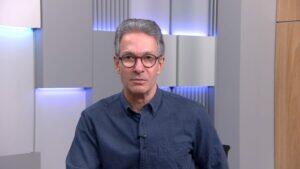
O candidato do Novo à Presidência da República, Romeu Zema, afirmou nesta quinta-feira, 13, que pretende recorrer a operações de Garantia da Lei e da Ordem (GLO) para combater o crime organizado. Segundo ele, a atuação federal será discutida com os governadores e não ocorrerá de maneira unilateral.
Zema foi questionado em coletiva de imprensa sobre como pretende preservar a autonomia dos Estados diante da previsão, em seu plano de governo, de intervenções federais na área da segurança pública. O candidato respondeu que as duas propostas são conciliáveis e defendeu uma atuação integrada entre União, Estados e municípios.
“Quero fazer uso da GLO. União e Estado se complementam na questão da segurança pública. Nada será feito unilateralmente, com o governo federal determinando. Vai ser um esforço conjunto, discutido com os governadores”, declarou.
O presidenciável citou ações recentes realizadas no Rio de Janeiro como exemplo da viabilidade dessa cooperação. Na avaliação de Zema, a participação das administrações municipais e de suas forças de segurança também poderá tornar mais efetivo o enfrentamento às organizações criminosas.
O plano de governo do candidato, batizado de “Plano Implacável”, prevê o emprego das Forças Armadas e de órgãos federais para retomar territórios controlados por facções. Zema também defende classificar facções e milícias como organizações terroristas e já afirmou que uma eventual intervenção no Rio de Janeiro precisaria ser prolongada, com duração de dez a 20 anos.
Zema participou do 13º Fórum Caminhos da Liberdade, organizado pelo Instituto de Formação de Líderes (IFL), na capital paulista. Os candidatos Renan Santos (Missão) e Ronaldo Caiado (PSD) também participaram do evento. O presidente Luiz Inácio Lula da Silva (PT) e o senador Flávio Bolsonaro (PL) foram convidados, mas não compareceram.
Romeu Zema, candidato à presidência da República (Novo), se vê como o nome talhado para um turnaround, ou freio de arrumação, no Brasil. O País, segundo ele, precisa de uma “chacoalhada” para entrar nos trilhos e fugir do “abismo fiscal” para o qual o atual governo estaria seguindo. Assim como acontece com algumas empresas em […]
A agência meteorológica da Organização das Nações Unidas alertou nesta sexta-feira que se espera que um forte El Niño se intensifique a partir de agosto, advertindo que o fenômeno provavelmente aumentará as temperaturas acima do normal em todo o mundo e alterará significativamente os padrões de precipitação.
O El Niño, um período de aquecimento das temperaturas da superfície do mar no Pacífico central e oriental, continuará a se intensificar de forma constante, tornando-se um evento forte entre agosto e outubro de 2026.
Além do fortalecimento do El Niño, prevê-se um Dipolo do Oceano Índico (IOD) positivo. O IOD é um padrão climático no Oceano Índico ocidental, onde a temperatura fica, em média, mais quente, enquanto no Oceano Índico oriental fica mais fria do que a média.
Juntos, esses fenômenos podem amplificar os impactos climáticos regionais, incluindo secas, inundações e risco de incêndios florestais, particularmente na bacia do Oceano Índico.
A agência, a Organização Meteorológica Mundial, afirmou que está intensificando sua mobilização de informações e serviços de apoio para ajudar os países a antecipar e minimizar os impactos do El Niño.
“O El Niño está se intensificando – jogando lenha na fogueira de um planeta já em chamas, com ondas de calor escaldantes, incêndios florestais apocalípticos e mares com temperaturas recordes. Os combustíveis fósseis estão alimentando as chamas dessa crise”, afirmou o secretário-geral da ONU, António Guterres.
O Banco Nacional de Desenvolvimento Econômico e Social (BNDES) aprovou um financiamento de R$ 96,2 milhões para uma nova planta industrial de biodieseldo Grupo Potencial, em Lapa, no Paraná. Em nota, o BNDES afirmou que a indústria pretende ampliar a oferta de combustíveis renováveis e contribuir para a transição energética no Brasil.
“O projeto aprovado pelo BNDES auxilia o processo de descarbonização da matriz energética e de transportes no país, com volume total de carbono capturado estimado em 782,2 mil toneladas de CO2 por ano”, disse o presidente do BNDES, Aloizio Mercadante, na nota.
Do montante, R$ 76,9 milhões são provenientes do Fundo Clima, vinculado ao Ministério do Meio Ambiente e Mudança do Clima (MMA) e operado pelo BNDES. Os outros R$ 19,2 milhões serão disponibilizados pelo Finem, que possui uma linha específica para produção de alimentos e biocombustíveis.
O financiamento aprovado pelo BNDES faz parte do investimento total de R$ 230 milhões que será feito pelo Grupo Potencial. A nova unidade, segundo o BNDES, terá capacidade para produzir até 120 toneladas por dia de glicerina bruta e até 1,2 mil toneladas diárias de biodiesel, além de 110 toneladas por dia de óleo sintético.
Com o novo aporte, o Grupo Potencial alcança capacidade de 3,3 mil toneladas por dia. A nova planta será integrada ao complexo industrial da companhia, em Lapa (PR), que já possui outras duas unidades de produção de biodiesel, duas de refino de glicerina e uma de glicerólise.
O BNDES destacou ainda que, além do impacto econômico, o investimento fortalece a política nacional de descarbonização da matriz energética, já que o biodiesel é produzido a partir de matérias-primas renováveis, como óleo de soja, girassol, mamona, babaçu e outras oleaginosas, além de gorduras animais.
Equipe do Centro Nacional de Emergências Ambientais e Climáticas (Ceneac) do Ibama coletou, nesta sexta-feira (10), seis amostras de manchas de óleo encontradas na praia de Ipanema, entre os postos 8 e 9. O material será analisado pelo Laboratório de Apoio ao Desenvolvimento Tecnológico (Ladetec), da Universidade Federal do Rio de Janeiro (UFRJ). Outras equipes do Instituto seguem em campo realizando vistorias para identificar outras áreas afetadas e investigar a origem do óleo.
O órgão revelou que foi informado sobre a presença das manchas de óleo em Ipanema, por volta das 08h30 de quinta-feira. Em seguida, o Instituto Chico Mendes de Conservação da Biodiversidade (ICMBio) relatou que foram encontrados resíduos semelhantes na Praia Grande, localizada na Reserva Extrativista Marinha do Arraial do Cabo (RJ).
Segundo o Ibama, as informações foram repassadas ao Grupo de Acompanhamento e Avaliação (GAA), que compõe o Plano Nacional de Contingência para Incidentes de Poluição por Óleo em Águas sob Jurisdição Nacional (Decreto nº. 10.950, de 27 de janeiro de 2022), e ao Instituto Estadual do Ambiente (Inea) para a adoção de medidas conjuntas de resposta ao incidente.
O Inea informou nesta sexta-feira que permanece monitorando o litoral fluminense, em articulação com os demais órgãos envolvidos, aguardando os resultados das análises laboratoriais para subsidiar a identificação da origem do material e a adoção das medidas cabíveis.
O Instituto garante que, até o momento, não há evidências de contaminação que justifiquem restrições ao banho de mar. No entanto, orienta que a população evite o contato direto com as pelotas de petróleo eventualmente encontradas na areia, pois o material pode causar irritação na pele e impregnar roupas e calçados. Pede ainda que novas ocorrências sejam comunicadas aos órgãos ambientais.
Já Marinha do Brasil informou que a Capitania dos Portos do Rio de Janeiro recebeu a denúncia e mandou uma equipe ao local, onde não foram observados indícios de mancha de óleo nem de poluição hídrica no mar.
Com força na capital e na Região Metropolitana de Porto Alegre, Juliana Brizola (PDT) lidera a pesquisa RealTime Big Data para o governo do Rio Grande do Sul divulgada nesta terça-feira (23), com 37% das intenções de voto no primeiro turno. O deputado federal Luciano Zucco (PL) aparece com 32%, seguido pelo vice-governador Gabriel Souza (MDB), com 17%, e Marcelo Maranata (PSDB), com 3%. Brancos e nulos somaram 5% e outros 5% não souberam ou não responderam.
Nos principais cenários de segundo turno, a advogada e ex-deputada estadual tem empate técnico com Zucco, com 44% a 41%, e vence Souza por 47% a 35%. A neta de Leonel Brizola bate Maranata por 49% a 27% em um eventual segundo turno entre ambos. A margem de erro é de 2 pontos porcentuais.
Nos recortes da pesquisa por regiões do Estado, Juliana Brizola lidera na Região Metropolitana de Porto Alegre, que inclui a capital e 23 municípios e responde por 43% do eleitorado do Estado. A pré-candidata do PDT tem 43%, Zucco tem 25%, Souza tem 19% e Maranata, 5%.
Na Região Noroeste, que representa 18% do eleitorado, Zucco tem 39% e Juliana Brizola tem 30%, Souza tem 16% e Maranata, 2%. Na região Nordeste, com 10% do eleitorado, o deputado federal mantém vantagem, com 40% contra 31% de Juliana Brizola, 19% do vice-governador e 2% de Maranata.
No Sudeste gaúcho, que representa 8% do colégio eleitoral, a ex-vereadora volta a ter vantagem numérica com 35% a 33% sobre Zucco, com 20% de Gabriel de Souza e 1% Maranata.
No Sudoeste, o cenário também é de equilíbrio, com 36% a 34% para Zucco sobre Juliana Brizola, na região Centro Ocidental o deputado tem 39% a 33% contra a ex-deputada estadual e na Centro Oriental Zucco tem 42% a 30%. Nessas três regiões, Souza varia de 16% a 18% e Maranata entre 1% e 2%.
Zucco tem a maior rejeição, com 40%, seguido por Juliana, com 38%, Souza com 23% e Maranata com 16%. O vice-governador e a ex-deputada estadual têm um potencial de voto de 49%, a soma eleitores declarando que votariam neles com certeza e dos que possivelmente poderiam escolhê-los. A chamada “votabilidade” de Zucco é de 42% e a de Maranata é de 27%.
Presidente
A corrida presidencial no Rio Grande do Sul tem empate técnico entre senador Flávio Bolsonaro (PL), com 42%, e presidente e pré-candidato à reeleição Luiz Inácio Lula da Silva (PT), com 39% das intenções de voto no primeiro turno. Renan Santos (Missão) aparece com 5%, seguido por Ronaldo Caiado (PSD), com 3%, Romeu Zema (Novo), Joaquim Barbosa (DC), e Aécio Neves (PSDB) aparecem com 2% das intenções. Augusto Cury (Avante) tem 1% e outros candidatos somaram também 1%. Brancos e nulos foram 2% e outros 1% não souberam ou não responderam.
No segundo turno no Rio Grande do Sul, Flávio Bolsonaro tem 51% a 42% contra Lula. Ambos lideram também a rejeição, com 51% para o atual presidente e 46% para o senador.
Foram realizadas 1.600 entrevistas, no período de sábado (20) a esta segunda-feira (22), a margem de erro é de 2 pontos porcentuais para mais ou para menos e o índice de confiança é de 95%. As pesquisas estão registradas sob o protocolo-RS 07063/2026 no Tribunal Superior Eleitoral (TSE).
Temas sérios devem ser associados a uma linguagem séria. Será? Durante muito tempo, essa lógica orientou a comunicação de setores como finanças, saúde, educação e tecnologia. Quanto maior a complexidade do assunto, maior parecia ser a necessidade de usar um tom formal e distante da cultura popular. A questão é que o público mudou o […]
A aprovação pela Agência Nacional de Vigilância Sanitária (Anvisa) do registro da primeira semaglutida nacional, no fim de maio, que será produzida pela EMS, acirrou a guerra pela queda do preço das canetas emagrecedoras no mercado brasileiro. Agora, a líder do mercado, a americana Eli Lilly, dona do Mounjaro, caneta análoga ao GLP-1 à base […]
A geração apontada pelo Bank of America como a mais rica do mundo até 2035 já começa a redesenhar o mapa dos investimentos no Brasil. Mais digital, mais aberta a risco e menos dependente da poupança, a geração Z, na faixa de 16 a 29 anos, investe proporcionalmente mais em criptomoedas, ações, fundos e crédito […]
Greg Abel (right) is Berkshire Hathaway's new CEO.
Bloomberg/Getty Images
Berkshire Hathaway's annual meeting is next week, but Warren Buffett won't be hosting.
New CEO Greg Abel will welcome tens of thousands of shareholders from across the world to Omaha.
Berkshire gurus want Abel to share his plans for stocks, businesses, cash, and leadership.
What is Berkshire Hathaway without Warren Buffett in charge?
Tens of thousands of shareholders are hoping to find out when they descend on the legendary investor's hometown of Omaha next week.
They're making the pilgrimage to attend Berkshire's annual meeting, dubbed "Woodstock for Capitalists" because it attracts a huge crowd of like-minded investors for a weekend of learning, networking, and celebration.
But for the first time, Buffett won't be hosting the gathering. Instead, it will be Greg Abel, who took over as Berkshire's CEO at the start of this year, marking the end of the business icon's six-decade run.
Business Insider asked five Berkshire gurus what they'd like to hear from Abel next week. They shared questions about his management approach, plans for Berkshire's cash pile and stock portfolio, and even his personal life.
David Kass, a finance professor at the University of Maryland and a longtime Berkshire blogger, said he would like to hear Abel's "explanation for Berkshire underperforming the S&P 500" by roughly 40 percentage points in under 12 months.
2. Money mountain
Berkshire held a record $373 billion of cash, Treasury bills, and other liquid assets at the end of December. That figure exceeds the market value of Chevron ($371 billion), Palantir ($365 billion), and Cisco ($355 billion).
Buffett, perhaps the world's foremost bargain hunter, struggled in recent years to deploy Berkshire's cash as stock valuations surged, acquisition prices soared, and even buybacks grew unattractive as Berkshire shares climbed.
"What are his plans to invest $373 billion in cash?" Kass asked.
Brett Gardner, an analyst and the author of "Buffett's Early Investments," raised the prospect that Berkshire might use its dry powder to purchase Buffett's roughly 14% stake in the business, a position worth $138 billion.
"Does Berkshire plan on buying Warren's stake in a negotiated transaction someday?" he asked.
Johnson and Katie Farmer, the CEO of Berkshire-owned BNSF Railway, will join Abel onstage for the second Q&A session.
Larry Cunningham, the author of several books about Berkshire and the director of the University of Delaware's Weinberg Center, told Business Insider he's looking forward to seeing Abel engage with the two subsidiary CEOs, "a new practice that I hope will add tremendous value to the meeting."
Gardner is also looking for indications of whether Abel intends to appoint other divisional leaders like Johnson. Under Buffett, subsidiary CEOs reported to Abel as the head of the non-insurance businesses, and Berkshire's insurance chief, Ajit Jain.
Chris Ballard, a managing director at Check Capital Management, said he was curious about Ted Weschler's expanded role at Berkshire. Abel touched on that in his first shareholder letter, following the departure of the other investment manager, Todd Combs.
Ballard said he was hoping Abel would share "some details on how often he sees Ted, how often he is in contact with Ted, and what sort of behind-the-scenes responsibilities Greg leans on Ted for."
Warren Buffett is Berkshire Hathaway's chairman and former CEO.
Daniel Zuchnik/WireImage via Getty Images
4. Stocks and subsidiaries
In his first shareholder letter, Abel listed Berkshire's core stock holdings as Apple, American Express, Coca-Cola, and Moody's, leaving out two large positions — Bank of America and Chevron.
Ballard said he was "very interested" to hear Abel's thoughts on Berkshire's stocks and what kinds of businesses he'd consider adding to its core portfolio.
He also highlighted that almost nothing is known about Abel's investing experience.
"We don't know what Greg's past personal or professional investment performance looks like, and we are very interested in him describing some investment successes and failures, so we can get a sense for what we might expect going forward," Ballard said.
Paul Lountzis, a longtime Berkshire shareholder and the president of Lountzis Asset Management, said he was curious whether Abel would look to offload any subsidiaries. Buffett famously offered businesses a permanent home, which distinguished Berkshire from other buyers.
"Does he see Berkshire selling any businesses if they receive offers to buy some of the companies at attractive prices?" Lountzis asked.
5. Hands-on vs. hands-off
Buffett and his late business partner, Charlie Munger, structured Berkshire as a decentralized web of autonomous subsidiaries, which allowed them to focus on allocating capital inside and outside the company instead of running the businesses themselves.
Abel is a more hands-on manager and may demand more of Berkshire's businesses. He wrote in his letter that Pilot had ranked second in a study of travel centers' popularity, and he wouldn't be pleased until it takes the No. 1 spot.
He also noted that Berkshire first invested in Pilot in 2017 but was "contractually delayed" from managing it until 2023, and said, "that mistake will not happen again."
"His comments were uncompromising and could be taken as unwelcoming," Ballard said. "In the past, Buffett wanted Berkshire to be seen as a great home for a long-held family business, and he would remain hands off and allow the current owners to have autonomy. Abel's comments could deter such owners from approaching Berkshire in the future."
Ballard asked whether Abel would promise a permanent home to potential sellers, and whether he would allow the same level of autonomy as Buffett and Munger did or seek to optimize businesses after buying them.
6. Getting personal
Buffett is famous for his investing prowess, his philanthropy, his frugal lifestyle, his junk-food diet, and more. Very little is known about Abel by comparison.
"What does his typical day look like?" Kass asked. "What percentage of his time is spent on travel to Berkshire's companies? How many hours per day does he spend on investment research, such as reading 10-Ks?"
Ballard said he's eager to learn "more about Greg as a person, both personally and professionally." He suggested Abel could talk about his love of ice hockey, his formative life experiences, his philanthropy, and his friends in the business world.
"It'd be nice to hear stories about some interactions that have taken place with other professionals, who he admires — other than Buffett — and what inspires him," Ballard added. "What books does he like? What movies, etc.?"
Gardner said he'd like to know who will succeed Jain, who turns 75 this summer, as insurance chief. Lountzis inquired about how Abel is working with his lieutenants to line up successors for when Jain and other executives step down.
Buffett has headlined Berkshire's big bash for decades. Shareholders are about to find out what it's like when he's not running the show.
I lived in Italy for eight years, and I still go back every summer to visit family and enjoy Europe.
I wish I could go even more often, but it's not always possible to hop on an international flight.
Luckily, I've found cities in California, Michigan, and Florida that feel like Italy to me.
When I was in college, studying abroad in Italy was a no-brainer. My great-grandparents are from a tiny village just outside Modena, and I was curious about my heritage.
Something that took me by surprise, though, was the realization that I didn't want to leave.
After my semester ended, I lived and worked in Rome throughout my early 20s. Eventually, I moved back to the US and became an Italian teacher.
Although I now live in Chicago, Italy still feels like my second home: I make a point to spend summers there, mainly so my daughter can bond with her nonna.
As lucky as I am to visit Italy every year, I still wish I could go more often. Thankfully, I've discovered a handful of places across the US that capture the energy of my favorite Italian regions.
These cities offer Americans a slice of Italian culture, minus the hourslong flight overseas — and help quench my insatiable thirst for Italy with soul-stirring food, wine, history, and charm.
Catalina Island's hidden coves and crystalline waters feel like Capri.
caption TK
vesperstock/Shutterstock
Located off the coast of southern California, Catalina Island is about 22 miles long. It's easily accessible via ferry service, which operates out of three ports near Los Angeles.
When I first visited Catalina Island, I was awed by the dramatic shorelines, crystal-clear waters, and hidden coves. I felt like I was back on Capri.
I hiked to the top of the Garden to Sky trail, catching panoramic views that felt straight out of a Mediterranean postcard. Then, I soaked up the sunshine at Descanso Beach while sipping a chilled glass of prosecco.
Florida is home to Coral Gables, a city that always reminds me of Lake Como.
caption
RAUL RODRIGUEZ/Getty Images
With its glamorous Mediterranean-style architecture, lush gardens, and waterfront estates, Coral Gables feels like Florida's answer to Italy's Lake Como.
The Italian Renaissance-inspired Vizcaya Museum and Gardens, built in the early 1900s, reminds me of the grand villas that line Como's shores.
If you plan your own visit, don't forget to check out the Venetian Pool — this public swimming spot was carved from a coral rock quarry, and (true to its name) feels straight out of Italy.
Chicago and Milan are "sister cities," and it's easy to see why.
Lucky-photographer/Shutterstock
It's no surprise to me that my hometown of Chicago and the metropolis of Milan are officially sister cities. Both feature vibrant street art, designer boutiques, and — unsurprisingly, maybe — delicious Italian food.
I always recommend that tourists plan a trip to coincide with the Randolph Street Market, a pop-up vintage extravaganza. You can also explore Chicago's dynamic mural scene with a street art tour.
Finally, Chicago's pizza is as hearty and rich as any slices you'd find in Italy. You can't leave my hometown without trying our legendary deep dish.
For a classic experience, head to Giordano's. The stuffed pizza here is a masterpiece of cheese and sauce wrapped in a golden crust.
Sonoma bears an uncanny resemblance to Tuscany.
Robert_Ford/Getty Images
The first time I visited Sonoma, California, I was struck by how much it resembled the Tuscan countryside, from the golden hills to rustic farmhouses.
When I found myself gathered around a long wooden table at Pedroncelli Winery, surrounded by laughter, clinking glasses, and the comforting scent of fresh herbs and olive oil, I felt wrapped in the same warmth and magic of the Italian countryside.
Perhaps the most obvious similarity, though, is the locals' deep appreciation for wine. You can even immerse yourself in vineyard life by staying at one of the several wineries that offer accommodations.
Venice Beach in California feels just like the Italian city of the same name.
caption
ALEXANDRE F FAGUNDES/Shutterstock
Venice Beach's bohemian vibe and canals are an almost-perfect replica of Venice, Italy.
Developed in 1905, the canals of this coastal Los Angeles neighborhood were designed to look like those in Venice. Whenever I stroll along the picturesque bridges and waterfront homes, I almost feel like I'm in Italy … all that's missing are the gondolas.
Frankenmuth, Michigan, reminds me of the Italian Dolomites.
caption
T-I/Shutterstock
This Michigan city's Alpine-style buildings, hearty cuisine, and cozy charm really resemble the Dolomites in northeastern Italy.
Moments like browsing handcrafted wooden ornaments at Bronner's Christmas Wonderland (the world's largest Christmas store), enjoying a traditional Alpine feast, and setting off on a riverboat cruise on the Cass River made me feel like I was celebrating Natale — or Christmas — in Europe.
This story was originally published on August 18, 2025, and most recently updated on March 26, 2026.
Ryan Lake and Stephen Rooney cover mid- and large-cap beverage companies in JPMorgan's investment bank.
JPMorgan
Ryan Lake and Stephen Rooney lead JPMorgan's beverage banking business.
Beverage M&A is expected to rebound, and they said big brands want to capitalize on the wellness boom.
The bankers broke down where they turn to spot regional trends and the advice they're giving CEOs.
When Ryan Lake and Stephen Rooney scan a bar menu, they might spot a drink they once evaluated — or helped sell.
The JPMorgan bankers cover the beverage industry, talking to everyone from executives to beer distributors to lawyers to retailers to figure out where consumer tastes are headed.
After a slowdown last year, partly due to tariffs, the pair is prepping to leverage that expertise as beverage M&A is expected to rebound in 2026, according to the investment bank Capstone Partners.
"There's been so much activity in the smaller space — bigger players buying smaller brands that are higher growth, maybe more health and wellness focused," Rooney said.
Lake, who joined JPMorgan in September and is based in Arizona, has covered beverages for more than 20 years and now focuses on mid-cap and fast-growing insurgent brands. In his previous role at Arlington Capital, he advised Stone Brewing on its $165 million sale to Sapporo. New York-based Rooney, who focuses on large-cap brands like Pepsi and is a leader on the investment bank's consumer and retail team, has spent nearly 15 years in the sector. He recently advised Alani Nu, an energy drink brand, on its $1.8 billion sale to Celsius, a deal that helped Celsius diversify its portfolio and reach more women.
Their partnership fits into JPMorgan's middle market banking push, working with a team of nearly 300 bankers across the company focused on founder-run companies rooted in local economies. Business Insider spoke with Lake and Rooney about opportunities in the beverage sector and the advice they're giving CEOs.
Large companies are eager for growth and increasingly turning to acquisitions to expand into new categories, price points, and geographies, the bankers said. That requires them to collaborate closely, since together they share insight across the market.
Spotting the next trend
The pair relies on what Lake calls an "early radar system," built on continuous communication with an ecosystem of companies, buyers, and investors. They might, for example, be able to spot a hot regional brand before it blows up on a national scale.
In a small, tightly knit industry with high barriers to entry — from dense liquor laws to understanding the cost of shipping water — relationships are crucial.
"If you do things the right way, it's a massive accelerator, because people will give you good referrals and talk well about you," Lake said. "If you do things the wrong way, everyone knows who you are pretty quickly."
Right now, large and small brands are trying to cash in on the boom in functional beverages, whether that's in the form of energy drinks or protein shakes. But Lake said that trends shift quickly, and today's protein maxxing could give way to something else, like a fiber craze.
Even so, he and Rooney caution clients against chasing every single trend, and often talk about staying focused. While M&A can drive growth, exploring too many options can risk losing or diluting a brand's identity.
Gen Z's drinking isn't so simple
If health drinks are having their moment, alcohol is struggling — but some of the issues may be overstated, Lake said.
Gen Z and those on GLP-1s are often cited as drinking less, and the rise in GLP, though the bankers said the reality is more complicated. Some Gen Z consumers are under 21, and those who can legally drink might be financially strapped.
"You're paying out the arm and the leg for housing and healthcare and for fuel — it's hard to actually go out and drink when you don't have the money for it," he said, adding that it could be years before we know whether alcohol is in a structural decline.
Just as the long-term alcohol trends are unclear, the beverage sector generally is as volatile as consumer tastes, which Lake and Rooney said can make it especially exciting. They've started lending to a company doing $5 million in revenue, only to watch it grow into a brand worth hundreds of millions.
"You do see that sort of meteoric rise of companies, because of the ever-changing consumer demand," he said.
A empresa chinesa de artigos esportivos Anta Sports Products está entre as companhias que avaliam uma possível aquisição da Puma, segundo pessoas familiarizadas com o assunto.
Listada em Hong Kong, a Anta vem trabalhando com um assessor para avaliar uma oferta pela Puma, disseram as fontes, que pediram anonimato porque as informações são privadas. A empresa pode se juntar a uma firma de private equity caso decida avançar com uma proposta, disseram algumas dessas pessoas. As ações da Puma chegaram a disparar 14% nas negociações em Frankfurt, a maior alta desde setembro.
Outros possíveis interessados incluem a concorrente chinesa Li Ning, segundo as fontes. A Li Ning — batizada com o nome do lendário ginasta que fundou a companhia — vem discutindo opções de financiamento com bancos enquanto faz uma análise inicial da Puma, disseram. A Puma também pode atrair interesse de empresas esportivas como a japonesa Asics Corp., afirmaram.
As discussões são preliminares e não está claro quais potenciais compradores seguirão adiante com ofertas, segundo as fontes. As expectativas de valuation do maior acionista da Puma, a bilionária família Pinault, da França, podem representar um obstáculo significativo a qualquer negociação, disseram.
Antes da disparada desta quinta-feira, as ações da Puma haviam caído 62% em Frankfurt neste ano, dando à empresa um valor de mercado de €2,5 bilhões (US$ 2,9 bilhões).
A holding Artémis, da família Pinault, detinha 29% da Puma no fim do ano passado, segundo o relatório anual da empresa.
A Anta — que é dona de marcas como Fila e Jack Wolfskin — acumulou alta de 10% nas negociações em Hong Kong neste ano, alcançando valor de mercado de US$ 31 bilhões. Um consórcio liderado pela Anta, que também incluía a firmade private equity asiática FountainVest Partners, pagou US$ 5,2 bilhões em 2019 para adquirir a Amer Sports, dona de marcas como Salomon e Arc’teryx. A Amer abriu capital em Nova York no ano passado, com a Anta permanecendo como sua principal investidora, segundo dados compilados pela Bloomberg.
As ações da Li Ning subiram cerca de 8% em 2025, alcançando valor de mercado próximo de US$ 6 bilhões.
Um representante da Anta não respondeu aos pedidos de comentário, enquanto porta-vozes da Artémis, da Asics e da Puma recusaram comentar.
Em resposta a uma consulta da Bloomberg News, a Li Ning disse em comunicado que continua focada no crescimento de sua marca e que não realizou nenhuma negociação ou avaliação “substancial” relacionada à Puma.
Estratégia da Puma
François-Henri Pinault, sócio-gerente da Artémis, disse em setembro que a participação na Puma é “interessante”, mas “não estratégica”, e que as opções relacionadas ao investimento continuam abertas.
A Puma vem tentando se reposicionar sob o comando do novo CEO, Arthur Hoeld, após anos sem conseguir criar muito entusiasmo pelos seus produtos entre os consumidores. Em julho, a empresa alemã nomeou o ex-executivo da Adidas, Andreas Hubert, como diretor de operações. Hubert tem 20 anos de experiência na Adidas e atuou nos últimos quatro anos como diretor de informação (CIO) da empresa.
Fundada em 1948, a Puma registrou €281,6 milhões em lucro líquido no ano passado e €8,8 bilhões em vendas. Entre seus contratos de patrocínio estão o Manchester City, da Premier League inglesa, a seleção de Portugal e a seleção masculina de handebol da Dinamarca.
No mês passado, a Puma afirmou que planeja cortar mais 900 empregos e reforçar seu foco em corrida, futebol e treinamento. A empresa também está reformulando o marketing para criar histórias mais envolventes sobre os produtos enquanto são desenvolvidos, na esperança de tornar a marca mais desejável para os consumidores. O objetivo da Puma é voltar a crescer até 2027, se estabelecer como uma das três maiores marcas esportivas do mundo e alcançar “lucros saudáveis” no médio prazo.

 Entrar