A bolsa brasileira está com uma oportunidade histórica em aberto. E não estamos falando de ações, mas sim de uma outra classe não tão conhecida assim pelo amplo público: os FI-Infras.
Um FI-Infra nada mais é do que um fundo de investimento em infraestrutura. Negociado em bolsa, esse tipo de fundo investe em títulos de renda fixa ligados ao setor de infraestrutura no Brasil, como as debêntures incentivadas.
Essa classe pode trazer diversas vantagens a um investidor:
Expor-se a uma cesta da renda fixa por meio de um ativo só, negociado na B3;
Possibilidade de distribuição de proventos recorrentes na conta;
E o melhor: isenção de imposto de renda.
Porém, se você procurar por eles, pode se deparar com uma cena curiosa: muitos deles em queda acumulada na visão anual. Se os FI-Infras têm tantas características interessantes, por que o mercado está oferecendo vários deles com desconto?
No novo episódio do Empiricus Analisa, Pedro Claudino, analista de fundos de investimento da casa, explica:
Como os FI-Infras realmente funcionam;
Por que a queda nesses ativos pode ser uma grande oportunidade de compra;
Como descobrir os melhores FI-Infras da bolsa para investir.
Clique no vídeo abaixo para assistir ao episódio na íntegra. Veja até o final para descobrir, também, quais os melhores FI-Infras da bolsa no momento:
O YouTube está oferecendo milhões de dólares a canais populares para que publiquem seus vídeos exclusivamente na plataforma por determinado período, em uma tentativa de conter o avanço da Netflix sobre suas maiores estrelas, segundo pessoas familiarizadas com as negociações.
O pagamento ocorreria de algumas formas diferentes. O YouTube discutiu o financiamento direto de alguns programas e também ofereceu destinar aos criadores uma parcela de grandes contratos com marcas.
Embora o YouTube ainda não tenha fechado acordos com nenhum criador, está perto de firmar contratos com vários parceiros, disseram as fontes, que pediram anonimato porque as negociações são sensíveis e ainda estão em andamento.
Segundo as fontes, o YouTube também avisou que criadores que fecharem acordos com a Netflix poderão sofrer consequências. A plataforma teria menos probabilidade de incluí-los em campanhas de marketing ou eventos caso publiquem vídeos na Netflix ao mesmo tempo. O YouTube também excluiria esses criadores da divisão de receitas de algumas grandes campanhas com marcas.
A Netflix vem negociando acordos com dezenas de YouTubers de destaque, pagando a criadores como Alan Chikin Chow e Nick DiGiovanni para publicar seus vídeos simultaneamente no YouTube e na Netflix. A empresa continua em conversas com dezenas de outros criadores, canais e programas, como Hot Ones, um talk show com celebridades.
Os acordos com a Netflix são atraentes para os criadores porque permitem receber milhões de dólares adicionais por vídeos que eles já produzem, além de expor seu conteúdo a novos espectadores. A Netflix tem mais de 325 milhões de assinantes.
Ainda assim, o YouTube disse aos criadores que publicar os mesmos vídeos em sua plataforma e na Netflix prejudica a audiência no YouTube e transmite a ideia de que os canais estão deixando de considerar a plataforma de vídeos como seu principal canal de distribuição.
Alguns criadores já decidiram não trabalhar com a Netflix. O serviço exige que eles entreguem os vídeos com dias de antecedência, algo que não faz parte da rotina de muitos criadores. A Netflix também pediu que alguns criadores retirassem determinados patrocínios de marcas de seus vídeos.
YouTube e Netflix são líderes no mercado de vídeos por streaming há 20 anos. Durante a maior parte desse período, foram concorrentes relativamente amigáveis, atuando em universos em grande parte separados.
A Netflix era a rainha do streaming por assinatura, concentrada em filmes e séries mais caros, produzidos nos moldes de Hollywood. O YouTube era o líder absoluto em conteúdo gerado por usuários, dando origem a uma nova geração de estrelas que o público acompanhava principalmente em dispositivos móveis.
As tentativas anteriores da plataforma de financiar produções originais não conseguiram gerar muitos sucessos. Um desses programas acabou se tornando um grande sucesso da Netflix.
Nos últimos anos, porém, a fronteira entre as duas plataformas ficou cada vez mais tênue. O YouTube priorizou fazer com que as pessoas assistissem a vídeos em televisores e agora responde por mais audiência nesses aparelhos do que qualquer outro serviço. A plataforma também passou a disputar verbas publicitárias da televisão e adquiriu os direitos de grandes eventos ao vivo, como o Oscar e a NFL.
A Netflix, que há muito tempo promove seus títulos no YouTube, licenciou os direitos de programas populares como CoComelon e outros conteúdos. A empresa vê as estrelas do YouTube como uma forma de atrair espectadores mais jovens e aumentar o tempo que os usuários passam na Netflix.
A competição se intensificou no último ano, à medida que a Netflix ampliou seus esforços para conquistar os canais mais populares do YouTube.
O YouTube avaliou se deveria reagir. O CEO Neal Mohan há muito tempo afirma que criadores que fecham acordos com concorrentes, como Instagram ou Amazon Prime Video, tendem a levar os espectadores de volta ao YouTube.
Poucos desses criadores estão deixando a plataforma, que continua sendo seu principal canal de distribuição. Financiar canais individualmente também pode desagradar milhares de outros canais que não recebem nenhum dinheiro.
O YouTube ainda não quer atuar como um estúdio para criadores, o que envolveria financiar produções e oferecer orientação criativa. Mas, nas últimas semanas, Mohan e sua equipe decidiram que o fluxo constante de criadores que passaram a publicar simultaneamente no YouTube e na Netflix era um problema que precisava ser enfrentado. Fica mais difícil convencer anunciantes sobre o apelo e o valor de um vídeo no YouTube se ele também estiver disponível na Netflix.
Essa não é a primeira vez que o YouTube reage dessa maneira a concorrentes. A plataforma ofereceu dinheiro a criadores que não fechassem acordos com a Vessel, uma startup cofundada e anteriormente comandada por Jason Kilar que tentava convencer criadores de redes sociais a publicar conteúdo em seu aplicativo antes do YouTube. A plataforma também criou um produto de vídeos curtos para competir com o TikTok.
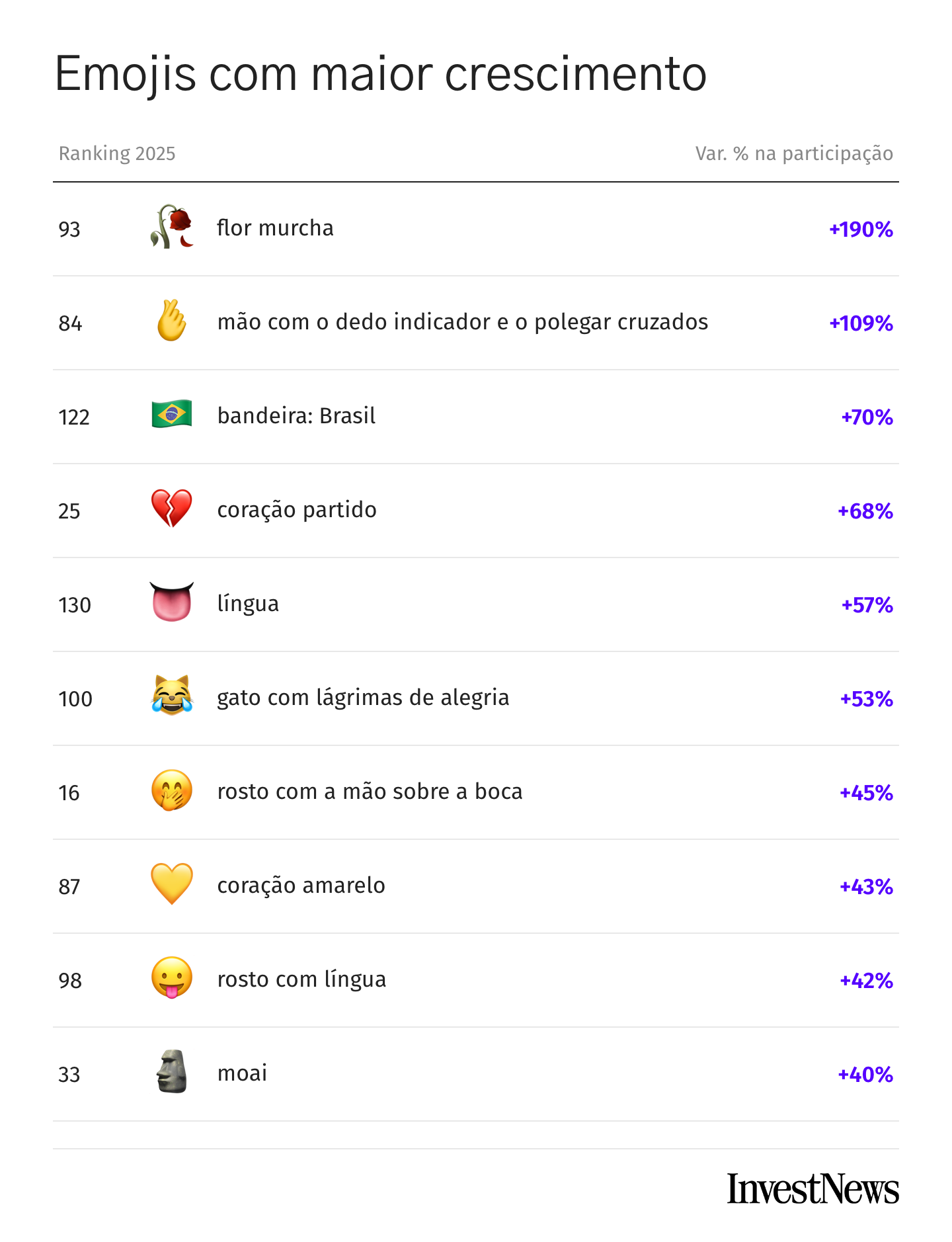
O Brasil apareceu em um lugar improvável entre os símbolos que mais ganharam espaço na internet global em 2025: o teclado do celular. A bandeira brasileira 🇧🇷 saltou 65 posições no ranking dos emojis mais usados no mundo e teve o terceiro maior crescimento do ano.
A explicação encontrada pelo New York Times não passou por futebol ou Carnaval, temas historicamente associados ao país, mas pela cultura gamer. O movimento parece pequeno diante do tamanho da internet, mas 185 milhões de brasileiros estão conectados, e algumas das principais plataformas digitais alcançam individualmente mais de 100 milhões de pessoas no país.
No WhatsApp, no TikTok, no YouTube e até no Reddit, o Brasil aparece com destaque não só pelo tamanho da audiência mas por comportamentos que destoam de outros mercados.
Isso ajuda a explicar por que empresas globais olham cada vez mais para o país para além do rótulo de grande mercado consumidor.
A bandeira brasileira 🇧🇷 terminou 2025 na 122ª posição entre os emojis mais usados no mundo, segundo levantamento citado pelo jornal americano. Um ano antes, ocupava o 187º lugar. Foram 65 posições de avanço, com alta de 70% em sua participação no total de emojis utilizados.
Entre os emojis com participação mínima de 0,1% analisados pelo New York Times, somente a flor murcha 🥀, com crescimento de 190%, e o coração feito com os dedos 🫰, com 109%, avançaram mais. A bandeira dos Estados Unidos, para fins de comparação, caiu 47 posições.
Levantamento New York Times/Divulgação
O levantamento partiu de uma amostra anônima de 665 milhões de emojis usados globalmente no Gboard, teclado do Google em aparelhos Android, e contou com análise de fóruns do Reddit para buscar padrões de linguagem.
O Times associou o avanço do emoji da bandeira brasileira à cultura gamer – um terreno em que o Brasil já tem escala.
Segundo a Pesquisa Game Brasil 2026, 75,3% dos brasileiros consomem jogos digitais. No PC, League of Legends aparece como o título favorito, enquanto Counter-Strike, LoL, Valorant e Free Fire seguem entre os principais nomes do cenário competitivo brasileiro.
Fora dos games, o Digital 2026: Brazil, do DataReportal, estima 185 milhões de usuários de internet no Brasil, equivalentes a 86,9% da população, e cerca de 150 milhões de identidades ativas em redes sociais – 70,4% dos habitantes.
Nas plataformas, o alcance publicitário potencial no Brasil é de:
150 milhões de pessoas no YouTube;
147 milhões no Instagram;
131 milhões de adultos no TikTok.
Reddit cresce no Brasil e entra na trilha do emoji
O Reddit tem presença menor no Brasil, mas cresceu rapidamente entre seus fóruns. No fim de 2025, a ferramenta publicitária da plataforma indicava alcance potencial de 19,9 milhões de pessoas no país — quase o mesmo registrado na França, de 20,5 milhões, e acima de mercados como Itália, Japão, Espanha e México.
Dados fornecidos pelo próprio Reddit à Exame mostram que o número de usuários ativos semanais no Brasil cresceu 95% no primeiro trimestre de 2025 em relação ao mesmo período do ano anterior. Nos Estados Unidos, maior mercado da plataforma, a alta foi de 18%.
O Reddit também foi usado pelo New York Times para investigar como diferentes gerações adotam emojis.
Para o jornal, símbolos digitais funcionam como marcadores de pertencimento a grupos e subculturas – ambientes em que novas formas de comunicação costumam surgir antes de alcançar públicos maiores.
O ‘Zap Zap’ que chamou a atenção de Zuckerberg
Nenhuma plataforma deixa essa particularidade brasileira tão explícita quanto o WhatsApp. A Meta não divulga atualmente quantos usuários do aplicativo estão no Brasil, mas executivos da companhia colocam o país entre seus principais mercados.
Em 2024, durante o Meta Conversations, em São Paulo, Mark Zuckerberg, fundador e CEO da Meta, destacou que brasileiros enviavam mais figurinhas, participavam mais de enquetes e mandavam quatro vezes mais mensagens de voz do que usuários de qualquer outro país.
O CEO disse ainda que o Brasil havia transformado o “Zap Zap” em algo próprio.
“A criatividade dos brasileiros no WhatsApp é realmente inspiradora, e nós queremos facilitar para que as pessoas façam ainda mais no WhatsApp”, afirmou Zuckerberg durante o evento.
A Pesquisa WhatsApp no Brasil 2026, do Opinion Box, aponta que 77% dos entrevistados conversam com marcas e empresas pelo aplicativo e que sete em cada dez já compraram produtos ou contrataram serviços por ali. Outros 37% afirmam deixar o WhatsApp aberto durante todo o dia.
No fim de 2025, o Instagram, também da Meta, alcançava potencialmente 147 milhões de brasileiros por publicidade, avanço de 8% em um ano.
YouTube: impacto econômico
No YouTube, um estudo da Oxford Economics divulgado pela plataforma em 2026 estima que o ecossistema criativo contribuiu com mais de R$ 6 bilhões para o PIB do Brasil em 2025 e sustentou mais de 150 mil postos de trabalho, direta e indiretamente.
O Brasil já reúne mais de 100 mil canais com pelo menos 100 mil inscritos e mais de 10 mil acima da marca de 1 milhão. Mais de 85% do tempo de exibição de conteúdos produzidos por canais brasileiros vem do próprio público do país, segundo o YouTube.
Entre pequenas e médias empresas brasileiras que mantêm um canal na plataforma, 71% dizem que o YouTube é essencial para o crescimento do negócio. Em julho de 2025, mais de 25 milhões de usuários brasileiros fizeram buscas relacionadas a compras dentro do YouTube.
No fim de 2025, as ferramentas publicitárias do Google apontavam alcance potencial de150 milhões de pessoas no Brasil, equivalente a 81,1% dos internautas brasileiros. Em números absolutos, o país estava praticamente empatado com a Indonésia e atrás apenas de Índia e Estados Unidos.
TikTok: 134 milhões de usuários
O apelo de redes sociais junto aos brasileiros parece ser universal. O TikTok, da chinesa ByteDance, tinha 134 milhões de usuários ativos mensais no Brasil em março de 2026, o que define o país como um de seus maiores mercados globais.
O levantamento calcula ainda que essa atividade sustentou entre 223 mil e 447 mil empregos.
Entre os empreendedores pesquisados, 52% afirmaram que o TikTok ajuda a alcançar novos mercados. Outros 69% usam a rede para conteúdos relacionados aos negócios, 62% para acompanhar tendências e 57% para desenvolver habilidades de marketing digital.
O crescimento também virou comércio dentro da própria plataforma. Dados do TikTok Shop mostram que 57,8% dos usuários pesquisados concluíram uma compra depois de descobrir um produto no aplicativo.
Pelas ferramentas publicitárias da plataforma, o alcance potencial no Brasil já havia crescido 17,6% entre o fim de 2024 e o fim de 2025, chegando a 131 milhões de adultos.
“Existe uma grande diferença entre somar alcance ou cliques e unir o país”, afirma Manuel Belmar, CFO da Globo, em resposta por escrito ao InvestNews.
O argumento da Globo é que a TV aberta ainda concentra atenção simultânea: milhões de pessoas vendo o mesmo jogo, jornal ou novela ao mesmo tempo, em um ambiente que gera conversa imediata, impacto cultural e valor para as marcas.
Esse valor comercial, porém, depende de uma conta complexa, especialmente no caso de grandes competições esportivas internacionais – como a Copa. Fazer dinheiro com pacote de jogos exibidos na TV aberta exige equilibrar direitos caros, venda publicitária e margem de lucro.
São direitos negociados em dólar, sujeitos às idas e vindas do câmbio.
Anos atrás, a Globo firmou contrato para pagar US$ 90 milhões ao ano à FIFA e assim poder transmitir os eventos esportivos realizados pela federação que rege o futebol mundial entre 2015 e 2022. No meio do caminho, veio a pandemia. A Globo tentou uma revisão do valor do contrato e a refrega foi parar na Justiça. Terminou com um acordo fora dos tribunais – também por US$ 90 milhões –, e a Globo garantiu um pacote de jogos mais modesto para a Copa de 2026.
A disputa abriu espaço para que YouTube e LiveMode acelerassem o crescimento da CazéTV no streaming. O ano de 2026 marca a primeira vez em que um canal no YouTube transmite todos os 104 jogos da competição. A Globo ficou com cerca de metade do torneio, sem exclusividade.
O movimento se dá em um mercado publicitário que migra em parte para o digital. Segundo relatório do Itaú BBA divulgado nesta semana, a TV aberta deve recuar de cerca de 33% da verba publicitária brasileira em 2021 para 20% em 2030, enquanto o digital, já em torno de 56% em 2025, avançaria para 67% no fim da década. Só o YouTube concentra perto de 21% do consumo de vídeo no país, à frente de todos os serviços de assinatura somados.
Faça as contas
“Do ponto de vista financeiro, não necessariamente um pacote completo resulta em um faturamento publicitário maior”, diz Ivan Martinho, professor de marketing esportivo na ESPM. O especialista, que também preside a liga mundial de surfe para a América Latina, apontou como exemplo o caso da Paramount+, que pagou caro pela Libertadores e não converteu o gasto em assinaturas como esperado. A Paramount desistiu das transmissões da Libertadores e da Sul-Americana.
A Globo de hoje faz muito mais contas do que no passado. Desde o projeto “Uma Só Globo”, no fim de 2018, avalia custos e retornos esperados. No futebol, isso se intensificou a partir de 2022 e a análise vale para cada pacote de transmissão, com compra seletiva dos direitos esportivos.
Na Futebol Forte União (FFU, ex-LFU), a Globo entrou com uma fatia menor: um pacote de até R$ 850 milhões por ano, condicionado à presença de 12 clubes do bloco na Série A, a primeira divisão. Em 2025, com 11 clubes, a conta ficou perto de R$ 750 milhões. O restante da oferta da Futebol Forte União ficou espalhado entre Amazon, Record e YouTube/CazéTV.
Belmar informou ao InvestNews que a escalada dos valores dos direitos esportivos é um desafio global e que a resposta da Globo passa por equilíbrio. Segundo ele, a empresa procura equalizar o investimento em direitos com o apetite do mercado publicitário, analisando cada aquisição caso a caso, com ou sem exclusividade.
A Globo continuou com a maior prateleira do Brasileirão, mas sem carregar sozinha todos os pacotes disponíveis. É uma mudança relevante para a empresa que, durante décadas, organizou o futebol brasileiro em torno da própria grade, com exclusividade.
Ao InvestNews, a empresa conhecida pela CazéTV defendeu que a sua proposta nesse modelo elevou em cerca de 110% a receita anual dos clubes em relação ao ciclo anterior, enquanto a negociação da Libra com a Globo teria gerado aumento inferior a 30%, nas mesmas bases.
A nova Globo
Em 2025, a receita líquida do Globo Comunicação e Participações cresceu 11%, para R$ 18,3 bilhões, enquanto os custos e as despesas para tocar a operação subiram 8,6%.
Quando o que entra cresce mais rápido do que o que se gasta, sobra mais no fim – sem contar despesas financeiras. Esse “sobrar mais” tem nome: Ebitda, sigla para o lucro antes de juros, impostos, depreciação e amortização, que representa uma métrica de geração de caixa operacional.
Em outras palavras, é uma forma de medir quanto a operação gera por si só, antes de descontar o custo da dívida, os tributos e o desgaste contábil de bens e direitos.
Na Globo, esse resultado saltou 57% no último ano. E a margem Ebitda — a fatia que sobra de cada real de receita — passou de cerca de 9,5% para 13,4%. A maior despesa do grupo, que reúne direitos esportivos e produção de conteúdo, cresceu 6,4%, abaixo da receita. A “compra de tudo” cedeu lugar à compra seletiva, em uma escolha também editorial que sustenta a margem.
A margem de hoje, no entanto, se deu às custas de uma reinvenção que não veio sem dor. Para chegar aos níveis mais recentes, a Globo realizou demissões em 2020 e 2021, trocou contratos PJ por CLT — cortando mais da metade dos ganhos de parte dos profissionais — e encerrou vínculos fixos com nomes históricos da marca.
Segundo o professor da ESPM, que analisou o caso, a Globo passou a cortar grandes talentos, alguns eternizados em sua história, que ganhavam mesmo sem trabalho no ar ou em fase de produção.
Em 2025, a Globo também reorganizou o seu comando: Paulo Marinho ficou à frente dos negócios de mídia, enquanto Roberto Marinho Neto passou a cuidar de negócios e investimentos. A família separou melhor a operação de conteúdo da área que decide onde colocar dinheiro.
Para enfrentar a ameaça crescente das plataformas, a Globo passou a explorá-las também. Criou o Globoplay, que nos últimos anos aumentou a oferta de espaços publicitários para anunciantes, o que ajudou o serviço de streaming da Globo a atingir o equilíbrio financeiro (breakeven) em 2025, após 10 anos consumindo caixa.
Além disso, a Globo hoje mantém canais e conteúdos no YouTube e vende pacotes de canais dentro do Prime Video.
Ou seja, a empresa que durante décadas controlou a distribuição pela TV aberta, por meio das afiliadas, e pela TV por assinatura agora também coloca seus produtos em vitrines digitais que pertencem a outros grupos.
Belmar diz que a distribuição de conteúdo em plataformas de terceiros faz parte da história da Globo desde as afiliadas da TV aberta e passou pelas operadoras de TV por assinatura antes de chegar às plataformas digitais.
A diferença agora é que esses parceiros também disputam atenção e verba publicitária com a própria Globo.
No esporte, a Globo criou a GE TV, canal gratuito com linguagem mais informal, para tentar atrair o público que se acostumou a ver jogos na CazéTV, fora da televisão tradicional. Na estreia, a atriz e apresentadora Regina Casé apareceu para celebrar a “Cazé da Globo”.
A disputa por audiência, atenção e conversão
A Globo foi buscar na internet uma linguagem que capaz de aumentar o engajamento entre os mais jovens, enquanto YouTube e LiveMode hoje vendem futebol pela internet com o manual comercial da TV aberta, em cotas de patrocínio milionárias negociadas antes de a bola rolar.
A disputa mais dura é pela definição do que é televisão e por quem fica com a maior fatia da verba publicitária, o que levou à briga da medição de audiência.
As plataformas digitais chegam ao mercado com dados próprios, produzidos dentro de seus próprios sistemas. Para o anunciante, a comparação fica menos direta: de um lado, audiência medida por um padrão conhecido; de outro, números de visualização, alcance e tempo de consumo que nem sempre contam a mesma história.
A Globo sustenta que a simultaneidade da TV aberta ainda entrega um tipo de atenção mais valioso para as marcas do que a soma de visualizações espalhadas por vídeos, canais e nichos. A disputa com o YouTube passa justamente por essa tradução comercial: quem consegue provar ao anunciante que concentra atenção, gera conversa e entrega resultado.
O YouTube tem escala, mas sua audiência é mais espalhada: milhões de pessoas vendo milhões de vídeos diferentes. Ainda assim, a plataforma tenta se apresentar como televisão.
“O YouTube é a televisão também; hoje a maior parte da nossa audiência já é em televisão”, diz Victor Machado, Head de Parcerias de TV, filmes e esportes do YouTube no Brasil.
O ciclo de direitos que se abre em 2030 vai redefinir o controle do futebol brasileiro, agora com a CBF em busca de organizar a sua própria liga de clubes, enquanto estes buscam o controle do dinheiro que geram. A Globo chega a essa fase com menos controle sobre a distribuição, uma governança que valoriza as finanças e uma pressão para transformar escala em rentabilidade.
A empresa que ensinou o mercado brasileiro a vender televisão tenta provar que ainda sabe transformar atenção em valor, mesmo quando parte da audiência, da publicidade e da bola já corre por fora da sua grade.
A CazéTV tem o rosto, a voz e o jeito de Casimiro Miguel. No ar, tudo parece espontâneo, artesanal, quase improvisado. A aparência esconde uma estrutura sofisticada de direitos esportivos, fundos de investimento e executivos do mercado financeiro.
O canal é controlado integralmente pela LiveMode, empresa dona da operação, da marca e dos direitos sobre o nome e a imagem de Casimiro, que deixou de ser sócio direto do canal para integrar a holding do grupo.
A LiveMode tem entre seus investidores a General Atlantic e a XP — que também administra fundos ligados à estrutura financeira da Liga Forte União, a LFU.
Segundo Ivan Martinho, professor de marketing esportivo na ESPM e presidente da WSL (World Surf League) para a América Latina, o capital de private equity tem o racional de buscar acelerar a expansão dos negócios de empresas investidas para, em momento posterior, alguns ou muitos anos depois, vender e devolver aos investidores um retorno muito mais elevado.
Há uma sobreposição de papéis: a LiveMode negocia direitos esportivos, controla a CazéTV — o principal canal que transmite parte desses eventos — e tem como sócios investidores expostos às receitas comerciais da LFU, bloco que negocia o Brasileirão em conjunto.
Essa relação entrelaçada deixa uma pergunta no ar: ao negociar um direito, a LiveMode age como agência, como dona da tela ou como sócia da estrutura que lucra com a receita futura dos clubes?
O olho do dono
Edgar Diniz e Sérgio Lopes, dois dos sócios-fundadores da LiveMode, conhecem o mercado de transmissão esportiva muito antes da ascensão e da popularização de Casimiro.
Em 2007, criaram o Esporte Interativo, que começou na parabólica e cresceu no meio digital quando Globo e Band o ignoravam. A CazéTV parece nova, mas o modelo tem quase duas décadas: em 2007, à Máquina do Esporte, Carlos Moreira Jr., sócio-fundador da TV Esporte Interativo, já media a reação do público por SMS e Orkut e transformava interação em inteligência comercial.
Muitos anos depois, a LiveMode voltou para disputar a cadeia dominada pela Globo. O momento ajudava. A Lei do Mandante, de 2021, deu ao clube mandante o poder de negociar a transmissão da partida, o que enfraqueceu o pacote único da Globo e abriu espaço para blocos de clubes venderem direitos de transmissão em conjunto.
A Globo, em reorganização financeira, passou a comprar seletivamente; o YouTube avançava sobre a linguagem da TV com sua plataforma pela internet; e o futebol atraía fundos que enxergavam nos direitos um ativo financeiro. Nessa equação, a LiveMode ajudou a montar a Liga Forte União (LFU), bloco que se opôs à Libra — rival que fechou contrato bilionário com a Globo.
O fenômeno CazéTV
A Copa de 2022 foi a prova de conceito. A LiveMode era agência da FIFA no Brasil e tentava vender os direitos digitais. A Globo abriu mão da exclusividade no streaming, e a LiveMode ficou com o pacote por cerca de US$ 3 milhões, segundo apurou o InvestNews com fontes envolvidas na negociação — uma pechincha comparada aos US$ 90 milhões anuais que a Globo pagava à FIFA.
O pacote valia pouco sem uma operação que o transformasse em audiência, e a LiveMode tinha a CazéTV. Durante a Copa, o canal explodiu e Casimiro se consagrou como o rosto de uma nova forma de assistir futebol, com uma linguagem que dialogava com o torcedor. Hoje soma dezenas de milhões de inscritos e será, no Brasil, a única forma de ver os 104 jogos da Copa de 2026.
O sucesso abriu os cofres. Em novembro de 2023, os clubes da LFU cederam 20% das receitas comerciais por cinquenta anos, de 2025 a 2075, por cerca de R$ 2,6 bilhões, a um consórcio formado por Life Capital Partners, General Atlantic e XP.
A operação passou pela Sports Media, criada para administrar a fatia cedida, financiada por debêntures — títulos de dívida comprados por fundos ligados à XP e outros veículos.
Investidores passaram a ter remuneração atrelada à receita futura de TV e mídia dos clubes por cinco décadas, com mais de R$ 1,2 bilhão adiantado aos clubes.
Em maio, o site Poder360 afirmou que a LiveMode aparece como agência vendedora e também como cotista direta do veículo Sports Media Futebol Brasileiro, uma das compradoras das debêntures.
A leitura circula entre clubes: um dirigente ouvido sob reserva pelo InvestNews diz que, em uma reunião, um executivo da LiveMode admitiu que a empresa era dona de parte dos direitos negociados. E criticou esse envolvimento, independentemente da compra ou não de debêntures.
Desde o fim de 2024, o InvestNews tenta entrevistar algum porta-voz da LiveMode, sem sucesso. A empresa não respondeu a nenhuma das perguntas enviadas para esta reportagem na última terça-feuira (9).
Investidores expostos a 20% dos direitos de transmissão dos clubes passaram a ser sócios da empresa que os negocia e controla a tela que os exibe – depois, sob protesto de alguns clubes, a fatia da Sports Media sobre os direitos encolheu de 20% para 12%.
Na Libra, o bloco rival de clubes, o arranjo ficou mais tradicional: o fundo Mubadala, de Abu Dhabi, apareceu como principal interessado, e a transmissão foi vendida à Globo — comprador de um lado, vendedor do outro. Na LFU, essa fronteira ficou mais difícil de enxergar.
Faz tudo
A defesa do modelo de negócio passa por uma distinção formal: alguns contratos de transmissão são fechados com o YouTube, e a CazéTV figura como canal de distribuição e operação editorial dentro delas.
Para os críticos, a separação resolve pouco do conflito, porque a CazéTV é controlada pela própria LiveMode. O problema, portanto, é ser agência e ser o comprador, segundo definição de um investidor que acompanha as negociações e pediu para não ser identificado.
De acordo com a visão desse mesmo investidor, quando um direito de transmissão sobra “de graça” para a CazéTV, a receita fica atrelada às projeções do próprio canal, enquanto o clube que vende não sabe se fez um bom negócio.
É uma mudança em relação ao discurso original da LiveMode. Edgar Diniz, em entrevista ao GE em março de 2023, disse que “a vocação da CazéTV e o projeto da LiveMode não contemplam entrar em disputas por direitos”.
No jargão, o “condomínio” é a estrutura que reúne os direitos comerciais da LFU e decide como vendê-los. Para um dirigente ouvido pelo InvestNews, a diferença para o antigo domínio da Globo está na governança: a Globo comprava e negociava direto com os clubes; na LFU, os clubes deixaram de vender ao mercado — quem vende é o condomínio, por meio da LiveMode, e a caneta está com o investidor.
Isso se traduziria em um investidor que é dono, na média, de 12% dos direitos, enquanto os outros 88% ainda são dos clubes. E esse investidor minoritário teria condições de direcionar a venda, segundo o dirigente.
Clubes e federações seguem negociando com a LiveMode porque ela entrega audiência, patrocínio e distribuição; quanto mais cresce, mais seus interesses se misturam.
Em paralelo, clubes estudam contestar na Justiça as travas de um contrato que os prende até 2075. A disputa vai além da CazéTV: o próximo ciclo de direitos, a partir de 2030, tende a ser uma guerra para estabelecer quem decide o que vender, para quem e por quanto, com a diferença de que agora a própria Confederação Brasileira de Futebol (CBF) está interessada em organizar uma liga de clubes.
O sinal mais simbólico veio do cliente que originou a fórmula. Segundo uma pessoa próxima às negociações, a tendência hoje é que a FIFA não mantenha a LiveMode como agência comercial no Brasil para a Copa de 2030, em meio a preocupações com potenciais conflitos de interesse.
Procuradas, FIFA e LiveMode não responderam ao InvestNews. A empresa que transformou um pacote digital barato da Copa de 2022 no maior case de sucesso do YouTube brasileiro pode ficar de fora do Mundial seguinte – ao menos no que tange ao seu papel como negociadora de direitos.
A CazéTV está dentro de uma cadeia desenhada por executivos de mídia, financiada por fundos e atrelada aos direitos dos clubes por décadas.
A LiveMode acumulou múltiplos papéis no mesmo negócio: agência que negocia os direitos, dona da tela que os transmite, cotista da estrutura que os detém e empresa investida por fundos expostos a essas receitas. E Casimiro continua sendo a cara da CazéTV. Quem manda no negócio é outra conversa.

 Entrar