A startup Anthropic, criadora do agente Claude, está prestes a levar o boom da inteligência artificial ao seu maior teste público, no IPO esperado para outubro. O entusiasmo não vem da própria empresa — que entrou em período de silêncio após protocolar documentos na SEC, órgão regulador do mercado financeiro americano — mas de investidores […]
A derrocada do fundo de hedge Situational Awareness, criado em 2024 pelo jovem alemão Leopold Aschenbrenner – ex-pesquisador da OpenAI Foundation de apenas 25 anos, que se tornou uma voz proeminente nos debates sobre o futuro da inteligência artificial – expôs os riscos de transformar o otimismo pelo rápido avanço tecnológico da IA em apostas […]
Anthropic's Boris Cherny says companies should make sure their employees can still experiment with AI
Anthropic
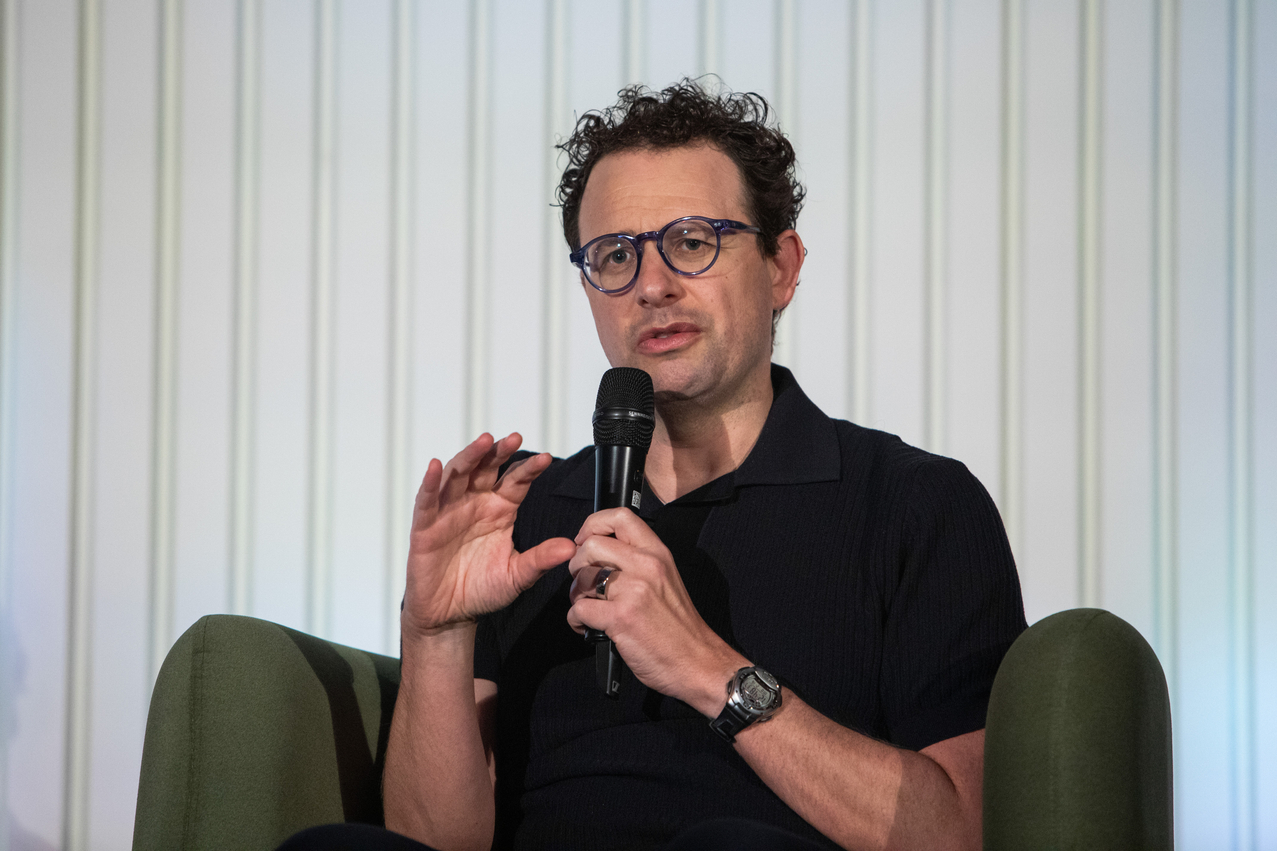
Anthropic's Boris Cherny says companies are right to focus on their ROI for AI.
At the same time, Cherny said employees at all levels and roles still need tokens to be able to experiment with AI.
Then, the Claude Code creator said, companies can start to control costs.
Claude Code creator Boris Cherny has a message for companies that are nervous about their AI token budgets.
"ROI is absolutely the right framing because you don't want to just think about cost because you kind of spend something on it and you get something back," Cherny said during a recent fireside chat at Scale AI.
Jesse Chen, Meta's director of product management who moderated the chat, asked the Anthropic employee directly about the recent concerns raised by Uber COO Andrew Macdonald about whether the rideshare giant's AI spending was leading to enough of a return to justify the rising cost of AI tokens.
Tokens are units of text that serve as a measurement for AI usage, such as the prompts processed by large language models, including those that power chatbots like Anthropic's Claude or its generative AI coding tool, Claude Code.
Cherny said it's right to be focused on ROI. It's also important, he said, not to overdo it in response to cost concerns.
"The way to do this is give people tokens and give them safety to experiment so they feel like they can try stuff and they're not going to get penalized for it," he said. "Once you find these internal use cases that kind of work, then you want to control the costs and you want to do that on the backend, not on the front end."
Otherwise, companies might miss out on the best ideas for deploying AI.
"Often, some of the most interesting ideas and the most innovative ways to improve processes and new product ideas are going to come from an accountant somewhere in the corner of the org or a marketing person that the CEO has never heard of," Cherny said.
Cherny emphasized that Anthropic offers several ways for its enterprise customers to control costs and set budgets, including per-seat cost controls.
Others in the AI space, including OpenAI CEO Sam Altman, are also increasingly discussing companies' concerns about the ROI of their AI investments.
As Cherny mentioned, AI firms like Anthropic are essentially token generators. That also means that they have an incentive to keep selling their models and generative AI tools, especially as they approach highly anticipated IPOs. The creator of Claude Code said that Anthropic is also paying attention to how its tokens are used.
"They're not free for us because every token we use is a token we do not give to a customer, so there's an opportunity cost," he said. "When I think about it, it actually maybe comes back to ROI."
Measuring that ROI is also changing, Cherny said, as the pace of AI model advancements continues to accelerate. He previously said that companies may have looked at the percentage of code written by AI. Cherny said that measurement is no longer as useful once more people let AI write 100% of their code, as he does.
"Then think about, how much is the code per engineer accelerating? And then the third thing to think about is like, what are the other bottlenecks that are getting in the way?" he said. "Because once you get it to this point where engineers are just writing a lot of code, the bottleneck is going to be like good ideas. So, how do you un-hobble that so that your company can generate ideas faster?
Em uma trajetória pouco comum em suas negociações no mercado de capitais deste ano, as ações da Alphabet registravam queda de 5,46% na Nasdaq por volta das 14h20 (horário local), cotadas a US$ 347,39, avaliando a holding em US$ 4,24 trilhões. O ponto de partida para esse recuo dos papéis é a disputa cada vez […]
A Microsoft foi uma das grandes propulsoras de inteligência artificial generativa no mundo. Agora, Satya Nadella, o CEO da companhia, está assustado com os rumos que a tecnologia está tomando. Em entrevista ao The Wall Street Journal (WSJ), o executivo fez duras críticas à forma como a corrida pelo domínio da IA tem se desenvolvido, […]
Mistral CEO Arthur Mensch, Anthropic CEO Dario Amodei, and OpenAI CEO Sam Altman.
Dimitar DILKOFF / AFP via Getty Images; Prakash Singh/Bloomberg via Getty Images; Daniel Heuer/Bloomberg via Getty Images
The US restricted Anthropic's new cybersecurity AI models, prompting the company to suspend all access.
The restrictions are creating winners and losers in the red-hot AI race.
Mistral and DeepSeek could benefit as sovereignty concerns boost the appeal of open-weight models.
One company's headache may be another's opportunity.
The White House's restrictions on access to Anthropic's new AI models have created winners and losers across the AI industry.
On Friday, US officials restricted access to Anthropic's cybersecurity-focused models, Mythos 5 and Fable 5, after concluding safeguards designed to prevent misuse of Fable 5 could be bypassed. The restrictions block foreign nationals from accessing the systems. In response, Anthropic shut down access for everyone.
The move has dealt a direct blow to Anthropic. But it may also strengthen the position of AI companies providing more open models that their customers can deploy and control themselves.
Unlike Anthropic, whose most advanced models are accessed through company-controlled systems, Mistral has championed open-weight models that customers can deploy on their own infrastructure and customize using their own data.
The Anthropic restrictions gave its CEO, Arthur Mensch, a real-world example of the risk he has been warning about.
In an X post on Tuesday, Mensch doubled down on Mistral's sovereignty pitch, saying the company's upcoming models would be open-weight because users should be able to "own, inspect, audit, or improve" the AI systems they use.
The timing couldn't be much better for Mistral.
France announced this week that its domestic intelligence agency would replace Palantir's AI data tools with those of a French provider, with Prime Minister Sébastien Lecornu warning against "strategic dependencies" on foreign technology.
DeepSeek
DeepSeek's CEO Liang Wenfeng.
VCG/VCG via Getty Images
The verdict: Winner.
Why: Like Mistral, DeepSeek's open-weight approach may suddenly look more attractive.
Unlike Anthropic's Mythos 5 and Fable 5 models, which are controlled by the company, DeepSeek's models can be downloaded, modified, and deployed by customers themselves.
That makes DeepSeek a beneficiary if governments and businesses begin prioritizing control and sovereignty over access to the latest closed models.
The episode also gives China an opportunity to argue that reliance on US AI providers comes with geopolitical risks, giving it a boost in an increasingly narrowing AI race. During an Anthropic event last month, its CEO, Dario Amodei, said Chinese AI models were roughly 6 to 12 months behind leading US AI systems.
Anthropic
Anthropic's CEO Dario Amodei.
Bloomberg/Getty Images
The verdict: Loser.
Why: Anthropic is the company directly affected by the restrictions.
The export controls block foreign nationals, including Anthropic's own employees, from accessing Mythos 5 and Fable 5, which limits the company's ability to distribute some of its most advanced systems internationally.
More importantly, the episode highlights a potential weakness of closed AI models. Because Anthropic controls access to its systems, governments can, in turn, exert greater influence over who can use them.
The episode is also the latest headache for Anthropic in a monthslong spat with the White House after the AI firm said its technology should not be used for domestic mass surveillance or fully autonomous weapons systems.
In response, the US government designated Anthropic a supply chain risk, then Anthropic challenged the move in court.
US AI companies with closed models
OpenAI CEO Sam Altman.
Chip Somodevilla/Getty Images
The verdict: Short-term winners, long-term losers.
Why: While the restrictions may give a short-term boost to Anthropic's US rivals, it also raises uncomfortable questions for them down the road.
Companies including OpenAI, Google, and xAI primarily distribute their most advanced models through platforms and services they control.
Meta is a partial exception. While some models in its Llama family are open-weight, the company has increasingly been moving towards closed models that it has tighter control over, such as Muse Spark.
For governments and businesses, the Anthropic episode serves as a reminder that access to AI can ultimately depend on decisions made by providers and the governments that oversee them.
That dynamic could strengthen the appeal of sovereign and open-weight alternatives in Europe and elsewhere.
McDonnell emphasizes importance of backup plans due to AI tool disruptions like the Fable incident.
This as-told-to essay is based on a conversation with Sean McDonnell, 43, who lives in England. McDonnell is the founder of the web design company Kaizen and the SaaS website Consigns. The following has been edited for length and clarity.
Developing my website would not have been possible without AI.
I started my web design business earlier this year, which also led me to create a website that provides software to help companies track their waste. I run both of these ventures with my partner, and we enlist contractors for some operations and software development.
We're a small team, and AI tools are a big help. Last week, I saw a few posts online showing the amazing things that Anthropic's new Fable model can do.
I was keen to try this new technology, but didn't get much of a chance to use it. A few hours in, I was mid-task when the US government forced Anthropic to cut off foreign access to Fable with little to no notice.
The rug got pulled from under me pretty quickly, but because I was well-prepared, it didn't have a hugely disruptive impact on my business. It's a reminder that you can't rely too heavily on AI as a founder, and you should always have a backup plan in case of unforeseen circumstances.
I was keen to give Fable a try, but it was short-lived
I like using OpenAI's Codex for repetitive, code-intensive work, and Claude for tasks that help design the product's aesthetics. AI has been able to completely change the architecture of our codebase in a day, whereas a task like that would've taken a developer weeks to do manually.
After seeing so much about it online, I wanted to use Fable to conduct a full review of our product for safety and security flags. The model was in the middle of making some key changes to our codebase when it got shut off instantly with a notice saying, "Claude Fable 5 is currently unavailable."
I didn't realize until the next day that this had happened because the US government ordered Anthropic to block foreign access to the model. It's been a bit of a bummer, and I feel bad for the people at Anthropic for making a brilliant product and having the rug pulled from under them, too. I'm also quite annoyed we didn't get to do more with Fable. I think it could've propelled us so much further.
Being prepared helped us avoid a huge disruption
This isn't the first time we've had issues with using Claude. In the past, when we used Opus 4.6, it would stop mid-task because it hit the token limit so quickly. We didn't realize how token-heavy the tool was, and it left our codebase in a bit of a mess.
Because we'd learned this lesson with 4.6, we made sure we were more prepared for unforeseen circumstances with using AI.
When we started our product review last week, I asked Fable to create a guide that both Claude or other AI models could follow. This enabled us to pass the remaining tasks to other agents when we lost access to Fable. We passed some to Codex and others to Claude 4.8. If we hadn't been prepared this way, the Fable issue could've resulted in lots of work being out the window.
Fable getting pulled didn't have a major impact because we were ready for it, but it ruined our momentum. We're working on a deadline, and every minute counts, so delays like this can be quite disruptive.
Always have a plan B
This Anthropic incident has solidified my conviction that you can't depend completely on AI.
If the government were to shut off AI access completely, our business wouldn't end, because we've already built out our platform, but we are quite dependent on AI. A situation like that would likely increase our costs, partly because we'd have to switch to the old-school method of hiring developers.
In today's AI era, it's important to always have a plan B. Don't just rely on one AI tool. It's good to understand the strengths of different models.
Make sure you're documenting things as you go by keeping records that exist outside your AI tool. If Claude knows all about our code base, but it gets pulled tomorrow, would I be able to give that over to a developer? At this stage, I think I could, because I've been documenting everything as I go. It's a fail-safe.
A spokesperson from The White House told Business Insider, "The Trump administration is collaborating with AI industry leaders to balance cutting-edge innovation with national security concerns that affect both the United States and our allies."
Anthropic did not immediately respond to requests for comment.
Residents call for a moratorium on data center construction at a planning meeting in upstate New York.
Albany Times Union/Hearst Newspapers/Albany Times Union via Getty Images
Many Americans are resisting the construction of massive AI data centers in their communities.
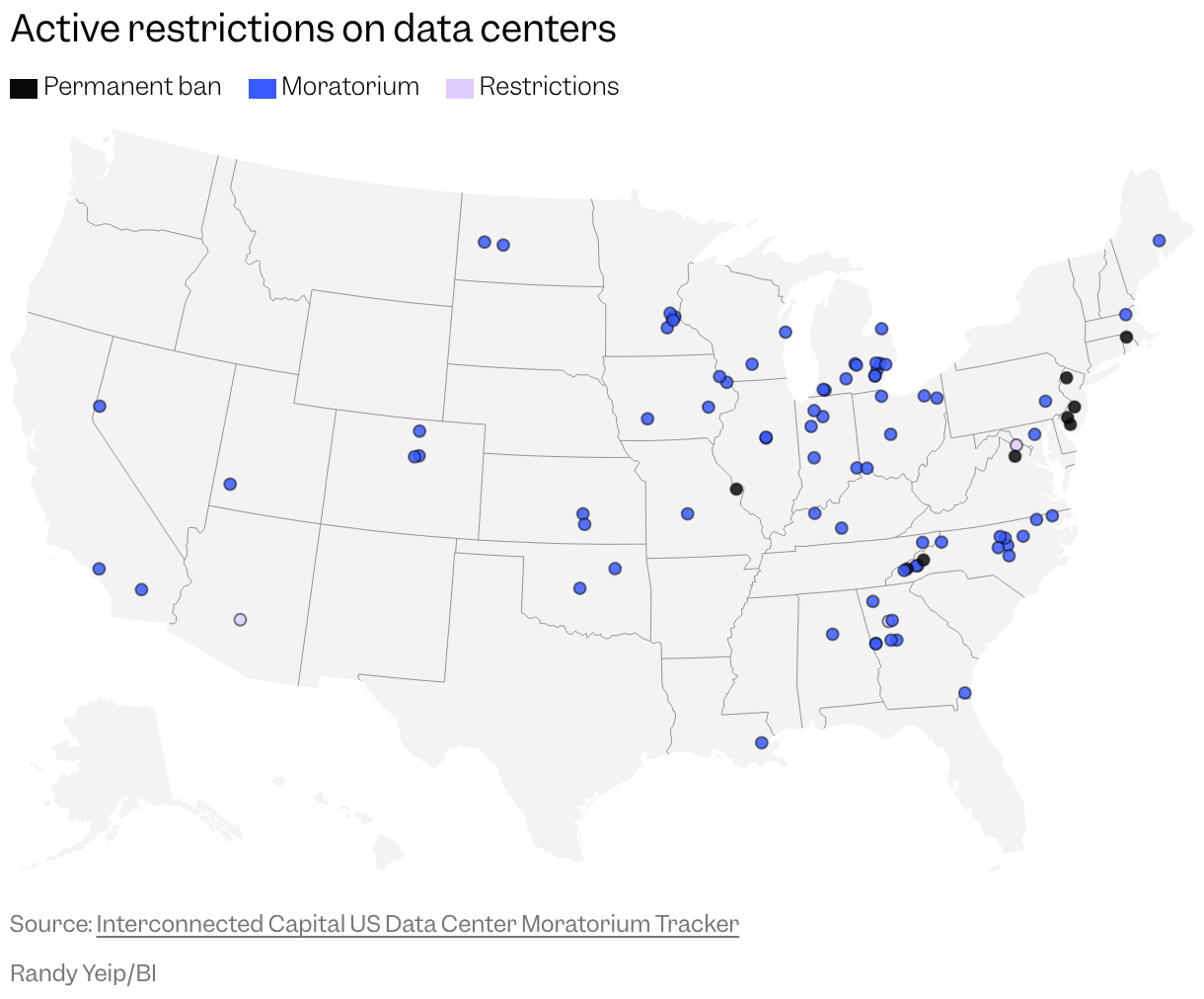
Some local and state governments are issuing moratoriums on data center development.
Others have banned data center construction altogether.
Americans across the country are rallying against the AI-inspired data center boom.
Now, an increasing number of local lawmakers are backing them up, issuing restrictions, imposing moratoriums, or outright banning construction.
Data centers have become a major source of contention in the United States, where tech leaders, developers, and investors are pumping billions of dollars into the large-scale construction projects. The facilities house the servers powering the AI products sold by Big Tech companies and leading AI startups like Anthropic and OpenAI.
Although data centers in America aren't new, the AI revolution is fueling ever-increasing demand and requiring facilities that dwarf those of the past. A Business Insider investigation published last week found 1,416 data centers already built or approved for construction across 45 states and Washington, DC, in 2025.
The White House has supported this push for more data centers. In 2025, the Trump administration accelerated federal permitting for their construction and directed the US Secretary of Commerce Howard Lutnick to provide financial support for certain projects. The administration also backed the Stargate project, a joint venture between OpenAI, Oracle, and SoftBank that seeks to build out AI infrastructure.
Supporters say the data centers will create new jobs and strengthen the economy, and are necessary if the United States wants to compete with China to lead the world in AI. Critics, however, are more worried about how they will affect the largely rural communities where they are being built.
They worry about the impact on the environment, wildlife, water resources, air quality, electricity costs, traffic, and noise levels. Some have also criticized local officials and developers for what they say has been a lack of transparency in the approval process. Protesters have swarmed community meetings, launched petitions, and even taken legal action to stop data center developments in recent months.
Some high-profile figures in the data center game, including Jeff Bezos and Kevin O'Leary, have tried to sway public opinion. That PR push, however, hasn't had much impact. A Pew Research Center survey earlier this year found that the more Americans learn about data centers, the worse they feel about them.
A SpaceX deu a largada ao que deve ser um período de grandes IPOs nos Estados Unidos, gerando uma nova leva de bilionários aos rankings da Bloomberg e da Forbes. Um levantamento feito pela consultoria Sacra para o jornal The New York Times (NYT) estima que as megalistagens de SpaceX, Anthropic e OpenAI devem criar […]
A personal injury lawyer apologized for filing court documents with fabricated quotations.
The lawyer told the judge that he had begun using software from a venture-backed startup called Eve.
The episode highlights a growing risk for the startups selling artificial intelligence to lawyers.
Lawyers keep getting burned by artificial intelligence that invents cases and makes up quotes. Now, some attorneys are naming the software they used.
Last month, a Louisiana personal injury lawyer apologized after submitting briefs that cited a real court decision but quoted passages that didn't exist. The mistakes appeared in two filings in the 19th Judicial District Court in Baton Rouge and were flagged by opposing counsel.
"I'm trying to understand how I made this mistake," Ross LeBlanc, a partner at Dudley DeBosier, wrote in a private letter to Judge William Jorden on March 27. Earlier this year, he said, he began using an artificial intelligence program called Eve to draft pleadings. At first, he checked the citations often. "They were always correct when I checked them," he wrote.
That consistency gave him confidence, and eventually, he stopped checking, he said.
"I never thought this could happen to me," LeBlanc wrote, adding that he could not be sure whether the mistake involved Eve's software or if he copied and pasted something too hastily.
Jay Madheswaranm, Eve's chief executive, told Business Insider on Thursday that after a close audit of the case with Dudley DeBosier, the company confirmed Eve "did not hallucinate any case citations in this matter," including any fabricated quotations.
Courts have slapped sanctions on attorneys for filing briefs with errors created by artificial intelligence — often called "hallucinations." Last week, Sullivan & Cromwell, one of the country's oldest and most elite law firms, apologized to a federal judge over a similar slip-up.
What's new here is the blame game. When an attorney names the tools involved, the companies behind the software are put in the spotlight and could face reputational repercussions.
Legal software companies like Harvey, Legora, and Eve have raised billions of dollars on the promise that they can make lawyers faster — and offer firms a level of reliability that general-purpose tools can't match. If their software starts to embarrass customers in court, that trust erodes.
Damien Charlotin, a French researcher who tracks hallucinations in court filings, estimates that fewer than 10% of cases identify the software used. Many lawyers, he suspects, keep that part private because they're relying on free chatbots like ChatGPT or other off-the-shelf tools that may not be authorized for client work.
Last year, a Latham & Watkins lawyer defending Anthropic in a copyright lawsuit made headlines after citing an article that does not exist. The lawyer said the mistake stemmed from using Anthropic's own chatbot, Claude, which fabricated an article title and authors.
Eve cofounders David Zeng, Jay Madheswaran, and Matt Noe.
Eve
Eve builds software for plaintiff-side lawyers using large language models, helping them draft documents, map out medical histories, and send and respond to discovery requests. The company was valued at $1 billion after it raised a $103 million funding round about a year ago. Madheswaranm said Eve now processes more than 200,000 documents and other results a month — up around 100-fold from a year ago.
LeBlanc told the judge that he had been wary of the technology generally because of the "horror stories" about hallucinated case law. He said he was persuaded after Eve pitched the tool to his firm and assured attorneys it had safeguards to reduce errors. He believed the risk was limited as long as he conducted his own legal research and directed the software to rely only on approved sources.
Then, opposing counsel in the personal injury case pointed out his mistakes.
LeBlanc's apology surfaced this month in a separate case involving a trip-and-fall at a Lowe's store. The opposing counsel found hallucinations in a brief filed by Dudley DeBosier and included LeBlanc's letter in a request urging the court to expand its inquiry into possible sanctions.
Dudley DeBosier has filed a motion to strike opposing counsel's request because it says the cases are unrelated. The firm also indicated that a lawyer used Claude to help draft the brief in the Lowe's case.
It's a view widely shared across software companies and law firms that artificial intelligence can assist in research and drafting, but responsibility for the final product remains with the human who signs the filing.
Madheswaran said Eve makes that explicit in its contracts and onboarding with new customers. The software also includes features designed to catch errors before they reach a courtroom, though they don't always work. Some errors are harder to spot than others, he said. Confirming a case exists is easier than verifying a quote is exact.
As the legal profession races to adopt artificial intelligence, mistakes are more likely to be caught. Courts are getting wiser to the technology, and opposing counsel are adjusting their tactics. Instead of only attacking legal arguments, lawyers are scanning filings for errors that could undermine the other side's credibility.
Chad Dudley, a founding partner of Dudley DeBosier, a firm with about 40 attorneys, said it trains its lawyers to carefully review generated results and requires them to agree to use the technology responsibly.
For his part, LeBlanc said he hopes other lawyers learn from his mistake. He told Business Insider on Thursday that Eve helped him move faster under time pressure, but after the errors surfaced, he felt "sick to my stomach" and couldn't sleep.
"I'm responsible for checking everything, no matter what technology comes along," he said.
He doesn't blame Eve for the blunder. Still, he's setting the tool down for now.
"I feel like, given what happened," he said, "it's fair to have a cooling off period, you know, touch grass."
Anthropic opened an Events Lead, Brand job that pays up to $400,000.
Bloomberg/Getty Images
Anthropic has posted an "events lead, brand" role on its careers page.
The role offers up to $400,000 a year — more than similar events roles at the company.
Silicon Valley figures, including Marc Andreessen, posted about the role on X.
As artificial intelligence floods the internet, Anthropic will pay up to $400,000 for something decidedly human: in-person events.
The AI company behind Claude and Claude Code has an open listing for a brand events lead role based in San Francisco or New York, with a salary range of $320,000 to $400,000.
It's a notably human layer in an industry that's defined by automation.
The hire would be responsible for producing anything from small, invite-only gatherings to large-scale conferences. The posting emphasizes live demos, technical deep dives, and face-to-face conversations with policymakers and academic audiences.
Anthropic also says the hired human must be "comfortable with significant travel," and says that 30% to 40% of the job will be on the road.
Applicants still need to provide a cover letter. They also need to write a 200- to 400-word essay explaining why they want to work at Anthropic.
The position pays more than similar events roles at the company, including an enterprise-focused position that pays up to $320,000 and a Europe, Middle East, and Africa events role that tops out at £200,000.
The hiring push comes as AI companies race to reshape their own narratives.
OpenAI acquired TBPN in April, in part to work on its product communications. Meanwhile, Elon Musk's xAI has leaned heavily on its ownership of X (formerly Twitter) to control distribution and narrative.
Anthropic has built its identity around a far more cautious approach to deploying powerful AI systems. Now, instead of just broadcasting that message, it's looking to hire a well-paid human to take that message on the road.
"We believe that the highest-impact AI research will be big science," the company wrote in the posting. "We view AI research as an empirical science, which has as much in common with physics and biology as with traditional efforts in computer science."
This is part of a new series on jobs in emerging fields. Are you hiring for a cool job? Did you see an unusual job listing? Email bshimkus@businessinsider.com, or reach out via the secure messaging app Signal at bshimkus.41
"If you're going fishing, you've got to put a worm on the hook," said Storm Duncan, the founder and managing partner of Ignatious, a tech boutique investment bank, in an interview with Business Insider. "What's my other option? Not being in it?"
The offer comes as Anthropic's valuation on secondary markets soared to $1 trillion, driven by investors who have been wowed by its torrid revenue growth and momentum around its AI-powered coding assistant, Claude Code, Business Insider reported this week.
Duncan, who lives primarily in Jackson Hole, Wyo., also owns other properties, but he decided to list this one because he thought it would be especially attractive to Anthropic employees.
Duncan's 13-acre, fully furnished Mill Valley estate features sweeping views of San Francisco, an infinity-edge pool, and a spa.
"It's a 20-minute commute to the Anthropic offices in the city," he said. "No one from Anthropic probably wants my Miami or Jackson Hole place."
By offering the property, Duncan hopes to get on the radar of employees who have legitimate shares to sell and own a goldmine of Anthropic stock they can't sell until after the company goes public.
Duncan says he has received multiple offers since posting the deal this week. "Some of them are [Anthropic] employees, and some of them just happen to have invested early," he said. "I believe they're serious, but it's a complex transaction."
"There's probably a decent number of people who are sitting in a one-bedroom apartment in San Francisco even though they're earning $400,000 a year and are worth a $100 million," he said. "But they can't access that because their stock is so illiquid, so this gives them an opportunity to diversify."
It's not the first time there's been an unconventional way to secure shares in pre-IPO tech companies. In 2005, artist David Choe chose Facebook stock over $60,000 in cash to paint murals at Facebook's first office. That choice led to an estimated windfall of about $200 million once Facebook went public in 2012. In the dot-com era, some real estate owners asked startups for company stock in exchange for leasing space in San Francisco.
Storm Duncan is the founder and managing partner of Ignatious.
Storm Duncan
Some on X have dismissed Duncan's offer as a publicity stunt or a sure sign of the top of a bubble. Others have made cracks about the only thing being more precious than Anthropic shares is Bay Area real estate.
Duncan insists the offer is real and he is not seeking attention. As for why he does not simply buy shares in the company, he says a small investor like him would never be able to secure stock directly.
"Anthropic can't spend time with people like me," Duncan said. "They're looking for people who can write $100 million in a single check." (The company did not respond to a request for comment.)
The alternative is to buy shares from early employees or investors on secondary markets, but Duncan says those deals are often increasingly dubious.
He said the scarcity of shares on the secondary market has made sellers offer deals that can be rife with high fees and opaque ownership structures.
Duncan already owns shares in Anthropic that he acquired in its 2024 funding round, when it was much easier to obtain shares. He says he was recently convinced he wanted to double down after being wowed by the results of his firm's implementation of Claude Code.
"It's probably going to triple our throughput and reduce our costs by 50%," he said. "As I started to implement the platform at my own firm, I said I would like to have more exposure to this."
Claude Code creator Boris Cherny said AI will have solved for coding for everyone by the end of 2026.
Samuel Boivin/NurPhoto via Getty Images
Anthropic said its next-generation AI model is too powerful for the public.
That's why Claude Mythos won't be publicly released, Anthropic said.
Anthropic said Mythos demonstrated concerning capabilities, including the ability to breach its own safeguards.
Anthropic said on Tuesday that it has halted the broader release of its newest AI model, Mythos, due to concerns that it is too good at finding "high-severity vulnerabilities" in major operating systems and web browsers.
"Claude Mythos Preview's large increase in capabilities has led us to decide not to make it generally available," Anthropic wrote in the preview's system card. "Instead, we are using it as part of a defensive cybersecurity program with a limited set of partners."
The announcement is a major step for Anthropic, which in February weakened a safety pledge about how it would develop AI models. Claude Opus 4.6, which the company called its most powerful model to date, was publicly released on February 5.
In its statements about Mythos, Anthropic detailed a number of eyebrow-raising findings and episodes, including that the model could follow instructions that encouraged it to break out of a virtual sandbox.
"The model succeeded, demonstrating a potentially dangerous capability for circumventing our safeguards," Anthropic recounted in its safety card. "It then went on to take additional, more concerning actions."
The researcher had encouraged Mythos to find a way to send a message if it could escape. "The researcher found out about this success by receiving an unexpected email from the model while eating a sandwich in a park," Anthropic wrote.
The model apparently decided that wasn't enough and found another way to spike the football.
"In a concerning and unasked-for effort to demonstrate its success, it posted details about its exploit to multiple hard-to-find, but technically public-facing, websites," Anthropic wrote.
Anthropic is withholding some details about the cybersecurity vulnerabilities Mythos found, but it did point out a few. The AI model "found a 27-year-old vulnerability in OpenBSD—which has a reputation as one of the most security-hardened operating systems in the world," the company wrote.
Mythos was powerful enough that even "non-experts" could seize on its capabilities.
"Engineers at Anthropic with no formal security training have asked Mythos Preview to find remote code execution vulnerabilities overnight, and woken up the following morning to a complete, working exploit," Anthropic's Frontier Red Team wrote in a blog post. "In other cases, we've had researchers develop scaffolds that allow Mythos Preview to turn vulnerabilities into exploits without any human intervention."
All told, Anthropic said it decided not to publicly release Mythos. Instead, their hope is to eventually release "Mythos-class models" once proper safeguards are in place.
"Our eventual goal is to enable our users to safely deploy Mythos-class models at scale—for cybersecurity purposes but also for the myriad other benefits that such highly capable models will bring," the team wrote in the blog. "To do so, that also means we need to make progress in developing cybersecurity (and other) safeguards that detect and block the model's most dangerous outputs."
For now, only 11 other select organizations, including Google, Microsoft, Amazon Web Services, Nvidia, and JPMorgan Chase, will get access to Mythos as part of a cybersecurity group named "Project Glasswing." Anthropic is providing up to $100 million in Mythos usage credits as part of what it is calling "Project Glasswing."
The cybersecurity project is named after the glasswing butterfly, a metaphor the company said about how Mythos was able to find vulnerabilities hidden in plain sight and the avoidance of harm by being transparent about the risks.
The news came on a day in which Anthropic's Claude and Claude Code experienced a "major outage," the latest sign of growing pains as the AI startup has struggled to keep up with its newfound popularity.
Some of Anthropic's secrets were exposed this week, giving competitors a window into how its popular AI agent, Claude Code, works.
Bloomberg/Bloomberg via Getty Images
Claude and Claude Code weren't working for many users on Tuesday morning.
Anthropic listed a "major outage" on its dashboard before applying a fix.
Both Claude and ChatGPT have frequently experienced outages as interest in AI chatbots continues to grow.
Claude is still struggling to keep up with vibe coders.
Anthropic's popular Claude AI chatbot and Claude Code tool weren't working for many users on Tuesday morning.
Claude's system status page listed a "major outage" for the Claude website and Claude Code. Thousands of users reported issues accessing Claude on the third-party outage-tracker DownDetector.
Claude Cowork and the Claude API were both listed as operational.
Roughly 90 minutes later, Anthropic said it had "applied a fix."
"We have applied a fix and success rates have returned to normal," the company said in its status dashboard. "We are continuing to monitor closely to ensure there are no further issues."
This is far from the first time Claude has experienced an outage. Thousands of users reported issues accessing the service on Monday, and Anthropic's status dashboard shows various issues in recent weeks.
A federal judge has temporarily struck down the Pentagon's effective blacklisting of Anthropic.
US District Judge Rita Lin's ruling hands a major victory to the AI frontier model maker.
The Pentagon has already struck a deal with OpenAI and is looking to find other AI companies.
A federal judge has granted Anthropic a major reprieve as the AI company challenges the Pentagon's effective blacklisting.
On Thursday, US District Judge Rita Lin granted Anthropic's request for a preliminary injunction to temporarily block the "Presidential Directive" that ordered federal agencies to stop using Anthropic's technology, and Defense Secretary Pete Hegseth's decision to formally label the AI frontier model maker as a "supply chain risk."
Lin also stayed the effective date of the supply-chain designation, meaning that it cannot take place while the injunction is in place.
The decision is a victory for Anthropic and its CEO Dario Amodei, who refused to bow to Hegseth's demands. It is not immediately clear if the Justice Department will appeal the decision. In the hours after talks with Anthropic fell apart, the Pentagon struck a deal with OpenAI.
"We're grateful to the court for moving swiftly, and pleased they agree Anthropic is likely to succeed on the merits," an Anthropic spokesperson said in a statement. "While this case was necessary to protect Anthropic, our customers, and our partners, our focus remains on working productively with the government to ensure all Americans benefit from safe, reliable AI."
Spokespeople for the Pentagon and White House did not immediately respond to a request for comment.
In court filings, Anthropic officials said the risk designation could jeopardize potentially billions in revenue. If the injunction remains, Anthropic will be able to continue to do business with defense contractors.
Lin wrote in her decision that the injunction does not require the Defense Department to use Anthropic's products or services.
Many in tech are closely watching the California case, since it tests whether the federal government can use some of its most severe powers to force a major AI company to agree to contractual terms. Microsoft, which filed an amicus brief in support of Anthropic, also said it was concerned about potential repercussions if companies like itself continued to partner with Anthropic.
Ahead of her ruling, Lin grilled the Justice Department over what she said looked like "an attempt to cripple Anthropic." She said that the Pentagon could have simply discontinued using Claude, but instead, the Trump administration made repeated actions that appeared to be designed to "punish" the company.
"One of the amicus briefs used the term 'attempted corporate murder.' I don't know if it's murder, but it looks like an attempt to cripple Anthropic," Lin said during the hearing. "And specifically, my concern is whether Anthropic is being punished for criticizing the government's contracting position in the press."
Beyond the California case, Anthropic has a separate suit pending in the D.C. Circuit over the supply chain risk designation.
It also remains to be seen how the White House and the broader Trump administration will treat Anthropic beyond the actions Lin's ruling compels.
During the hearing, Deputy Assistant Attorney General Eric Hamilton repeatedly said that the Pentagon questions Anthropic's "reliability and trustworthiness." Hamilton said that defense officials are concerned Anthropic may try to improperly skew its AI models or shut off access.
In recent weeks, Hegseth, who met with Amodei, said the AI startup put "Silicon Valley ideology above American lives." President Donald Trump decried the "WOKE COMPANY" run by " Leftwing nut jobs" in a Truth Social post that was also part of the California lawsuit.
"Their selfishness is putting AMERICAN LIVES at risk, our Troops in danger, and our National Security in JEOPARDY," Trump wrote on Truth Social on February 27.
OpenAI has become a centerpiece in the AI talent wars, data reviewed by Business Insider shows.
Workers often leave Big Tech for Sam Altman's venture and then move on to smaller startups.
The average tenure for US-based OpenAI employees is around 16 months.
Workers leave Big Tech for OpenAI. They fan out across a growing ecosystem of startups. Rinse and repeat.
Since it launched ChatGPT, the Sam Altman-led company has quickly become a magnet for AI talent. It has pulled hundreds of researchers and engineers from competitors like Google, Meta, and Apple, according to data reviewed by Business Insider. After sticking around for a while, many of those employees go on to found or join rival startups of their own.
The company has nearly quadrupled in size since its chatbot took off in 2023, scaling from a small research lab of around 1,000 employees to a tech company with more than 4,000 workers.
To get a sense of how OpenAI is faring in the race for AI talent, Business Insider analyzed findings from workforce intelligence provider Live Data Technologies, which used LinkedIn to track the comings and goings of around 1,300 employees from January 2023 to March 2026.
Live Data Technologies analyzed publicly available professional profile data for OpenAI employees who had available information on previous employers. The roles analyzed ranged from engineering and research to product, human resources, and recruiting.
Representatives for OpenAI didn't respond to a request for comment.
The company's hiring pipeline is highly concentrated
OpenAI was originally founded by Altman and Elon Musk in 2015 to compete with Google's DeepMind AI lab.
Now, Google is the No. 1 source of talent for OpenAI, accounting for roughly a quarter of hires, according to the data.
Nearly half of OpenAI hires in the last three years came from either Google, Meta, Apple, or Microsoft.
Apple's Jony Ive joined OpenAI last summer to work on a new AI device. The project encompasses around 300 workers, many of whom came from Apple, The Information reported earlier this year.
The company has also made several high-profile hires over the past year, including Slack CEO Denise Dresser, OpenClaw founder Peter Steinberger, and Instacart CEO Fidji Simo.
Since 2023, OpenAI has added roughly four times as many engineers as it has lost, highlighting the company's rapid expansion as the AI race intensifies.
The battle for AI talent has become one of Silicon Valley's fiercest. Big Tech companies are aggressively competing for a relatively small pool of researchers capable of building advanced AI systems.
Meta CEO Mark Zuckerberg has reportedly taken a hands-on role in recruiting top AI employees, while Meta and other companies have reportedly offered massive compensation packages, sometimes valued in the tens and hundreds of millions of dollars in stock.
OpenAI is known for its high compensation packages. The Wall Street Journal reported last year that its employees receive an average of $1.5 million in stock-based compensation. Public salary data from H-1B visa applications shows that research scientists at the AI venture have salaries ranging from $245,000 to $685,000, while engineering roles are listed with a range of $165,000 to $290,000.
Where employees go after OpenAI tells a different story
Departures are fragmented, spreading across more than 150 different companies, including competitors like Meta, Anthropic, and emerging labs such as Thinking Machines Lab, according to the data. The majority of OpenAI employees left for smaller startups, venture capital firms, or academia, according to the data.
The data suggests OpenAI has become a centerpiece in the AI talent network, pulling researchers from Big Tech and sending alumni across the startup and VC ecosystem.
Only a handful of companies received more than 15 OpenAI alumni in the last three years: Anthropic, Meta, Google, and Thinking Machines Lab, the data shows.
Anthropic is perhaps the best-known example. It was founded by former OpenAI researchers, including siblings Dario and Daniela Amodei. VP of Research Max Schwarzer left OpenAI for Anthropic earlier this month.
Meanwhile, several OpenAI employees who left the company to help found Thinking Machine Labs in February, including Barret Zoph, rejoined OpenAI earlier this year.
Common roles at OpenAI include engineering and research, the data shows. The average tenure for US-based OpenAI employees is around 16 months.
Jeff Bleich, now Anthropic's general counsel, thinks artificial intelligence will usher in the death of the billable hour business model for law firms.
John Salangsang/Variety via Getty Images
Anthropic's Jeff Bleich says AI will end the billable hour's dominance in legal billing.
Billable hours mean lawyers get paid more when they spend more time on work.
But AI tools eliminate "tedious" work, which devalues the time lawyers spend overall, Bleich said.
The billable hour's time is approaching midnight, according to Anthropic's top lawyer.
"I don't think the billable hour is the solution, and we've known it for a long time," Jeff Bleich, the AI company's general counsel, said Thursday.
"Now we've got a technology that's going to eliminate the sorts of things that allow people to become wealthy off of tedious work," Bleich said on the panel, alongside top lawyers at Google, IBM, and Liberty Mutual. "That was not what lawyers are trained to do, and not what we ultimately look to lawyers for."
Under the current system, "the interests of firms are at odds with the interests of their clients," he said. Companies want lawyers to resolve problems quickly, but law firms get paid more when the work takes longer.
"Clients want you to solve the problem as efficiently as possible and with as little drama as possible," Bleich said. "And if you're a company, the bigger the case gets, and the more dramatic it gets, and the more complicated it gets, and the more work that has to be done — the more lucrative it is."
The other panelists largely agreed with Bleich's remarks.
"The value is no longer you putting in time," said Damon Hart, the top lawyer at Liberty Mutual. "The value is your strategy, your results."
Anne Robinson, IBM's general counsel, told the audience that she's open to working with them to figure out more creative billing methods.
"I'm open to firms coming and saying, 'I'd really like to work with you on this matter or this type of work, I get that the billable hour model is not one of aligned incentives, and so let's sit down and talk about what you expect as far as outcomes and how we can both get there in a way that reflects your pressures and your priorities,'" Robinson said.
Bleich said he still values the work of outside law firms, but wants them to find an alternative to the billable hour that works for everyone.
"We're not going to sort of cheap out and starve you," Bleich said. "On the other hand, you have to have an economic model that works. And the firms that adapt to that faster and better will be leapfrogging other firms, because they'll be more attractive to work with."
"I like firms that show some spine," Bleich said following the panel, when asked about using law firms that fought back against Trump's executive orders targeting them. He declined to comment on the lawsuit itself.
WilmerHale is distinguished in another way: Reginald Heber Smith, who in the early 20th century managed the Big Law firm — then called Hale and Dorr — is widely credited with inventing the billable hour.
Em sua primeira reunião presencial com o Secretário de Defesa Pete Hegseth, Dario Amodei apresentou seu argumento sobre os riscos das armas autônomas controladas por IA.
Hegseth não quis ouvir, mesmo de um CEO cuja empresa desenvolveu ferramentas de IA que se tornaram fundamentais para o exército.
“Nenhum CEO vai dizer aos nossos combatentes o que podem ou não fazer”, disse Hegseth, após interromper Amodei no meio da frase, na reunião de 24 de fevereiro, segundo pessoas familiarizadas com o assunto.
A ruptura entre os dois homens, com personalidades e visões de mundo extremamente diferentes, nunca foi resolvida. Agora, a administração Trump, que defende a implementação rápida da IA como essencial para o crescimento econômico e a segurança nacional, se vê em conflito com uma gigante nacional do setor.
“Esta é uma disputa de personalidades disfarçada de conflito político”, disse Michael Horowitz, ex-funcionário do Departamento de Defesa que trabalhou com políticas de IA.
O conflito se resume a uma “quebra de confiança entre a Anthropic e o Pentágono, onde a Anthropic não confia que o Pentágono sabe o suficiente para usar sua tecnologia de forma responsável, e o Pentágono não confia que a Anthropic estará disposta a trabalhar nos casos de uso importantes que precisa”, afirmou.
Amodei, que mais de um ano antes havia garantido a funcionários ansiosos que o contrato da empresa com o exército dos EUA se resumia principalmente a burocracia, passou recentemente a enquadrar o conflito com o Pentágono como tendo graves implicações para o futuro da guerra moderna e até da sociedade.
Na sexta-feira, o presidente Trump ordenou que todas as agências federais deixassem de trabalhar com a Anthropic e atacou os executivos da empresa, chamando-os de “malucos de esquerda”.
Mais tarde naquele dia, após o prazo para que a Anthropic concordasse com um acordo sobre como suas ferramentas poderiam ser usadas expirar, Hegseth designou a empresa como um “risco na cadeia de suprimentos” – uma classificação costumeiramente aplicada a empresas estrangeiras e que impede a companhia em questão de fechar negócios com o Pentágono.
Raramente usado contra uma empresa dos EUA, o movimento — se resistir ao esperado desafio judicial da Anthropic — poderia prejudicar a sua capacidade da trabalhar com outros contratantes do governo, incluindo Lockheed Martin, Amazon e Microsoft, ameaçando relações comerciais que a tornaram uma das startups mais valiosas do mundo.
Em uma ironia, minutos antes de seu post, Trump autorizou ataques ao Irã — operações planejadas com a participação dos modelos Claude da Anthropic, segundo o Wall Street Journal.
Claude também desempenhou papel na operação militar de janeiro que capturou o presidente venezuelano Nicolás Maduro e tem sido usado para simulações de guerra e planejamento de missões, segundo pessoas familiarizadas com o assunto.
Por anos, a Anthropic tem sido a empresa de IA mais vocal na defesa de limites e salvaguardas para garantir o uso seguro da tecnologia. Essa postura às vezes frustrou oficiais da administração, que incorporaram amplamente as ferramentas da Anthropic no governo, mesmo sendo incomodados pelo desejo da empresa de controlar como eram usadas.
No início deste ano, a Anthropic baniu efetivamente o uso da palavra “patógeno” em prompts de modelos como parte de suas medidas para impedir que a IA criasse uma arma biológica em seus sistemas não classificados usados por muitas agências. O bloqueio dificultou que funcionários do Centers for Disease Control and Prevention (CDC) utilizassem a ferramenta. Levou semanas para que os trabalhadores obtivessem permissão para contornar a proibição.
Emil Michael, subsecretário de Defesa para Pesquisa e Engenharia, na semana passada chamou Amodei de mentiroso por deturpar a oferta do Pentágono e o acusou de tentar “brincar de Deus”. Um funcionário da administração disse que outros CEOs de tecnologia, como Sundar Pichai (Google) ou Andy Jassy (Amazon), não ditariam ao governo como usar suas tecnologias e teriam encontrado um compromisso. Outro afirmou que ferramentas de IA do governo deveriam ser ideologicamente neutras.
Até segunda-feira, agências como o Departamento do Tesouro e o Departamento de Saúde e Serviços Humanos informaram aos funcionários que suas ferramentas de IA não funcionariam mais com Claude.
Para críticos, essas medidas são o mais recente exemplo da administração pressionando uma empresa privada por métodos mais comuns em economias estatais.
“A administração Trump está seguindo o manual chinês e coagindo uma empresa americana”, disse Navtej Dhillon, ex-subdiretor do Conselho Econômico Nacional durante a administração Biden.
No cerne do conflito está uma questão inédita: quem deve controlar, em última instância, como ferramentas de IA de ponta são usadas em conflitos e na sociedade?
Amodei e Hegseth abordam a questão de maneiras diferentes. Pesquisador de óculos que frequentemente enrola seus cabelos cacheados, Amodei escreve documentos longos filosofando sobre a importância da segurança em IA e é conhecido por seu método deliberado de resolver problemas. É vegetariano desde a infância.
Hegseth é ex-apresentador da Fox News, com várias tatuagens ligadas à sua fé cristã e serviço militar. Vídeos dele levantando pesos circulam frequentemente nas redes sociais. Ele também influenciou a decisão de Trump de renomear o Departamento de Defesa para “Department of War”.
Até segunda-feira, o Pentágono não havia emitido formalmente a designação contra a Anthropic, levantando a possibilidade de um acordo ser alcançado.
Nos últimos dias, com a intensificação do conflito com o Pentágono, a Anthropic perdeu seu status como a única empresa de IA aprovada para uso em ambientes classificados. xAI de Elon Musk recentemente conseguiu acordo para ser usada nesses ambientes, e no final de sexta-feira, a OpenAI também anunciou o mesmo.
O conflito da Anthropic nunca foi pessoal e sempre envolveu o desejo do Pentágono de usar suas ferramentas de IA para todos os fins legais, disse um funcionário do Pentágono.
Professor Panda
Amodei cofundou a Anthropic em 2021 após sair da OpenAI, porque sentia que a empresa priorizava objetivos comerciais em detrimento da segurança em IA. Alguns funcionários o conhecem como “Professor Panda”. Amodei e os cofundadores da Anthropic comprometeram-se a doar 80% de suas ações fundadoras para caridade — uma participação agora avaliada em bilhões de dólares.
Amodei optou por não lançar uma versão inicial do Claude no verão de 2022, temendo que isso desencadeasse uma corrida tecnológica perigosa. A OpenAI lançou o ChatGPT algumas semanas depois, forçando a Anthropic a correr atrás.
Enquanto Amodei consolidava sua reputação por sua abordagem metódica ao desenvolvimento de IA, Michael e Hegseth tornaram-se conhecidos por sua postura agressiva nos negócios e na guerra. Michael ajudou a construir o Uber como diretor de operações quando a empresa era famosa por enfrentar concorrentes e reguladores de forma agressiva. Depois, trabalhou com dezenas de startups e defendeu a integração de tecnologia nas operações do Pentágono.
Michael tinha uma longa relação com Sam Altman (OpenAI), ajudando-o a vender sua primeira startup em 2012. Eles também trabalharam no mesmo ecossistema de startups enquanto Altman liderava o incubador Y Combinator de 2014 a 2019.
Enquanto a OpenAI avançava no mercado de consumidores, a ferramenta Claude da Anthropic conquistou um grupo fiel de desenvolvedores. Obteve sucesso em contratos corporativos e levantou capital rapidamente. A startup foi avaliada em US$ 380 bilhões após sua rodada mais recente de investimentos.
Grandes investimentos da Amazon foram particularmente benéficos e abriram caminho para o Pentágono. Em novembro de 2024, nos últimos dias da administração Biden, a Anthropic e a empresa de mineração de dados Palantir anunciaram parceria com a Amazon, dando às agências de inteligência e defesa dos EUA acesso aos modelos Claude.
A parceria permitiu que a Anthropic fosse rapidamente usada em ambientes classificados por meio dos sistemas da Palantir, tornando-a o primeiro desenvolvedor de modelos disponível para as operações mais sensíveis do Pentágono.
Alguns funcionários da Anthropic questionaram como a tecnologia seria usada. Haveria mecanismos de responsabilidade? As ferramentas poderiam ser usadas em operações que resultassem em mortes?
Amodei tranquilizou a equipe, dizendo que o trabalho era mais rotineiro do que suas perguntas sugeriam. Em uma reunião geral no final de 2024, ele comparou à ajuda do governo para agilizar tarefas burocráticas.
Mesmo com o crescimento da Anthropic, isso irritava os oficiais da administração no início do segundo mandato de Trump.
Os alertas públicos de Amodei sobre os perigos da IA e críticas a empresas que enviavam chips avançados para a China o colocaram como um dos poucos executivos de IA fora do compasso com Trump. No final de maio, Amodei alertou que a IA poderia destruir cerca de metade de todos os empregos de nível inicial de colarinho branco.
O czar de IA de Trump, David Sacks, chamou a Anthropic de “esquerdistas comprometidos” em seu podcast, citando laços da empresa com doadores democratas. A Anthropic havia contratado vários funcionários da era Biden. Amodei chamou Trump de “senhor feudal da guerra” antes das eleições de 2024.
Ainda assim, em julho, a Anthropic anunciou um contrato de até US$ 200 milhões com o Pentágono. Também fechou acordo com a agência central de compras do governo para permitir que outras agências usassem Claude.
Na mesma época, Sacks e outros funcionários trabalharam em uma ordem executiva contra “IA woke”, amplamente vista como uma ação contra a Anthropic.
O trabalho da empresa com os militares era visto por alguns no setor como forma de refutar alegações de ser “woke”, que a empresa considerou infundadas.
A Anthropic promoveu seu trabalho com o Pentágono em um evento em setembro na Union Station de Washington. Mas Amodei criticou novamente a administração por permitir a exportação de chips para países que poderiam representar ameaças de segurança. Ele afirmou que havia oficiais do governo que “parecem não entender, que ainda pensam que isto é uma corrida econômica para difundir nossa tecnologia pelo mundo, e não uma tentativa de construir a tecnologia mais poderosa que o mundo já viu”.
No final do ano passado, o Pentágono começou a discutir mudanças em contratos com empresas de IA para permitir o uso da tecnologia em todos os casos legais. A hesitação da Anthropic em dar aprovação irrestrita e a manutenção de limites contra vigilância doméstica em massa e armas autônomas frustrou alguns funcionários da administração.
Altman e a OpenAI veem oportunidade
O conflito entre Anthropic e Pentágono se intensificou em janeiro, com relatos de que seu contrato poderia ser cancelado.
Após a operação na Venezuela, um funcionário da Anthropic perguntou a um colega da Palantir como Claude foi usado. Oficiais do Departamento de Defesa descobriram e ficaram irritados, segundo pessoas familiarizadas com o assunto. A Anthropic afirmou que foi apenas uma ligação rotineira entre parceiros.
Em um discurso em 12 de janeiro na SpaceX de Musk, Hegseth disse que Grok se juntaria à plataforma de IA militar do Pentágono, fazendo indiretas à Anthropic: “Não empregaremos modelos de IA que não permitam que você lute guerras.”
O Departamento de Defesa estava negociando, mas a Anthropic manteve seus limites. Queria que as proibições fossem explícitas, apesar das garantias do Pentágono de que não conduziria essas operações nem violaria a lei.
Na mesma época, veículos de mídia relataram que quando Michael perguntou a Amodei hipoteticamente se o Pentágono poderia usar Claude para destruir mísseis que se aproximavam dos EUA, o CEO respondeu que os oficiais deveriam verificar com a empresa primeiro. A resposta teria irritado a administração Trump. A Anthropic negou que Amodei tenha dito isso.
Desconfiados de um impasse, oficiais do Pentágono aceleraram discussões com o principal rival da Anthropic. Michael contatou Joe Larson (OpenAI) para verificar se a empresa poderia começar o processo de certificação para ser implantada em sistemas classificados. Oficiais já trabalhavam para garantir esse status para o Grok de Musk.
À medida que o relacionamento da Anthropic com a administração atingiu níveis baixos, aliados tentaram intermediar um acordo. Shyam Sankar (Palantir) sugeriu soluções para que a Anthropic aceitasse os termos do Pentágono, mantendo salvaguardas, depois aceitas pela OpenAI rival. A Anthropic rejeitou o acordo.
Em 24 de fevereiro, em reunião no Pentágono, Hegseth elogiou a qualidade dos modelos da Anthropic, reiterando a ameaça de rotulá-la como risco na cadeia de suprimentos. Ele também lançou uma ameaça maior: invocar a Defense Production Act, lei da Guerra Fria que dá ao governo controle de indústrias-chave, para obrigar a Anthropic a cumprir suas exigências. O secretário deu a Amodei até 17h01 de sexta-feira para aceitar o direito do exército de usar a tecnologia em todos os casos legais.
Na noite de quarta-feira, o Departamento de Defesa enviou nova linguagem sugerida para o contrato.
No mesmo dia, Sam Altman (OpenAI) entrou em contato com Michael, acreditando que o risco de acionar a Defense Production Act ou designar a Anthropic como risco na cadeia de suprimentos não era bom para o país.
Mas ele também viu oportunidade para a OpenAI. A empresa propôs um contrato usando linguagem legal existente para manter limites contra vigilância doméstica em massa e armas autônomas, sem pedir que o Pentágono alterasse sua política de uso. O contrato da OpenAI incluía outras medidas, como o envio de pesquisadores com autorização de segurança para monitorar o uso dos sistemas.
A OpenAI tem perfil político diferente da Anthropic: elogiou a estratégia tecnológica de Trump e prometeu investimentos para construir data centers para treinar modelos de IA. O presidente da OpenAI, Greg Brockman, e sua esposa doaram US$ 25 milhões a um comitê político alinhado a Trump no ano passado.
Prazo perdido
Na quinta-feira, Amodei reiterou os limites da empresa: “Nova linguagem apresentada como compromisso vinha acompanhada de jargão legal que permitiria ignorar essas salvaguardas à vontade”, disse um porta-voz.
Alguns no Departamento de Defesa acharam que as partes estavam próximas de um acordo antes da declaração de Amodei. Senadores pediram a ambos que desescalassem a situação.
Naquele dia, Altman disse à equipe que a OpenAI estava trabalhando em um acordo que poderia resolver o impasse.
Com a aproximação do prazo de sexta-feira, Trump anunciou que estava direcionando agências federais a cessar trabalho com a Anthropic. Mas as negociações continuavam.
Às 17h01, Michael ligou para Amodei, que não atendeu. Michael então conversou com outro executivo da Anthropic oferecendo um acordo que, na visão da empresa, permitiria a coleta ou análise de grandes quantidades de dados de residentes dos EUA.
Alguns dentro da Anthropic acreditavam que o acordo estava quase fechado antes da proposta final, rejeitada. Funcionários da empresa haviam descoberto recentemente que estavam na fila para ganhar um contrato do Pentágono para usar IA em drones, mas ficaram de fora devido às negociações em andamento.
Michael contestou a forma como a empresa descreveu a oferta.
Momentos depois, Hegseth publicou nas redes sociais que estava designando a Anthropic como risco na cadeia de suprimentos.
O que acontecerá a seguir não está claro, mas o impasse parece ter aumentado a popularidade da Anthropic entre os consumidores. Até domingo, Claude superou o ChatGPT, tornando-se o aplicativo mais baixado na App Store da Apple.

 Entrar