OpenAI will not go public in 2026, CEO Sam Altman said in remarks published on Saturday, citing safety concerns over artificial intelligence that render "unacceptable" even a 10% risk that AI could cause human extinction by decade's end.
The comments come as more US lawmakers urge new rules to govern AI systems after dire warnings from two researchers from OpenAI rival Anthropic that rapidly progressing AI could lead to the extinction of the human race in the not-too-distant future.
"I actually think that, given everything happening with safety, right now would be an ill-advised moment to go public, and we don't feel pressure on that," Altman told business magazine Fortune.
Asked if there was a 10% chance of AI-driven extinction, Altman said he did not know how such an estimate could be made, but warned the risk was serious enough that AI companies and governments should act as though it could not be tolerated.
"Whether it's 10 or eight or six, the point is, we all have a tremendous amount of responsibility, and cannot let egos or incentives for profit or anything else get in the way," Altman added.
"We need to act such that we are not taking any of those numbers of risk, and I believe we can."
Asked by Fortune if an IPO date of 2026 was off the table in favor of 2027, Altman said, "I would say not 2026."
"We got a lot of stuff to do, like meeting this moment of what is going to be required for safety and alignment, and how the industry and governments can work together."
Altman also suggested that OpenAI and other leading AI firms may be close to unveiling a pact to slow AI development and work together to tackle safety risks, Fortune said.
Call for more deliberate approach
On Saturday, Anthropic CEO Dario Amodei urged AI companies to take a more deliberate approach to development.
"We must slow the pace at which we improve the capabilities of AI models," Amodei wrote in an essay on X.
Altman later posted that he agreed with the sentiment.
"I agree with Dario that we need to pace the frontier," Altman wrote. "This has been a primary topic of discussions we've had at OpenAI in recent weeks."
Safety concerns have not slowed Anthropic's own IPO plans. It is expected to begin marketing its initial public offering in mid-October at the earliest and complete the listing days before the US midterm elections in November, people familiar with the matter told Reuters this month.
China's annual token consumption is expected to reach 100 quadrillion this year, as the country's AI industry shifts its focus from competition in large models and computing power to the large-scale deployment and commercialization of AI agents, according to a new report.
AI is now entering a new stage of development in which AI agents are becoming a primary form of application, said a report titled "Research Report on AI Infrastructure Development in the Agent Era (2026)" released by the China Telecom Research Institute on Saturday.
AI agents are making complex AI technologies invisible and accessible, which allows individuals and enterprises to complete sophisticated, end-to-end tasks without mastering specialized technical expertise, it said.
Rao Shaoyang, director of the industry and enterprise strategy institute at the China Telecom Research Institute, said China's annual token consumption is expected to reach 100 quadrillion in 2026 and exceed 35 quintillion by 2030 – a compound annual growth rate of nearly 12-fold.
That is to say, roughly 274 trillion tokens are expected to be consumed a day in 2026, or about 3.2 billion tokens consumed every second, compared to over 140 trillion per day as of March this year.
The surge of AI agents will drive sustained, rapid growth in China's demand for computing power, said Rao. China's computing power demand is expected to increase by nearly tenfold annually over the next two to three years. In terms of the structure of that demand, inference computing will far outpace training computing, and by 2029, inference computing is projected to account for 80% of China's computing market.
Chinese companies are already preparing for the surge in token consumption.
Qian Ling, a chief expert at China Mobile, said the group has established two high-level management institutes for computing power and tokens, to coordinate the development of computing infrastructure and token consumption.
"We estimated that the average daily token output of China Mobile was about 3.4 trillion tokens last year, and the production capacity will for sure surpass that level this year," said Qian.
According to the global market research firm International Data Corporation, the number of active AI agents worldwide is expected to expand from roughly 28.6 million in 2025 to 79.4 million in 2026 and 2.216 billion by 2030.
China released a list of the world's leading science and technology journals at the opening of the 2026 Pujiang Innovation Forum in Shanghai on Saturday.
The 2025 list covers 6,132 journals from 55 countries and regions, published in 23 languages. The list includes 353 Chinese journals.
The Institute of Scientific and Technical Information of China compiled the list, together with related research institutions, based on the world science citation database and an evaluation index system for world-class sci-tech journals.
In the 2025 list, the US and the UK ranked first and second among the top ten countries, with 1,845 and 1,815 journals respectively, followed by the Netherlands, Germany, China, Switzerland, Japan, France, South Korea and Singapore ranking from third to tenth.
The top ten languages used by these journals were English, French, German, Chinese, Spanish, Portuguese, Italian, Japanese, Korean and Polish. In terms of the founding history of the journals, 384 journals have a history of more than 100 years, 1,360 were established 50 to 100 years ago, 1,871 were founded 30 to 50 years ago, 2,266 journals were founded 10 to 30 years ago, and 251 were launched within the past decade.
Among the countries that have launched the largest number of world-class scientific and technological journals in the past ten years, China ranked first with 83 journals, followed by the US with 67, the UK with 56, the Netherlands with 14 and Switzerland with 9.
The release of the list provides a fair and impartial evaluation standard for sci-tech journals across different countries and languages, giving journals from emerging countries and newly founded journals equal evaluation opportunities.
The release is also significant for promoting high-quality development of sci-tech journals, optimizing the global academic ecosystem, and advancing exchanges and cooperation in sci-tech innovation.
Earth just sweltered through its hottest August on record, the World Meteorological Organization (WMO) said Friday, and the effects were felt around the planet.
The Northern Hemisphere had its warmest summer, while the Southern Hemisphere had a near-record warm winter, and at both poles, sea ice coverage fell below average.
Western Europe baked in August under heatwaves that capped off an exceptional run of extreme heat beginning in May. Severe drought conditions gripped France, Hungary, Romania, Serbia and Britain.
Large parts of central and eastern Europe also dried out, in some cases since May. Major rivers, including the Rhine, Danube, Southern Bug and Dnieper, ran exceptionally low.
Part of the driver was El Niño, which also influenced tropical cyclones, heavy rainfall and floods in some countries, the WMO said.
The 10 warmest Augusts on record have all occurred since 2016, the agency said.
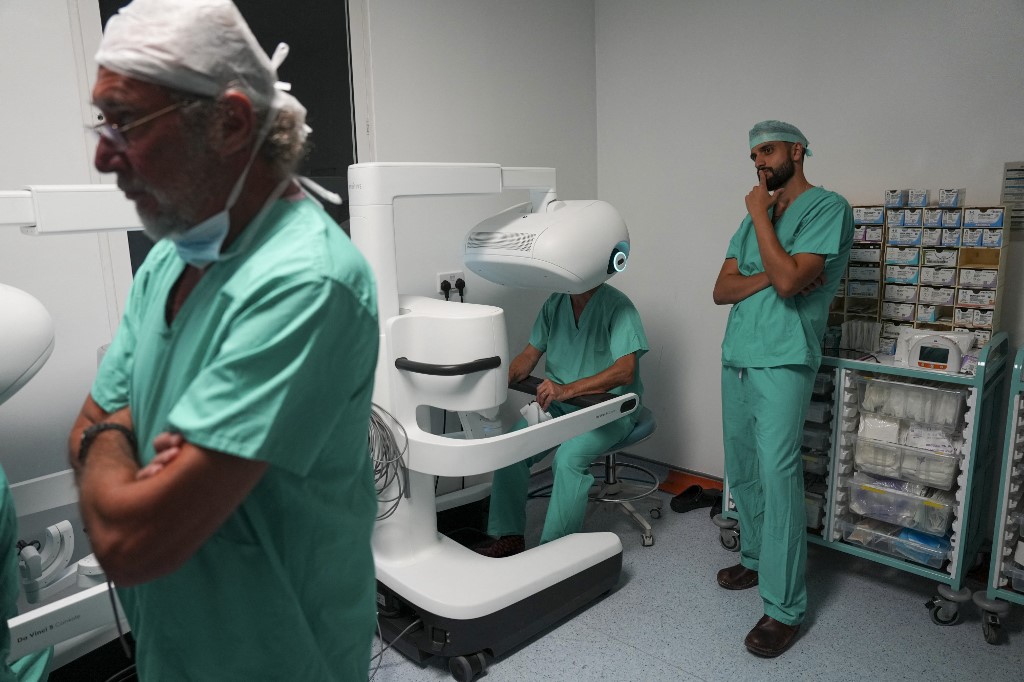
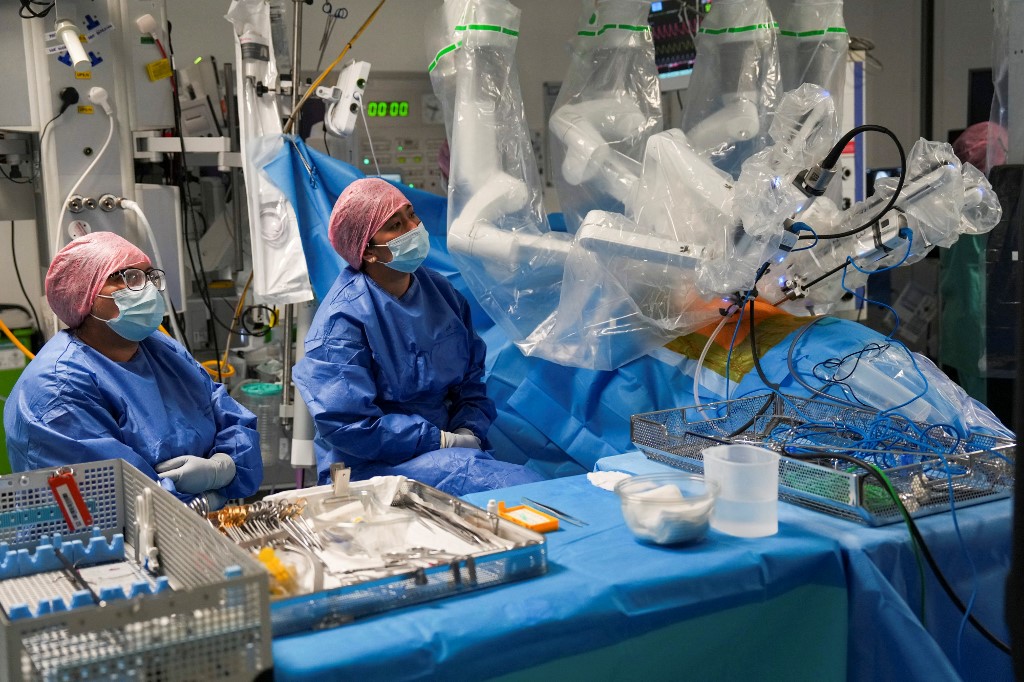
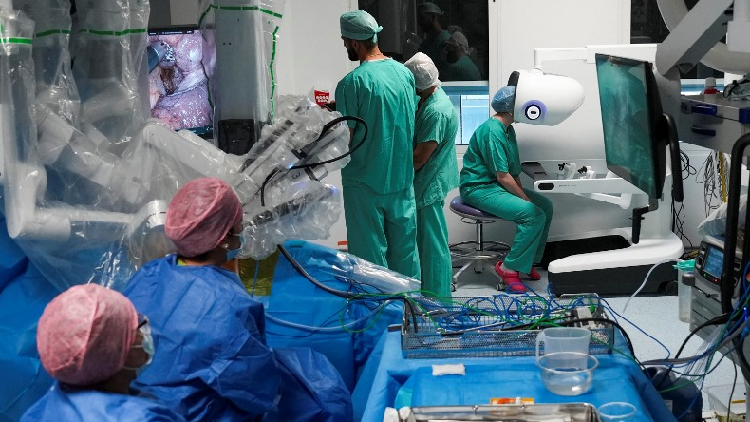
Sitting at a surgical console in Guangzhou, south China's Guangdong Province, an ophthalmologist from the Zhongshan Ophthalmic Center tracks a crystal-clear, real-time 5G video feed. The doctor guides a robotic arm thousands of kilometers away to perform a painstaking subretinal injection – delivering targeted medication into a paper-thin layer of tissue beneath the patient's retina.
That robotic arm was deployed in an operating room in Urumqi, northwest China's Xinjiang Uygur Autonomous Region, 4,200 kilometers from the control team in Guangzhou. Lin Haotian, director of the Zhongshan Ophthalmic Center at Sun Yat-sen University, noted that performing such a procedure remotely via robotics marks a clinical milestone, as remote robotic interventions of this precision had not previously been documented.
"The retina is only about 100 to 300 micrometers thick, divided into 10 distinct layers. Delivering medication precisely between two of those layers is an exceptionally delicate operation," Lin told China Media Group.
The adoption of remote medical robotics in China began in 2019 with its first 5G-assisted orthopedic surgery. Over recent years, remote medical procedures have expanded across various specialties in Beijing, Shanghai and Zhejiang.
From local reach to nationwide networks
These advanced remote procedures reflect a broader expansion of digital health infrastructure across China. According to China's National Health Commission, the country's telemedicine network now covers all cities and counties, expanding further into rural communities. Monitoring data shows that 70% of township health centers have established collaborative telemedicine partnerships with higher-level hospitals.
Alongside the physical infrastructure, AI-driven applications are increasingly integrated into daily clinical workflows. At Ruijin Hospital, affiliated with the Shanghai Jiao Tong University School of Medicine, an AI pathology platform assists doctors by scanning digital slides and highlighting potential lesions in seconds – a process that manually takes around 40 minutes per slide.
Furthermore, a report by KPMG, a global network of professional services firms, indicates that China accounts for over 70% of the world's published medical large language models. As these digital health tools mature domestically, elements of the technology, equipment and operational frameworks are progressively being adapted for international healthcare partnerships.
Smart infrastructure and clinical applications overseas
As China's telemedicine infrastructure and domestic medical devices continue to mature, these technological solutions are increasingly being incorporated into international healthcare collaborations, particularly across BRICS countries.
Construction is underway in São Paulo, Brazil, for the country's first public smart hospital within the University of São Paulo hospital complex. Financed by a $320 million long-term loan from the New Development Bank (NDB) alongside local funding, the 800-bed facility is scheduled to open in 2029.
Developed with technical collaboration from Chinese partners, the project will incorporate 5G-connected ambulances, AI-assisted triage and automated operational management. NDB President Dilma Rousseff noted that the project serves as a reference model for technology transfer in public health, while Brazilian Minister of Health Alexandre Padilha highlighted the role of international technical collaboration in upgrading public health infrastructure.
Beyond hospital infrastructure, Chinese medical equipment and diagnostic tools are seeing expanded clinical application overseas.
In April 2024, clinical teams from Xiamen Cardiovascular Hospital affiliated to Xiamen University, using Chinese-made medical devices, performed the first local Transcatheter Aortic Valve Replacement (TAVR) procedures in Brazil and El Salvador. By August 2024, teams completed the first TAVR in eastern Indonesia and the country's first Intravascular Lithotripsy (IVL) procedure. In September 2025, the first Chinese-assisted IVL procedure was performed in Vietnam. These inaugural procedures using innovative equipment reflect an expanding role for domestic medical technologies in international clinical settings.
In the commercial biotech sector, a Fujian-based firm established a localized laboratory in São Paulo to provide lower-cost genetic screening for breast cancer – a prevailing health challenge in Brazil. Company records show that partnerships had been established with nearly 20 institutions across BRICS countries by August 2025.
Cultivating talent and strengthening policy dialogues
Beyond medical equipment and infrastructure, human resource development and clinical training remain central to international medical cooperation.
The Xiamen Cardiovascular Hospital has established a fellowship program offering 6-to-12-month clinical training for foreign cardiologists. By October 2025, 28 physicians from 13 countries, including Brazil, Russia, India, Indonesia and Egypt, had been trained. Upon returning to their home institutions, several participants have taken on primary surgical roles, such as performing emergency interventional procedures for acute myocardial infarction.
Official policy frameworks continue to guide these multilateral initiatives. China has participated in the BRICS Health Ministers' Meetings since the inaugural conference in 2011. At the 15th meeting in June 2025, Guo Yanhong, vice minister of China's NHC, noted that China has implemented a health-prioritized development strategy to advance the Healthy China initiative and promote coordinated governance across medical services, pharmaceuticals and health insurance.
China is committed to working alongside BRICS members and partner nations to strengthen policy dialogue, align health actions and deepen exchanges across medical fields, according to Guo.
At Durban University of Technology, a Chinese vocational training program known as the Luban Workshop is bringing technologies such as the Internet of Things and additive manufacturing into South African classrooms. Teachers receive professional training, while students build practical skills through hands-on learning. China-South Africa cooperation opens up new possibilities for young people.
Apple unveiled its new foldable smartphone, the iPhone Duo, at the company’s “Surprise and Shine” event on Wednesday, Sept. 9, igniting a real-time social media troll-fest from competitors that have already made foldable smart phones.
“Let us know when you’re done reheating our leftovers,” Samsung posted on X during Apple’s presentation, along with many other witty quips that quickly went viral and inspired other brands like Motorola and DuoLingo to join the fray.
Click arrows to view gallery
Click arrows to view gallery
Click arrows to view gallery
Samsung’s trolling X campaign that uses sarcastic and even caustic online displays has been interpreted as advertising genius, promoting wider visibility for all brands involved.
For more, check out our exclusive content on CGTN Now and subscribe to our weekly newsletter, The China Report.
A side event on intellectual property (IP) for overseas expansion was held on Thursday at the 2026 China International Fair for Trade in Services (CIFTIS) in Beijing. Co-hosted by the World Intellectual Property Organization (WIPO) China Office and the Beijing Intellectual Property Office, the event marked the first time WIPO has served as a co-host of the CIFTIS Global Service Trade Summit.
Two IP experts discussed trademark strategy and cross-border risks.Wu Hongxia from CCPIT Patent & Trademark Law Officenoted that in 2025, Chinese applicants filed 5,636 international trademark applications under the Madrid System, ranking third globally. Their designations exceeded 76,000, the highest worldwide for a second consecutive year. In the United States, Chinese applicants filed about 148,000 trademark applications, making China the top foreign source of applicants at the US Patent and Trademark Office. But rising filings do not equal full protection, Wu warned, pointing to high refusal rates and complex cross-border enforcement as hidden risks.
Wu described three common scenarios. A company finds its trademark already registered in a target market by a local agent or professional squatter, forcing it to rebrand or buy back the mark at a high price. A company enters a market without adequate searches and faces infringement complaints, leading to product delisting and platform store closures.
"The cost of prevention is far lower than the cost of remediation," Wusaid.
A relevant person in charge at Wanhuida Intellectual Property added that international trademark filing generally follows the first-to-file principle, while some countries also consider genuine intent to use. Chinese companies should first file a basic mark in China, then submit a Madrid application through the China National Intellectual Property Administration to designated countries. The process typically takes one to two years.
WIPO's international services are turning intellectual property from a protection tool into infrastructure for trade in innovation. Wu noted that monitoring trademark gazettes, e-commerce platforms and specialized databases can build an early-warning system covering both trademark and market dimensions, allowing timely opposition or invalidation against squatted marks. As Wu put it, professional IP services are not just a shield – they help technology, brands and innovation flow smoothly across borders.
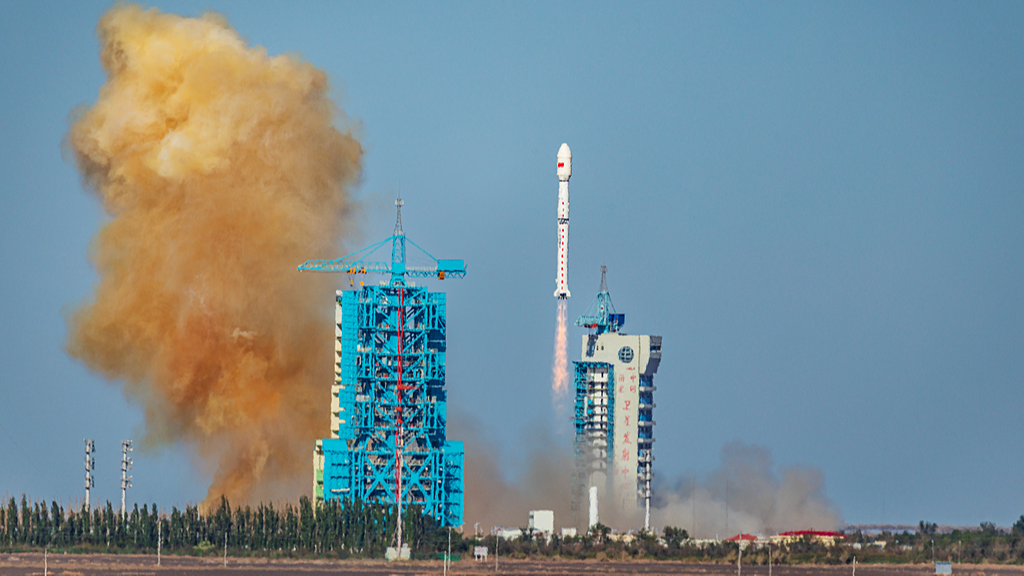
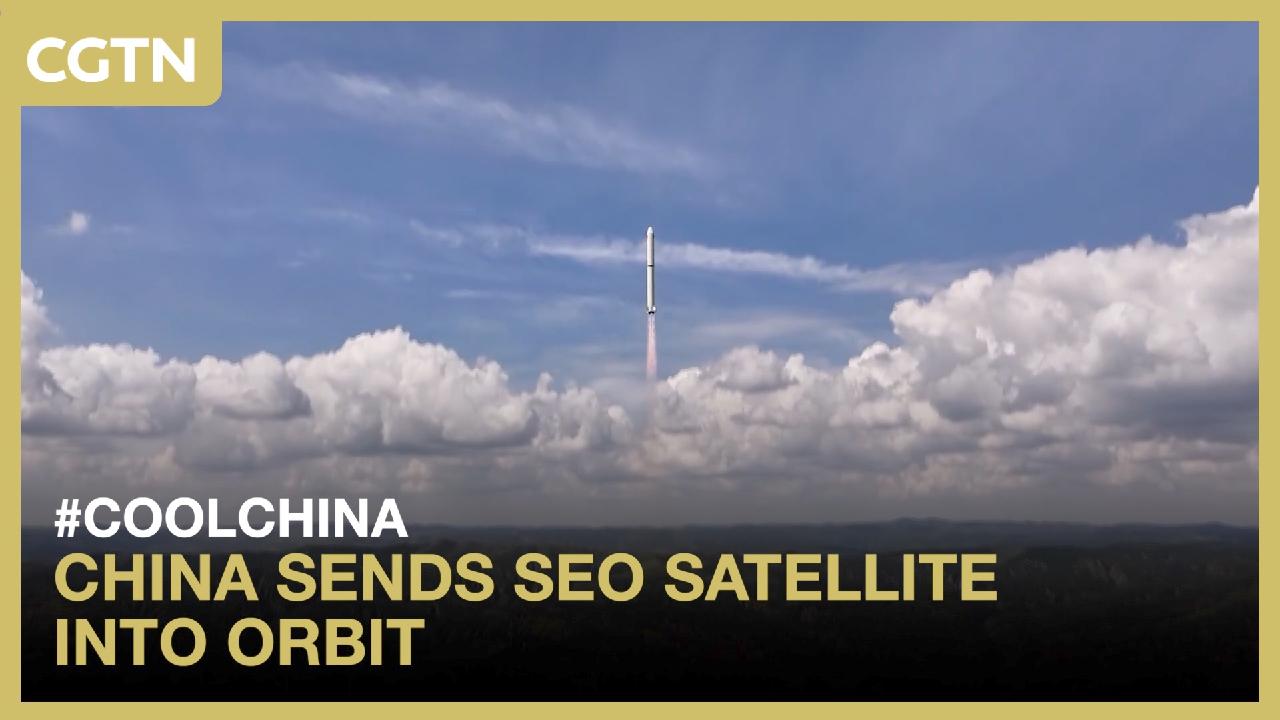
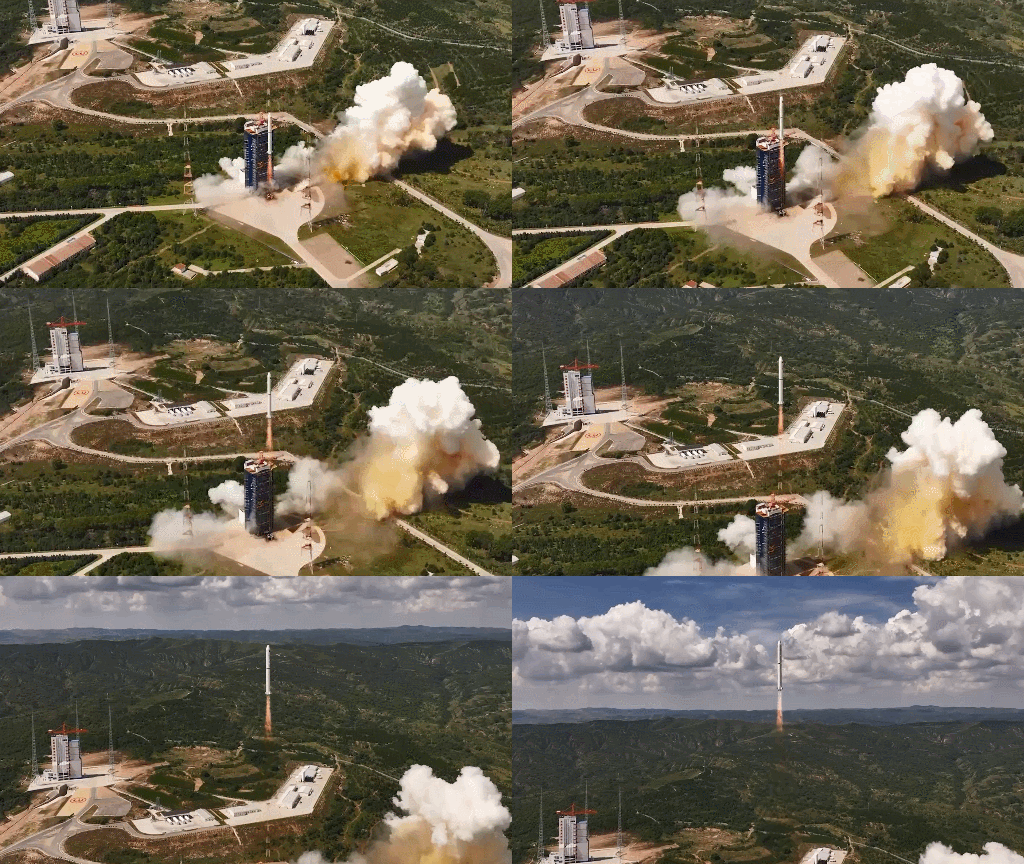
China launched two new groups of remote sensing satellites from the Jiuquan Satellite Launch Center in northwest China on Thursday.
The satellites of the Yaogan-53 and Yaogan-56 groups were launched at 5:00 p.m. (Beijing Time) aboard a Long March-4B carrier rocket and have entered their preset orbits.
They are primarily used for scientific experiments, land and resource surveys, crop yield estimation, and disaster prevention and reduction.
The launch marked the 666th mission of the Long March carrier rockets.
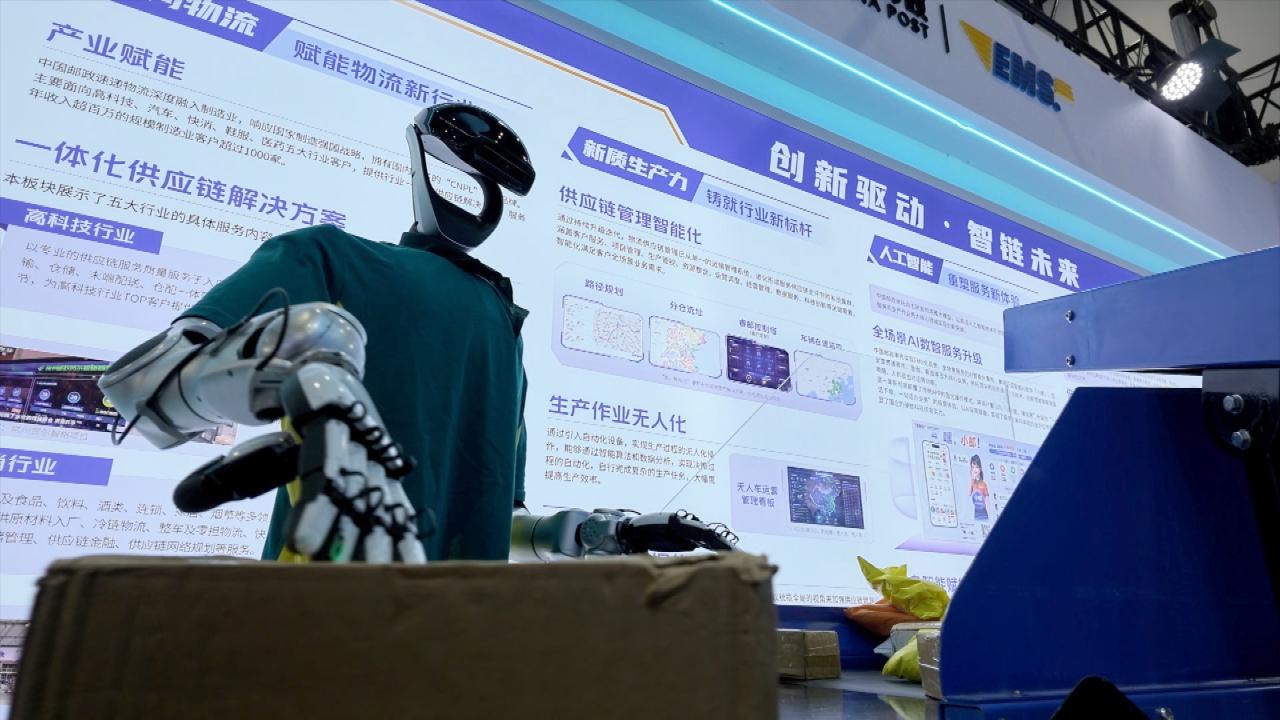
AI robots are developing at a shocking pace and gradually entering everyday life. During this year's China International Fair for Trade in Services (CIFITS), companies are showcasing new technology-enabled offerings. Drones, unmanned delivery vehicles and humanoids are among the products showing how frontier digital tools could reshape business worldwide.
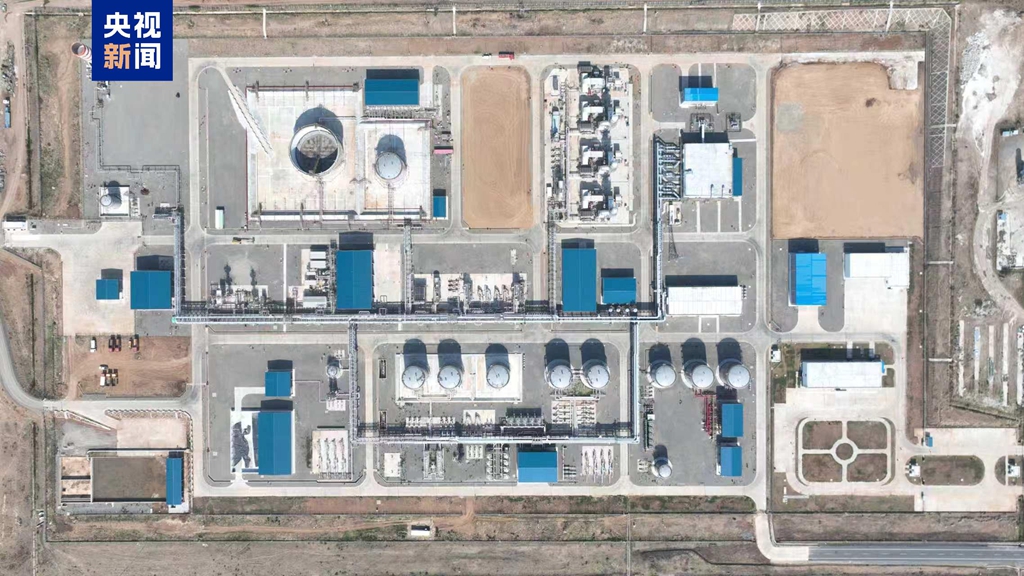
The core surface facilities of Uganda's Kingfisher oilfield, a key China-Africa energy cooperation project, passed mechanical completion acceptance on Thursday, marking the completion of Uganda's first commercial oilfield and its entry into the production preparation stage. Once operational, the field will help Uganda officially join the ranks of oil-producing countries.
Located in the Albertine Basin in western Uganda, the field has estimated geological reserves of about 560 million barrels of crude oil. The core surface facilities, built by China National Offshore Oil Corporation (CNOOC), include a central processing facility with an annual processing capacity of 2 million tonnes, four cluster well pads, a water intake station, inter-station pipelines and a 1,000-person camp.
The project sits on the shores of Lake Albert in the East African Rift Valley, where large areas of soft soil cannot support heavy equipment. The construction challenge was described as being similar to building a factory on a sponge. The project team overcame difficulties including large-scale soil replacement under special geological conditions and the installation of heavy equipment. It laid 783 kilometers of pipelines and cables and installed more than 300 pieces of equipment, forming a replicable case of efficient overseas engineering.
The project has also built a green, multi-energy complementary power supply system and a wastewater recycling system, helping create a green modern oilfield. It has employed more than 1,500 Ugandan workers, with a localization rate of 90%, and provided 135,000 man-hours of skills training, building Uganda's first cohort of industrial workers with modern oil and gas engineering skills.
When fully operational, the Kingfisher oilfield is expected to reach a peak daily output of 40,000 barrels, boosting local employment, infrastructure and related industries.
A recent event held in Yiwu County, Hami City, northwest China's Xinjiang Uygur Autonomous Region, marked both the delivery of computing power under the Xinjiang Computing Power to Chongqing Project and the start of construction on the China Mobile-Alibaba Cloud intelligent computing center. The event signals a new stage for the project.
Chongqing is one of the eight national computing hub nodes and one of the 10 data center clusters under China's "East Data, West Computing" initiative. Xinjiang is a national pilot region for coordinating computing power and electricity.
One-way data transmission latency between Chongqing and Hami has been reduced to 16.2 milliseconds, equivalent to 0.52 milliseconds per 100 kilometers. Hami's computing power now transmits more than 100 petabytes of data to Chongqing users each month, making it a new artery for information transmission.
The Hami (Yiwu) Computing Power Innovation Demonstration Zone is building functional areas for computing infrastructure, digital industry incubation and other functions. It is expected to further advance the Xinjiang Computing Power to Chongqing Project and strengthen Chongqing's high-quality computing power support.
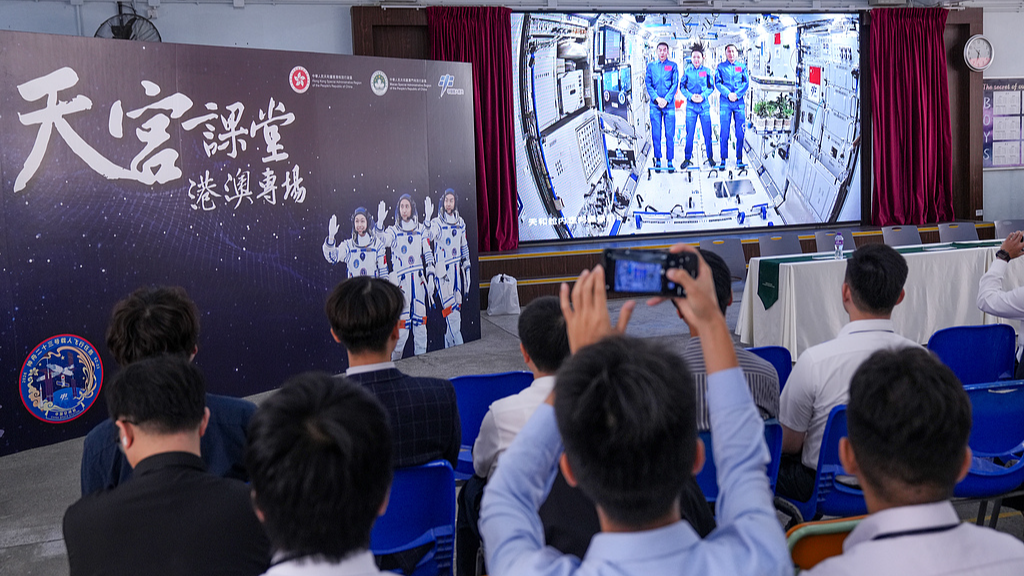
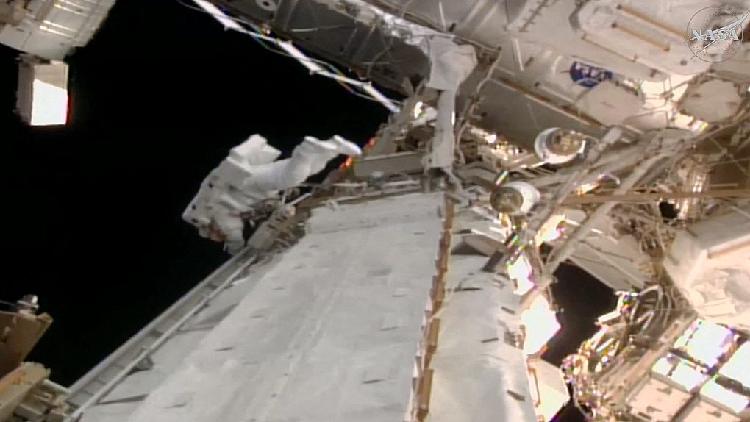
China's Shenzhou-23 crew members aboard the country's space station give a "Tiangong Class" space lecture for students in Hong Kong and Macao special administrative regions (SAR) on Wednesday.
The three astronauts – Zhu Yangzhu, Zhang Zhiyuan and Li Jiaying(or Lai Ka-ying in Cantonese) – served as space teachers. More than 200 primary and secondary school students from Hong Kong and Macao attended the class from the Tsuen Wan Public Ho Chuen Yiu Memorial College in Hong Kong, the alma mater ofLi, Hong Kong’s first payload specialist, while many more students across the two regions watched the livestream.
During the lecture, the astronauts demonstrated a series of experiments highlighting the unique environment of space, including the fixed-axis property of a gyroscope in microgravity, the station’s three-module layout and the space kitchen, as well as baking a cake, exercising on a space treadmill, and wringing water from a wet towel.
They also demonstrated a flying Bauhinia flower, introduced the space vegetable garden and conducted a "water-ball ping-pong" experiment. The astronauts also introduced space station facilities involving Hong Kong researchers, including the "Tianyun" camera.
The event featured scientific explanations, demonstrations conducted aboard the space station and questions from students, followed by a live dialogue between the astronauts and students in Hong Kong and Macao.
The lecture was jointly hosted by the governments of Hong Kong and Macao SARs and the China Manned Space Agency. Hong Kong Chief Executive John Lee and other government officials from both regions also attended.
During the dialogue, students asked the astronauts about space food, how they prepare for intensive training, the use of AI aboard the space station, silkworm breeding and biological experiments in space, preparations for extravehicular activities, and how to make choices in life.
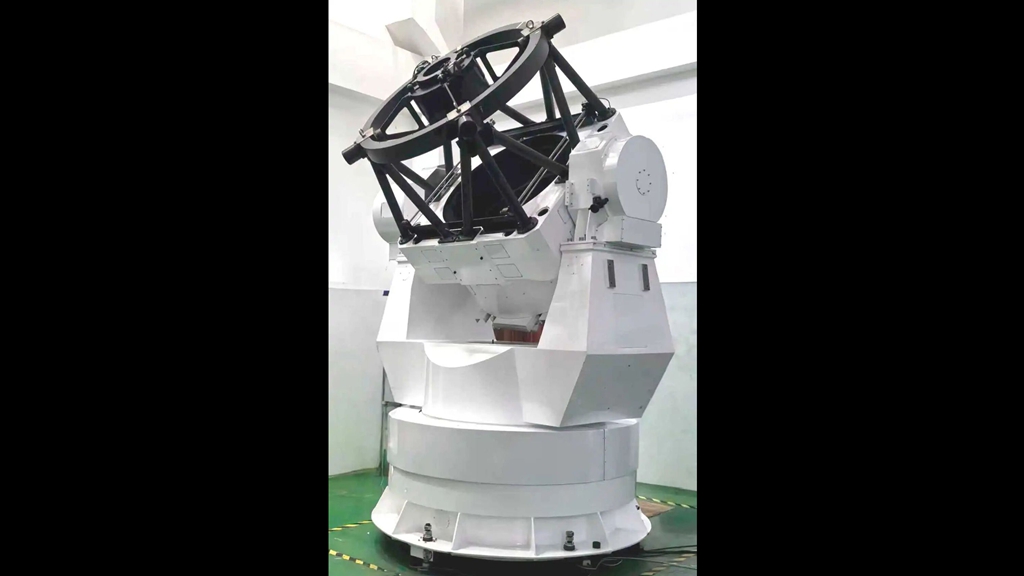
The Tianyu Telescope, located in Lenghu, northwest China's Qinghai Province, has successfully captured an image of the North America Nebula and the Pelican Nebula in the constellation Cygnus, along with more than one million surrounding stars in the Milky Way in a single exposure.
This feat signals the telescope's transition to the scientific observation stage, according to People's Daily on Tuesday.
Initiated in 2022 and led by the Tsung-Dao Lee Institute (TDLI) of Shanghai Jiao Tong University, with the Shanghai Astronomical Observatory of the Chinese Academy of Sciences responsible for its development, the telescope is expected to begin formal scientific survey operations in October 2026.
The Tianyu Telescope covers a sky area of nearly nine square degrees in a single exposure, equivalent to more than 40 full moons.
Many violent events in the universe, such as stellar explosions and gravitational-wave flashes from neutron star mergers, often fade away within seconds to minutes. When space telescopes or gravitational-wave detectors send out alerts, the Tianyu Telescope can rapidly slew toward the target and "rewind" the sky area under its real-time monitoring, restoring the celestial view from seconds before the burst, said the report.
The Tianyu Telescope will carry out sustained photometric monitoring of hundreds of millions of celestial objects, capturing subtle variations in their brightness to discover exoplanets, various types of variable stars, supernovae and small bodies within the solar system, Feng Fabo, an associate professor at the TDLI and project director of the Tianyu Telescope, was quoted as saying by the newspaper.
The Tianyu project has already attracted research teams from Britain, Belgium and Chile, and its data will be coordinated with multiple survey projects both at home and abroad.
Moving forward, the Tianyu Telescope will undergo a phased transition from commissioning observations to stable operations, and from remote-controlled to fully-automated observing modes.
Cross-border payments and greater interoperability among national payment systems are expected to feature prominently at the 18th BRICS Summit, which will be held in New Delhi, India, on September 12 and 13, as BRICS members seek to make trade and financial transactions faster, cheaper and more accessible.
One key distinction is that connecting payment systems does not mean creating a common BRICS currency. India has made it clear that its focus is on interoperability among existing fast-payment systems and central bank digital currencies, rather than establishing a new currency.
On August 11, Reserve Bank of India Governor Sanjay Malhotra said that BRICS members were discussing ways to connect fast-payment systems and central bank digital currencies (CBDCs).
"Various options are on the table, but it is still at discussion stage, including CBDCs and linkages of fast payment systems," he said.
India's Commerce and Industry Minister Piyush Goyal also rejected the idea of a common BRICS currency on August 7. "India is not in favor of a BRICS currency. We do not support the introduction of any such BRICS currency scheme; India opposes it," Goyal said.
Meanwhile, the use of local currencies in trade is growing. Kremlin spokesman Dmitry Peskov said on September 8 that around 90% of Russia's payments and transactions with BRICS countries are now conducted in national currencies. But he stressed that this should not be interpreted simply as a drive to eliminate the dollar. "We do not seek de-dollarisation. On the contrary, we are open to any possible method of payment," Peskov said.
Practical links between national payment networks are also emerging. China UnionPay International launched a pilot project with Brazilian partners to connect China's QR payment network with Brazil's Pix system. During the pilot, users of the UnionPay app and participating Chinese bank apps can scan QR codes to make payments at Brazilian merchants connected to Pix.
BRICS leaders have endorsed further work on payment interoperability. BRICS' 2025 Rio de Janeiro Declaration called for "fast, low-cost, more accessible, efficient, transparent, and safe cross-border payments" and welcomed technical work on greater interoperability among BRICS payment systems.
Chinese battery technology is playing a growing role in Mexico’s renewable energy expansion as new solar and wind projects are required to include energy storage.
Chinese companies showcased storage systems and battery technologies at a major renewable energy expo in Mexico City.
But industry representatives warn that Mexico’s tariffs on Chinese imports could raise costs and slow deployment as the government considers additional trade restrictions.
CGTN’s Alasdair Baverstock reports from Mexico City.
For more, check out our exclusive content on CGTN Now and subscribe to our weekly newsletter, The China Report.
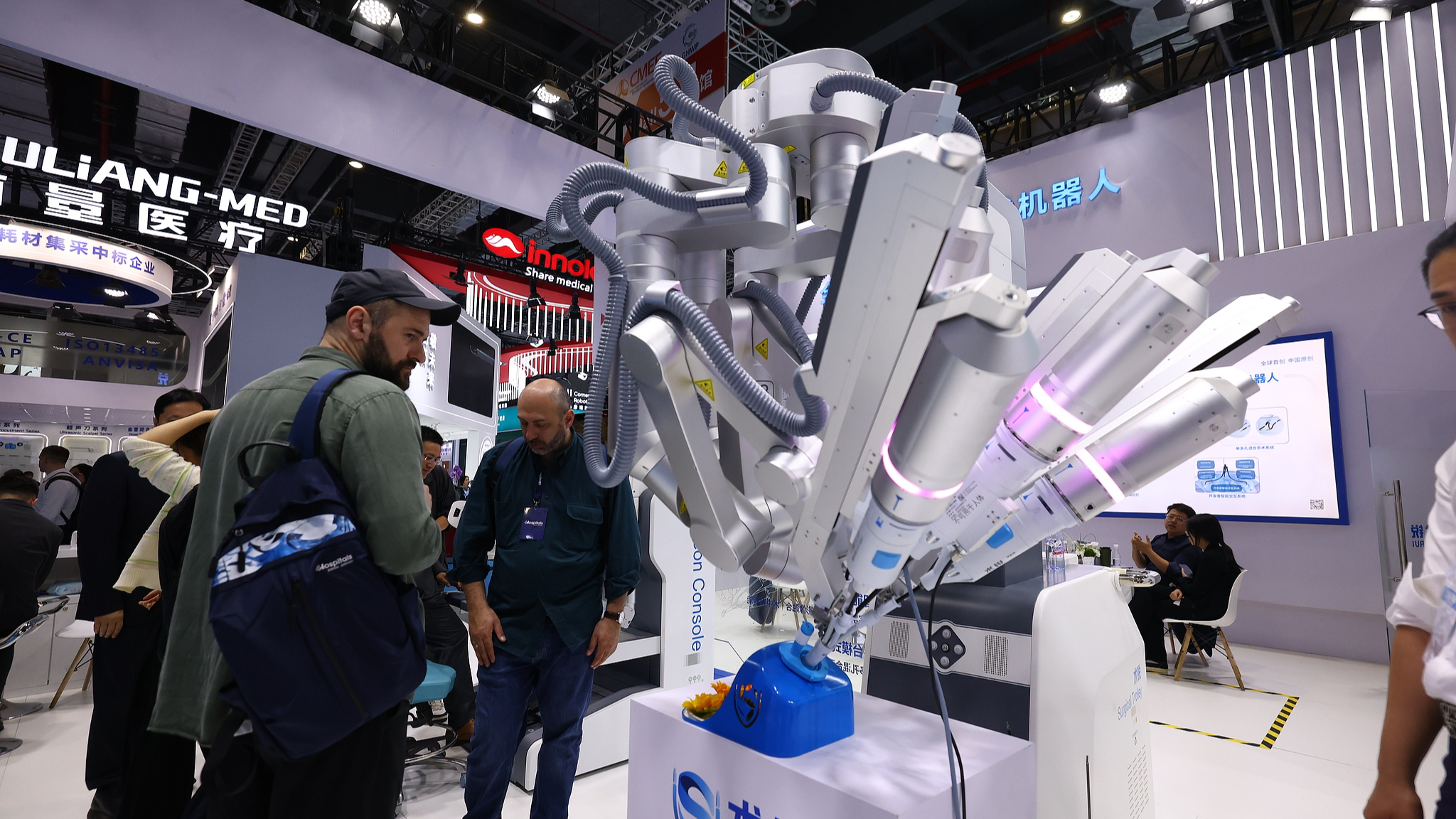
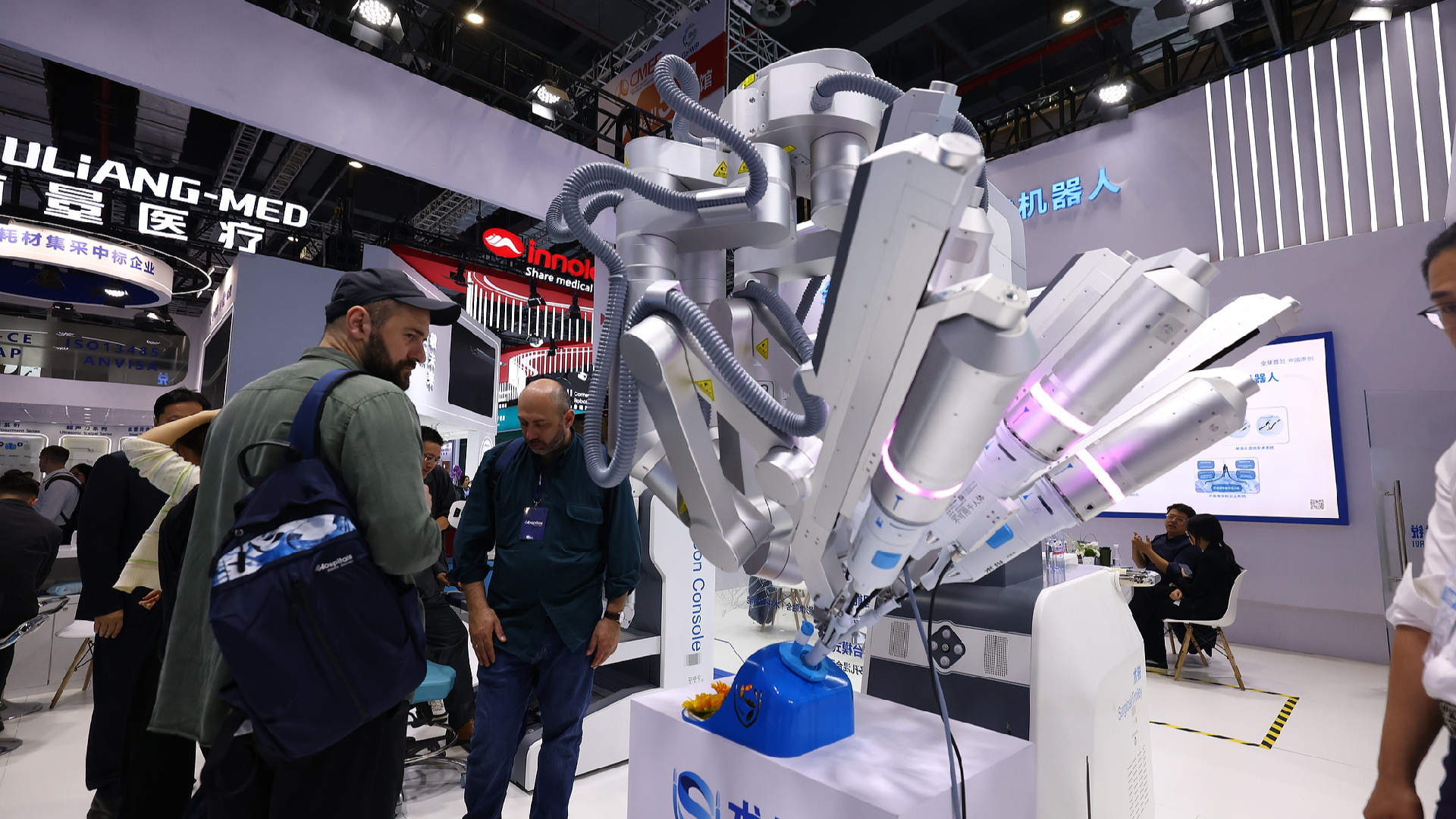
In a Barcelona operating room this summer, a 12-year-old boy with multiple kidney stones and organ damage became part of an unlikely trade story. Surgeons at Vall d'Hebron University Hospital, one of Spain's top public hospitals, removed the damaged tissue through a single incision barely 2.5 centimeters wide, guided from a console by a surgical robot designed and built in Beijing.
Three snake-shaped instruments and a 3D camera, mounted on nickel-titanium arms, reached the surgical site through that single opening. The boy went home within 48 hours. According to the hospital, it was the first pediatric surgery in Europe performed with a single-incision robot.
The machine was a single-port surgical robot from Beijing-based Surgerii Robotics, delivered under a 2.42-million-euro contract – the highest price yet recorded for a Chinese-built surgical robot sold abroad – and above the European price of the US market leader's mainstream system. Bidding against the US giant's own single-port system, the Chinese robot met the hospital's tender terms within 30 days: installation and revalidation, training for 10 lead surgeons in five departments, and 11 operations.
The Barcelona deal is one data point in a broader shift: in the first half of 2026, China exported 480 million yuan ($71 million) of surgical robots, 3.3 times a year earlier, with export markets growing from 23 countries and regions to 49, according to the General Administration of Customs (GAC).
From boxes to blueprints
China's export mix is shifting as fast as its trade in volumes. Surgerii's robot relies on a self-developed "snake arm" that bends at multiple angles and filters out a surgeon's natural hand tremor; over 95% of its components are made in China, cutting costs to roughly half to one-third of foreign rivals.
A parallel story is unfolding on factory floors. In Shenzhen, Bambu Lab's desktop 3D printers have become fixtures in workshops from Mexico to Brazil, where small manufacturers build flexible, small-batch production lines without heavy upfront investment. China exported 3.62 million 3D printers in the first half, up 90.2%, with export value surging 109.3% to 9.61 billion yuan, customs data show.
Filling gaps, not crowding markets
Much of the new demand comes from places where established Western vendors have long had little presence.
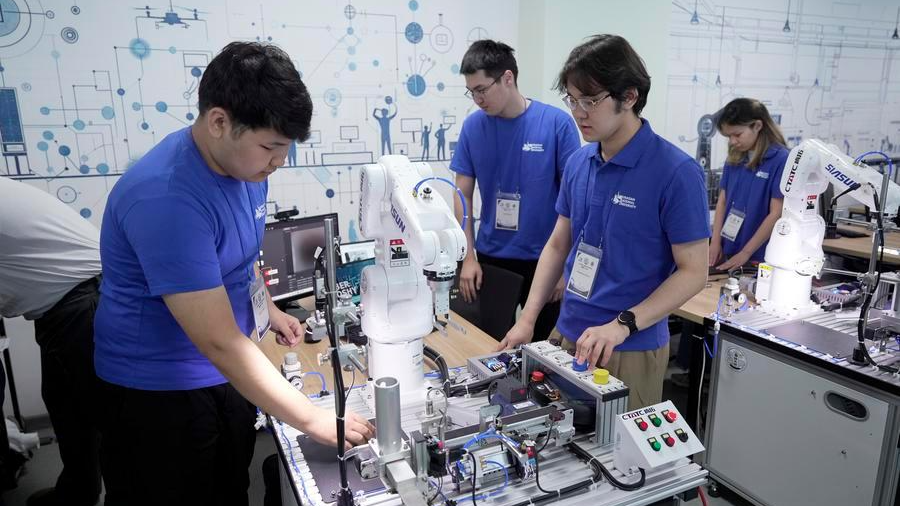
In Astana, Kazakhstan, 20-year-old student Zhansaya Abdurakhman is learning computer vision and robotic-arm operation inside the Luban Workshop, a Chinese-backed vocational training program where China's Tianjin Vocational Institute has set up an AI training center with L.N. Gumilyov Eurasian National University. "These skills are in great demand," she told Xinhua. The workshop has already trained nearly 100 teachers and over 30 students. In May, President Kassym-Jomart Tokayev signed a decree bringing AI into secondary schools nationwide, including a pilot to narrow the urban-rural education gap.
China's intelligent water management tools are also reaching climate-stressed countries. At the 2025 Great Rivers Forum in Wuhan, an AI flood early-warning platform drew interest from UNESCO's Humid Tropics Centre in Kuala Lumpur, which is studying China's "sponge city" approach, a way of designing cities to absorb and reuse rainwater, for Malaysia's intensifying rainfall. Chinese-built water projects in Pakistan, Guinea and Sudan have improved water and electricity access for millions.
The trade flows are substantial. China's trade with Belt and Road partners rose 14.8% in the first half to 12.97 trillion yuan – just over half its total – while trade with Africa grew 19.6% and with Latin America 16.2%; high-tech exports climbed 39%.
Built with the world
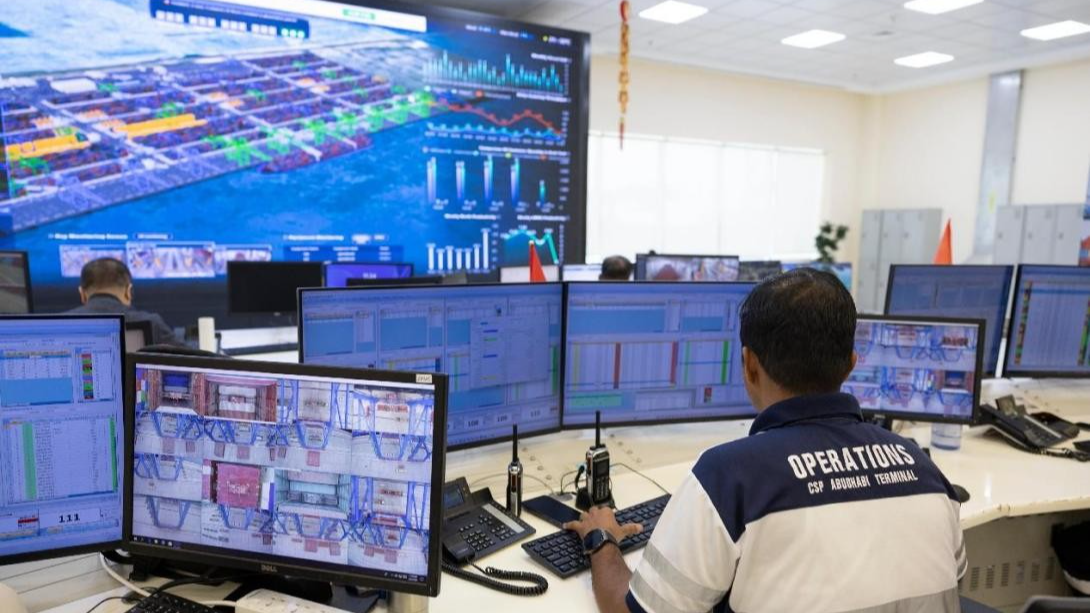
At Khalifa Port in Abu Dhabi, a container terminal jointly built and operated by COSCO Shipping Ports and Abu Dhabi Ports has grown into one of the Gulf's busiest hubs since its December 2018 opening. In 2024 it handled 1.845 million TEUs, or twenty-foot equivalent units, up 36%, with more than 1,000 vessel calls. Its general manager says continuous intelligent upgrading has made it "the smartest terminal in the Middle East."
The project reads like a global supply chain in miniature: quay cranes from Shanghai crane maker ZPMC, electrical automation from Germany's Siemens, and systems integration from China.
In Malaysia, a joint venture between Chinese industrial-internet firm GYMD and local partner Altel Group – witnessed by Prime Minister Anwar Ibrahim – has become the country's first end-to-end digital service provider for the automotive value chain. At national carmaker Proton's plant, its Geega platform – industrial software that digitally manages entire factory floors – links manufacturing and procurement; a BRICS smart-manufacturing solutions catalogue released this year credits it with cutting equipment downtime by 10-20%.
The macro numbers point the same way. China's imports grew 22.1% in the first half of 2026 – 8.7 percentage points faster than its exports – and contributed more to trade growth than exports did, the GAC said.
Back in Barcelona, the boy's two-day recovery was a human thread in a much larger story. As GAC Deputy Administrator Wang Jun put it, China's stable supply chains are becoming "a key hub connecting all parties in win-win cooperation."
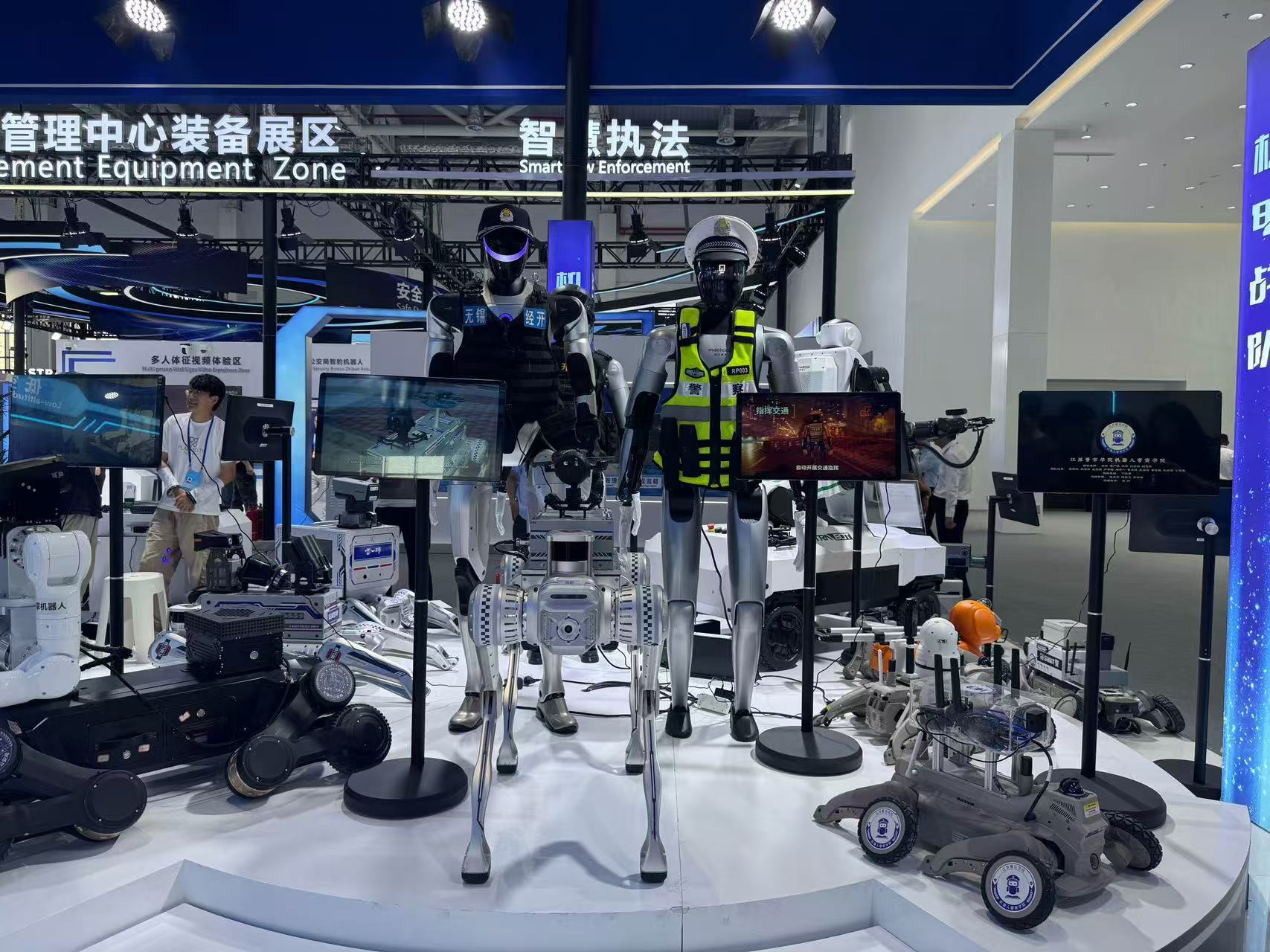
The third Public Security Technology and Equipment Expo opened in Lianyungang, east China's Jiangsu Province, on September 8, bringing together more than 100 companies showcasing policing technology, equipment and security solutions.
Hosted by the First Research Institute of the Ministry of Public Security, the five-day expo covers more than 13,000 square meters at the Jiangsu Haizhou Bayview Conference Center, with the theme of "Technology Empowerment, Win-Win Cooperation."
Exhibits range from police vehicles and other equipment to overseas security solutions and export services. Six specialized zones use simulated scenarios to show how technology can support different types of police work.
Among the exhibits are 12 police dogs from Chinese breeds. Trained for different environments, they can work in confined spaces and cold, high-altitude conditions. Their duties include detecting explosives, conducting search-and-rescue operations and tracking people.
Domestically bred police dogs are used across China in criminal investigations and other public safety operations.
The expo also features live demonstrations, product launches and procurement talks. These activities connect Chinese companies and research institutions with foreign government agencies, international organizations and experts. They also help Chinese suppliers better understand international demand and explore overseas markets.
First held in 2024, the expo has become a platform for displaying public security technology and promoting cooperation between Chinese companies and international partners.
Yu Bing, deputy director of the First Research Institute of the Ministry of Public Security, said this year's event has more exhibitors and a stronger focus on technology than the previous two editions.
"This expo aims to deepen technical exchanges and international cooperation in public security technology, showcase advances in Chinese equipment and support international law enforcement cooperation," Yu said.
He added that the event seeks to advance the Global Security Initiative and the Global Governance Initiative while applying technological innovation to strengthen public security governance worldwide.
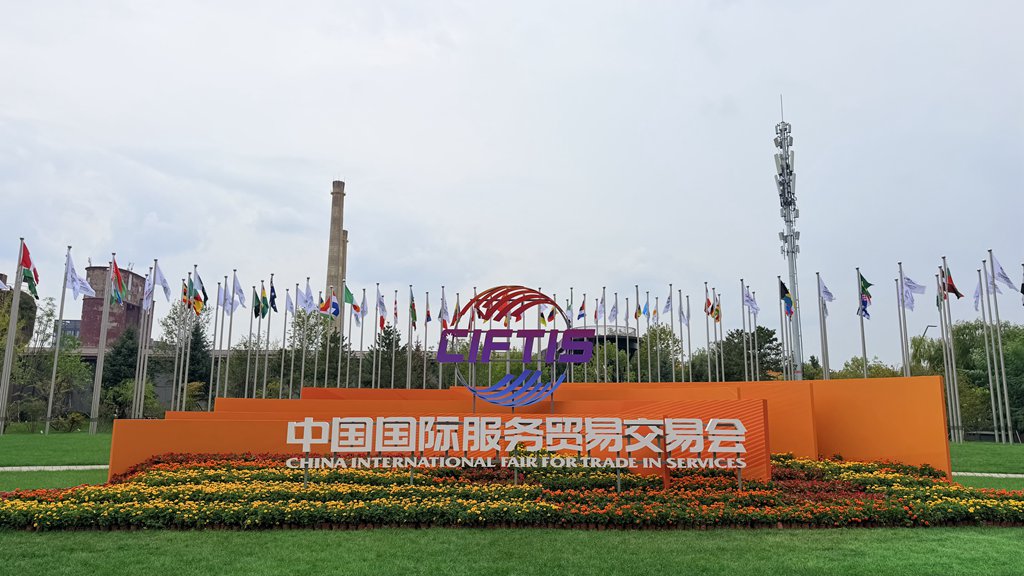
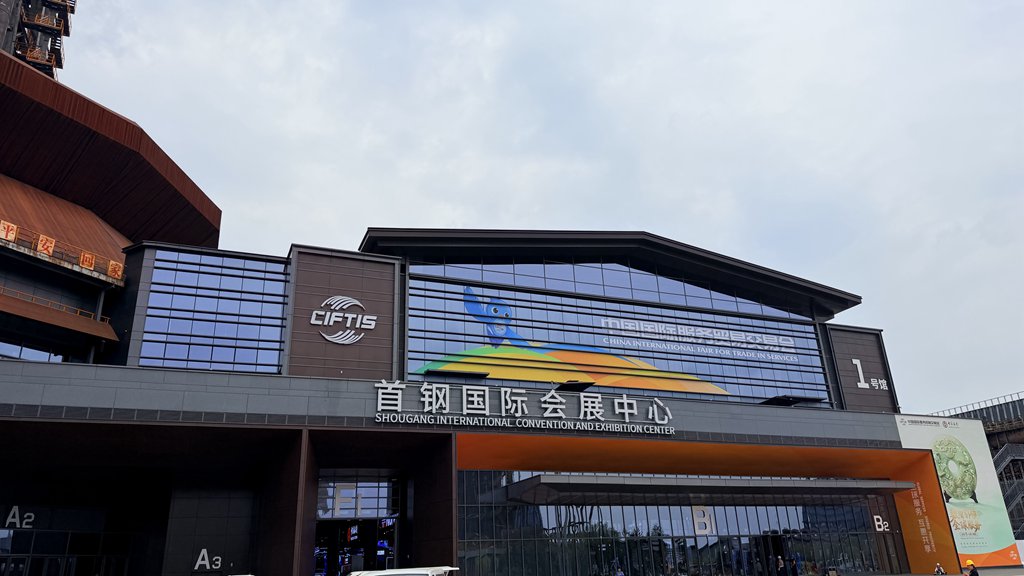
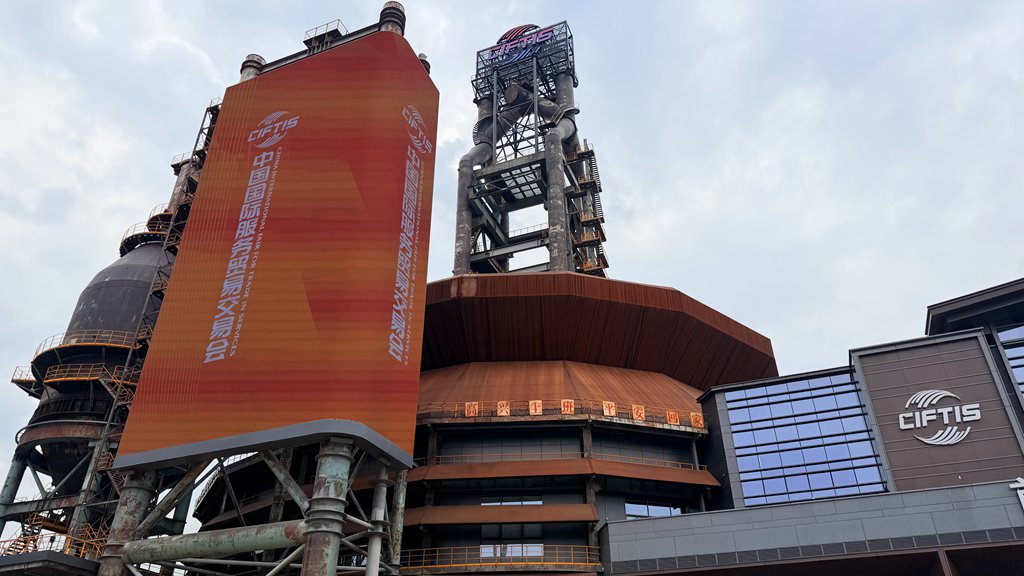
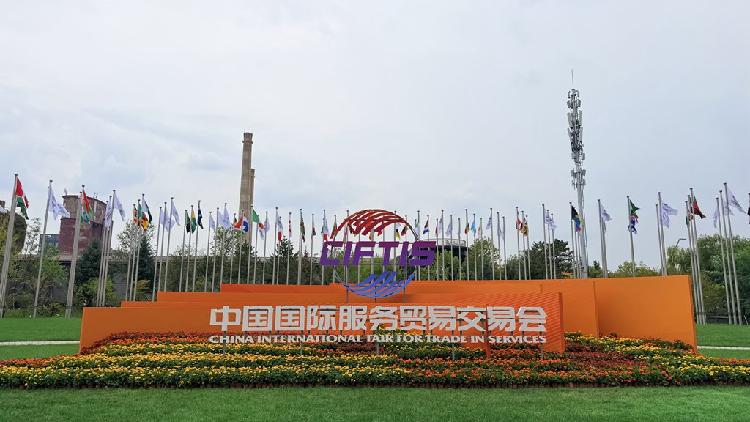
The 2026 China International Fair for Trade in Services (CIFTIS) will be held at Beijing's Shougang Park from September 9 to 13, offering a window into the latest trends reshaping China's service trade.
As the first national-level comprehensive exhibition for trade in services held in the opening year of the 15th Five-Year Plan period (2026-2030), this year's CIFTIS has upgraded its exhibition format and service model.
A total of 90 countries, regions and international organizations will participate in the event, while more than 1,830 companies will attend the exhibitions offline, including 473 Fortune Global 500 companies and industry leaders. The fair will feature more than 190 forums, conferences and business matchmaking activities, alongside 74 supporting events and 11 business inspection routes.
Knowledge-intensive services as a new engine
Knowledge-intensive services have been increasingly driving China's service exports. In the first half of 2026, the country's total service imports and exports reached 3.8 trillion yuan (about $566.2 billion), up 8.3% year on year, according to the Ministry of Commerce.
Among them, exports of intellectual property royalties, financial services, transport services, and telecommunications, computer and information services grew 44.3%, 25.9%, 25.4% and 10.9%, respectively. Knowledge-intensive services accounted for 53.5% of total service exports, increasing 3 percentage points from the end of 2025.
The figures show that China's service trade is shifting toward higher-value-added and technology-intensive segments, said Zhao Ruojin, an associate researcher at the Institute of International Service Trade under the Chinese Academy of International Trade and Economic Cooperation.
From exporting products to delivering technologies and services
The transformation is closely linked to the deeper integration of manufacturing and services. Chinese companies are increasingly moving from simply exporting goods to providing integrated technologies, solutions and full-cycle services.
One example comes from the aviation maintenance sector in south China's Hainan Province. Leveraging the policy advantages of the Hainan Free Trade Port, the Haikou Airport Comprehensive Bonded Zone has established specialized aircraft and aero-engine maintenance facilities, accommodating five leading aviation maintenance companies and holding 24 international maintenance licenses covering 19 countries and regions, as well as more than 2,300 component maintenance certifications.
During this year's summer travel season, overseas aircraft arrived for maintenance.
"Airlines from Qatar, Jordan, Thailand and Vietnam have become repeat customers," said Guo Luoyi, a business manager at Grand China Aviation Maintenance Co., Ltd., a subsidiary of HNA Technic, noting that overseas maintenance orders are expected to exceed 100 aircraft this year.
"China's service exports are shifting from traditional sectors such as engineering and transportation to the export of high value-added capabilities, including knowledge, creativity and other high value-added services," said Lin Xuejun, a professor at the International Business School of Jinan University.
Lin said this transformation is driven by years of innovation accumulation, with numerous research achievements, patents, and brands developed through new business models and emerging industries providing strong support for intellectual property-related service exports.
Innovation will be another highlight of this year's fair.
China views digitalization, intelligent technologies, and green development as key drivers of high-quality development and is promoting the application of big data, cloud computing and artificial intelligence (AI) across service trade, said Vice Minister of Commerce Yan Dong at a press conference briefing the media about CIFTIS in August.
More than 200 new products and achievements will be unveiled at this year's CIFTIS, with over 100 making their global or China debut, covering areas including information and communications, fintech, digital healthcare, smart education, and energy conservation and environmental protection.
'China services' expanding through innovation
The innovation-driven transformation will be showcased in the newly established “China services” exhibition zone, featuring 140 representative cases from domestic regions and enterprises across a broad range of service trade sectors.
The demonstrated cases will highlight the expanding global reach of Chinese services, with solutions ranging from BeiDou-based space and time information services and cross-border trade platforms to international pharmaceutical research and development services and logistics solutions.
Nearly 40% of the cases involve AI, large language models, or intelligent agents applied in fields such as legal services, digital trade, cultural tourism and quantum computing.
The exhibition will also showcase the closer integration of services into manufacturing and daily life, with smart driving insurance, elderly-friendly digital solutions, and intelligent childcare platforms demonstrating how service innovation is benefiting people more and more.
What does the green transition look like on the ground? CGTN joins media professionals from across APEC economies in south China's Greater Bay Area to find out.
From a zero-carbon shared lab in Hengqin to a smart substation powering Macao, as well as wind turbines operating overseas, the journey follows how research, technology and regional cooperation are helping turn clean-energy ideas into real-world solutions.
As the Asia-Pacific Media Forum drew to a close in south China's Shenzhen, media leaders from across the region reflected on their experiences during a journey through China's Greater Bay Area.
From large-scale infrastructure to cutting-edge green technology, what they saw offered different perspectives on a common question: what can bring the Asia-Pacific closer together?
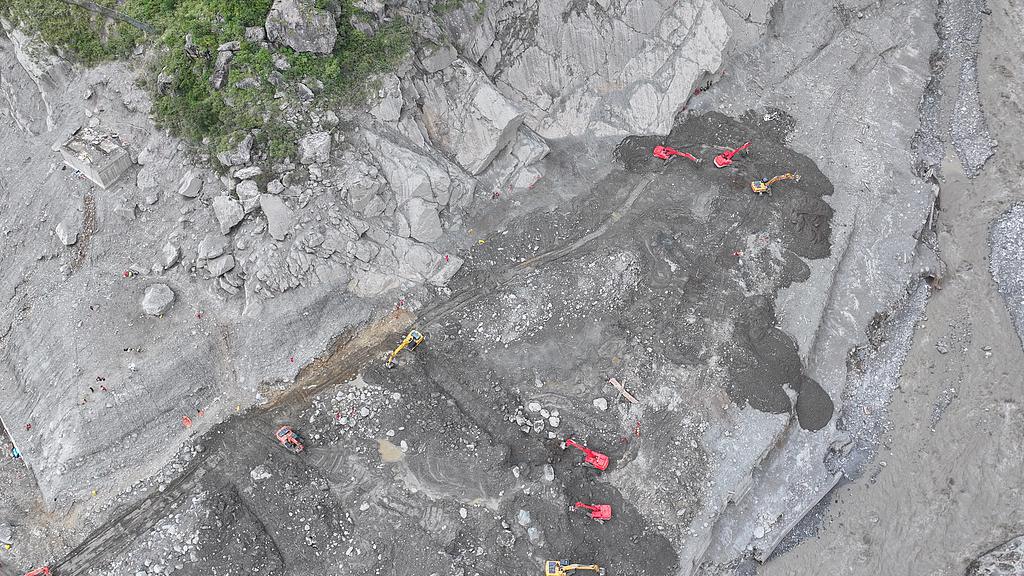
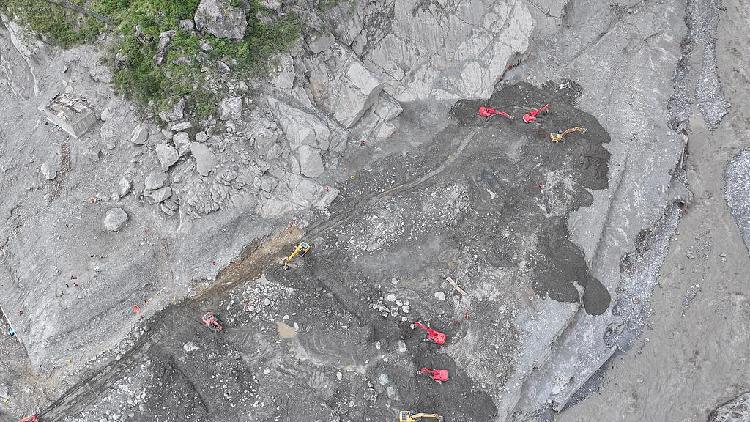
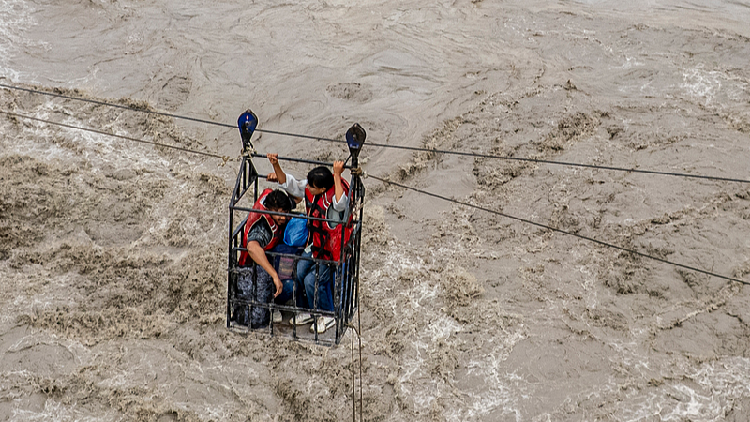
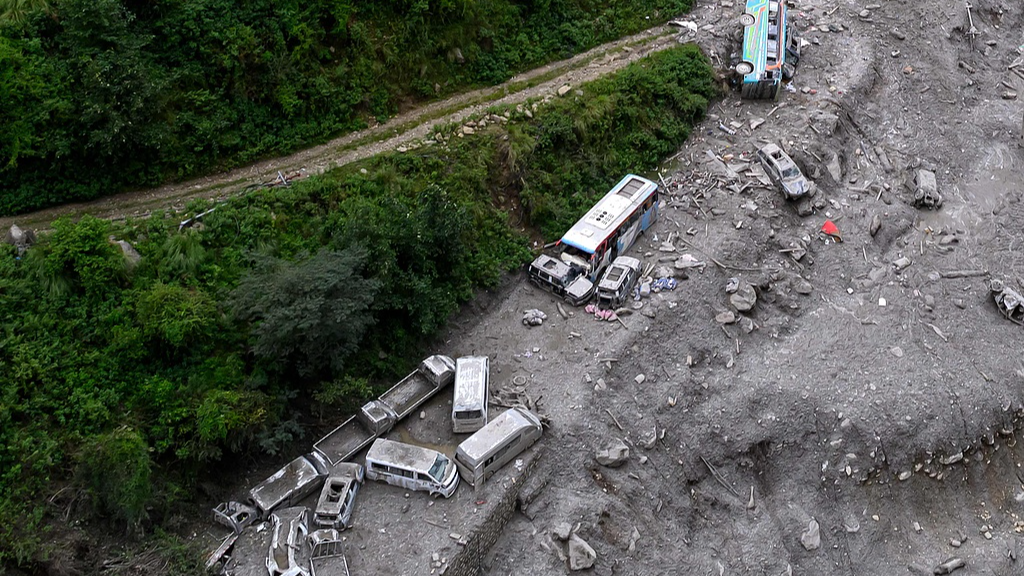
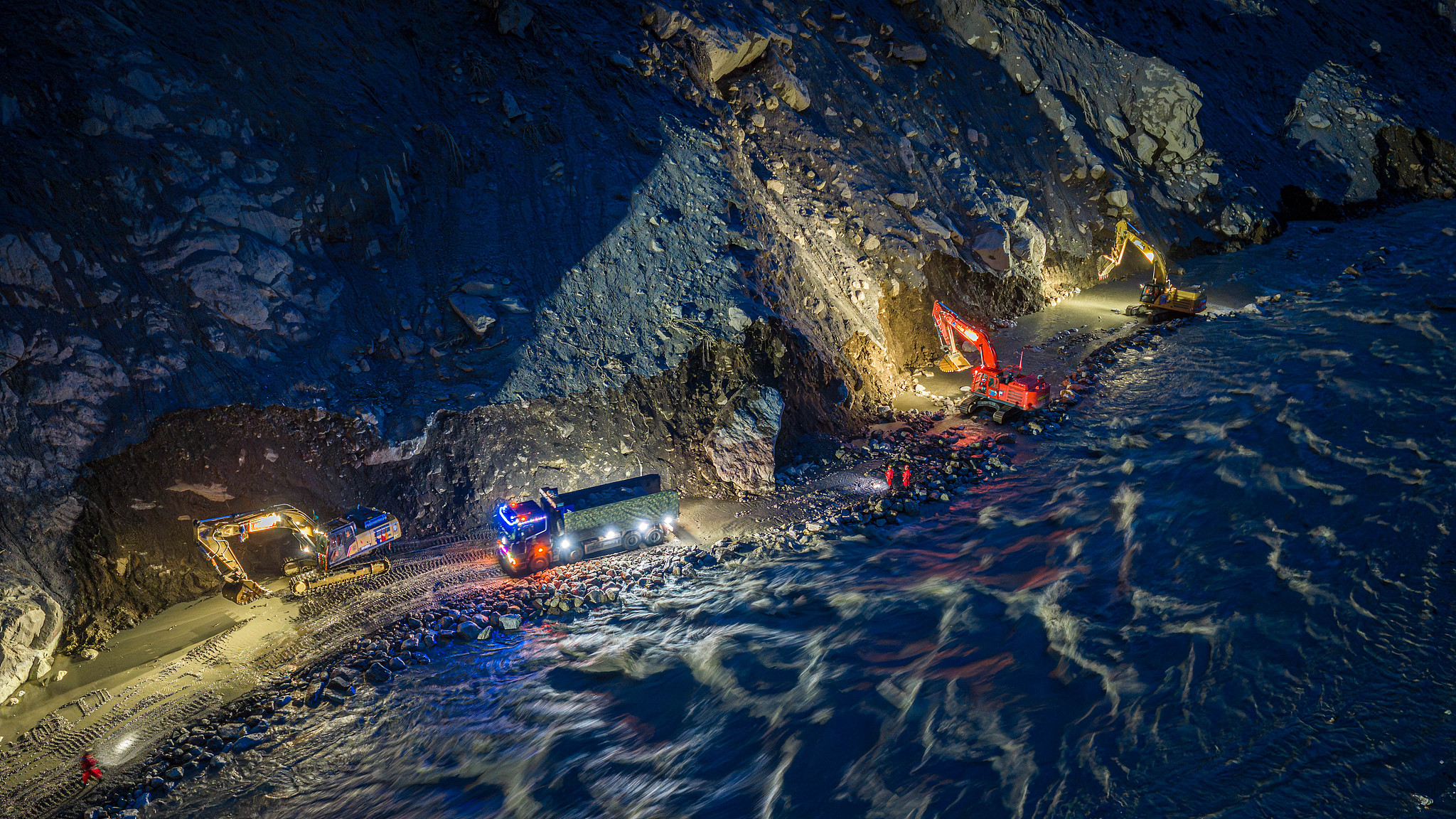
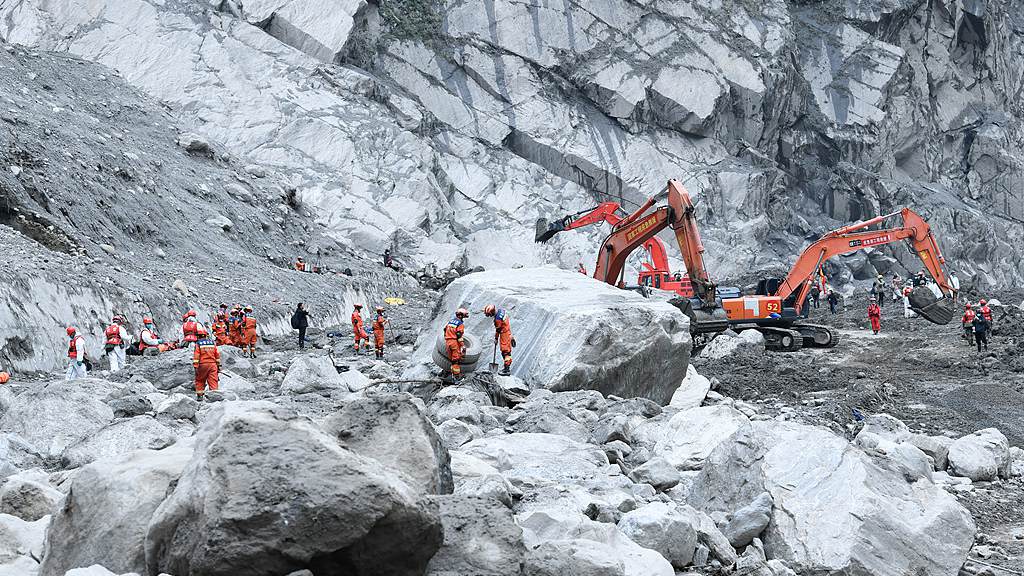
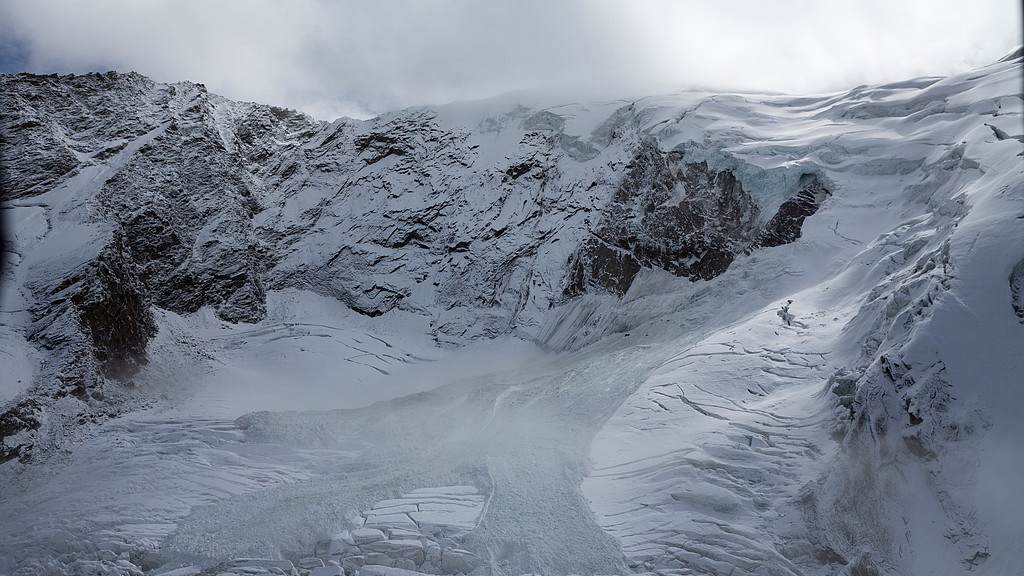
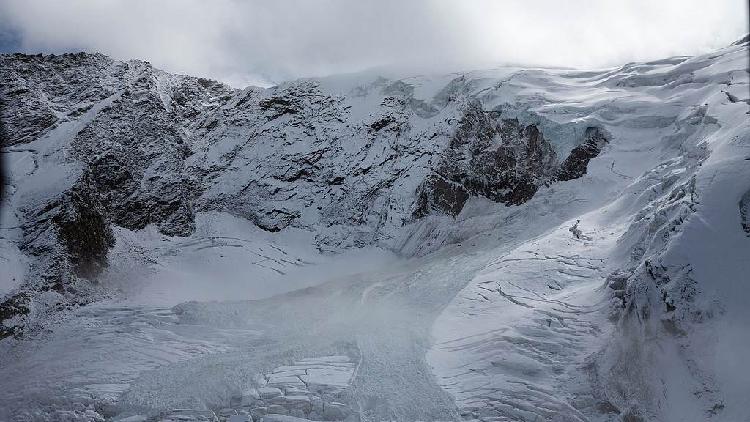
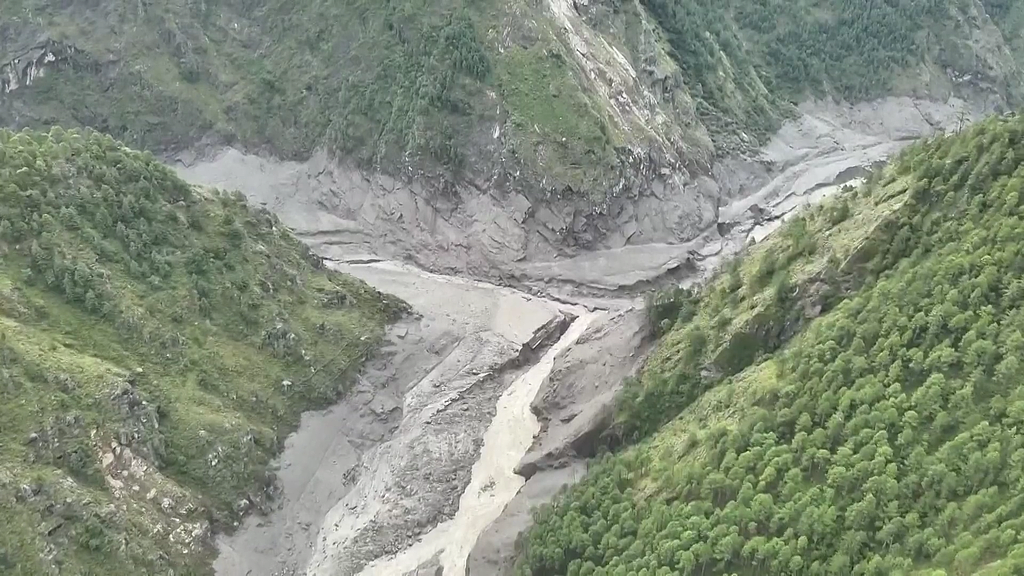
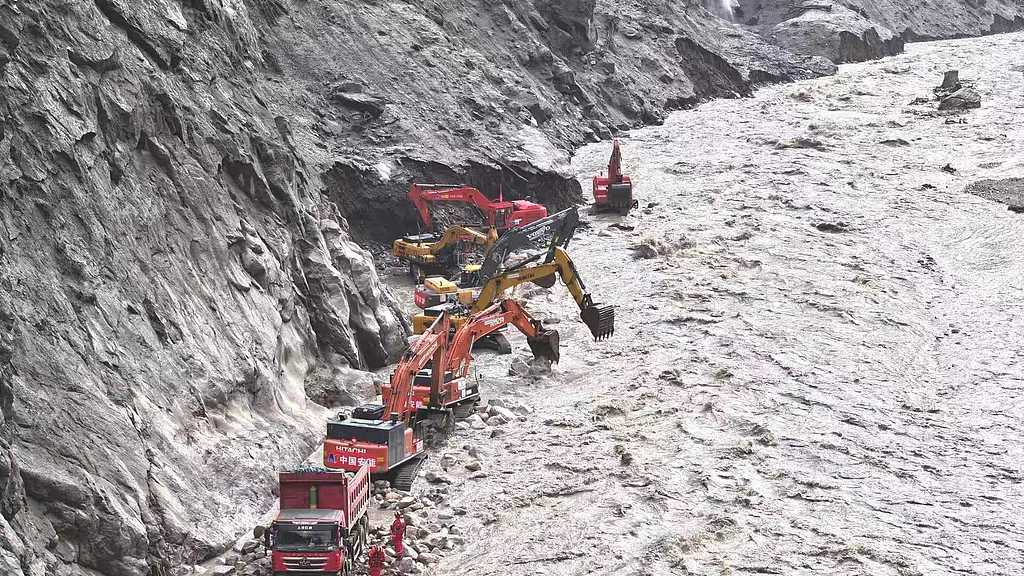
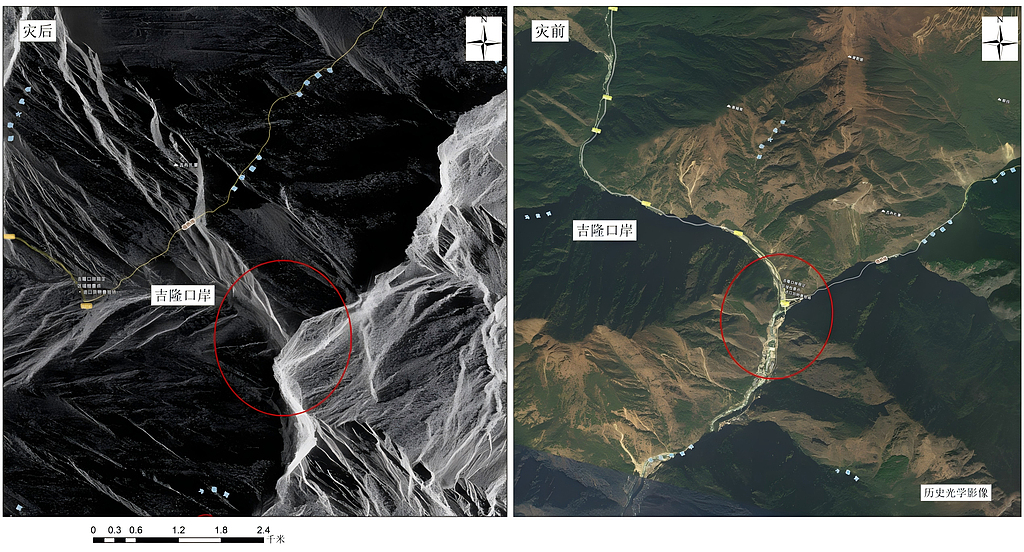
The source of the recent ice-rock avalanche and mudslide disaster on August 26 around Gyirong Port on the China-Nepal border, southwest China's Xizang Autonomous Region, was located on the northern slope of Nepal's Langtang Lirung peak, which posed a major challenge for monitoring and early warning, experts said at a media briefing on Sunday.
Su Pengcheng, a researcher at the Institute of Mountain Hazards and Environment under the Chinese Academy of Sciences, said the ice-rock avalanche began at an altitude of about 5,200 meters, rapidly descended, scoured the mountain slopes and developed into a massive mudflow. The flow traveled about 22 kilometers before reaching Gyirong Port in China at an elevation of around 1,800 meters. The entire process took just six to seven minutes and caused severe damage downstream.
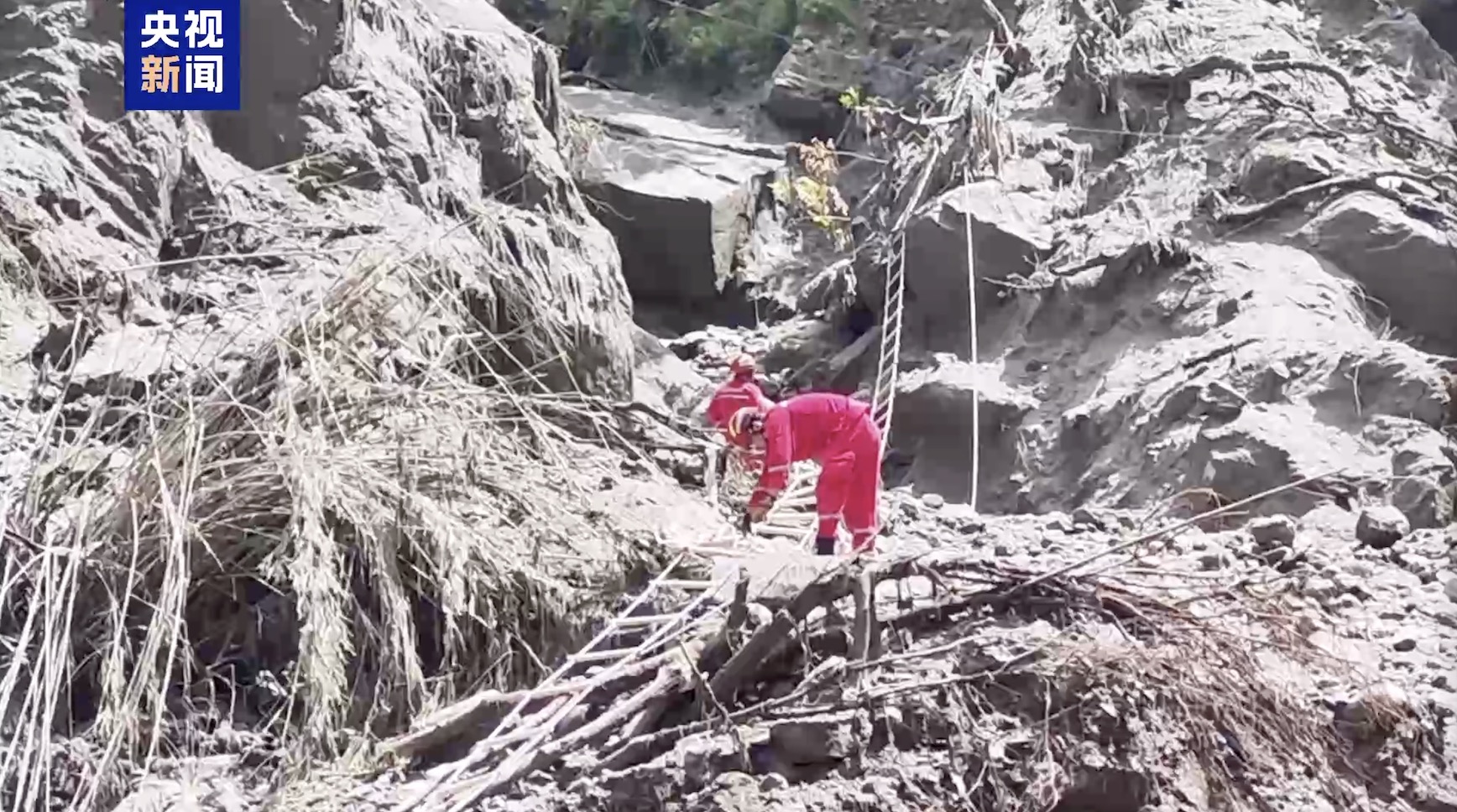
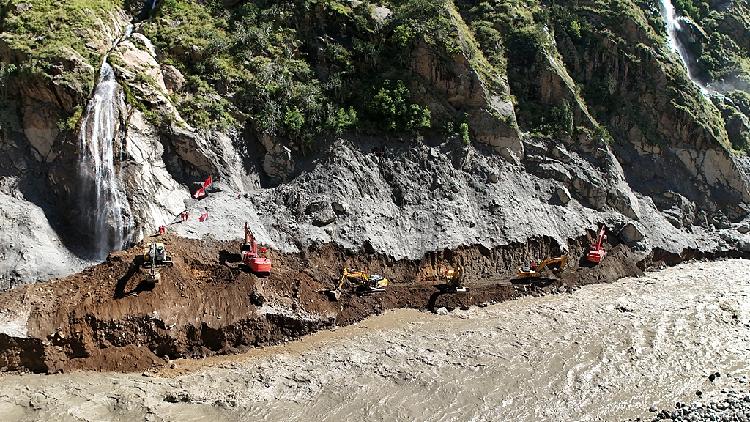
Following the disaster, runoff in the river channels has continued, with large amounts of loose glacial moraine and debris remaining along the channels, creating a potential risk of secondary blockages and barrier lakes. Experts warned the main secondary risk is that large ice-rock collapses could block the river channel, posing a threat to rescue personnel downstream.
Therefore, authorities have conducted a comprehensive survey of geological hazards in the Donglin Zangbo river basin. Remote sensing analysis, along with field surveys, show that the basin contains 26 glaciers larger than 1 square kilometer and 11 glacial lakes larger than 0.1 square kilometers, requiring continued monitoring.
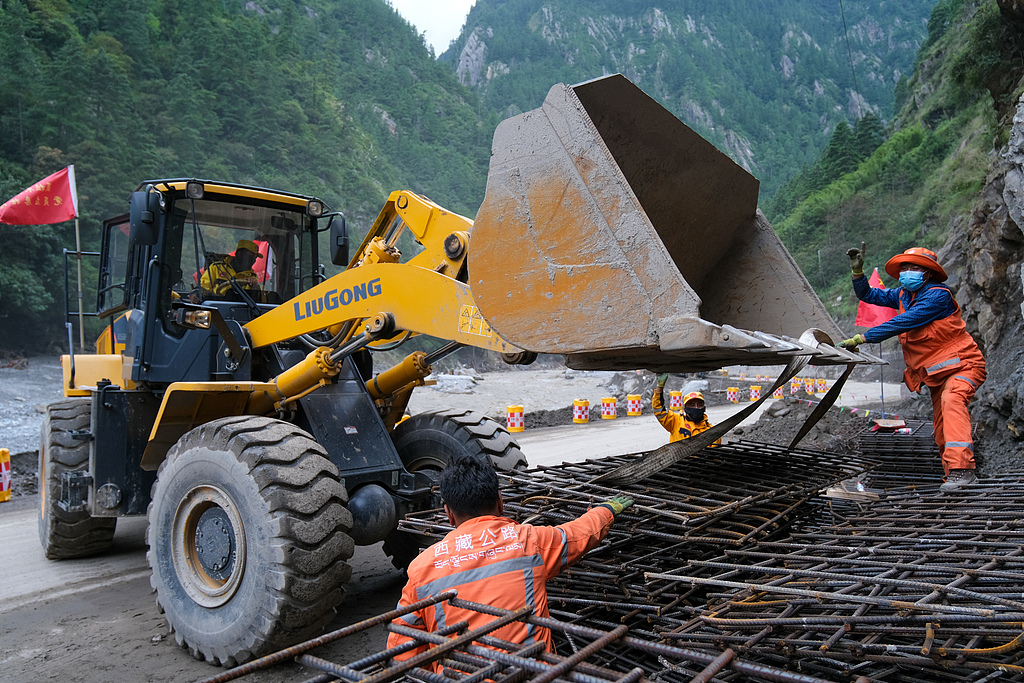
Efforts have also been made to ensure the safety and smooth operation of G216 National Highway, a vital access route for personnel, supplies and heavy equipment entering the affected area.
Multiple teams have carried out continuous monitoring and inspections along the highway, identifying and addressing potential geological hazards. A total of 58 risk points have been detected along the route and classified into high-, medium- and low-risk categories. At vulnerable sections, including areas prone to landslides, rockfalls and river erosion, authorities have installed slope monitoring equipment, reinforced protective structures and implemented targeted measures to reduce risks.
Given that Gyirong Port is located in a remote, high-altitude region along the China-Nepal border, monitoring the ice-rock avalanche source area is highly challenging. The source area is cold, oxygen-deficient and difficult to access, while cross-border river basins create observation gaps and ground-based equipment faces difficulties in power supply, communications and maintenance. The hidden nature of disaster-chain precursors leaves only a few minutes for early warning, making traditional point-based monitoring unable to cover risks across the entire basin.
Considering the conditions of Gyirong Port, Su said future work should focus on three key areas: enhancing scientific understanding of disaster chains, developing integrated monitoring technologies and strengthening cross-border cooperation.
Improving research and early identification of warning signals
The occurrence of ice-rock avalanches in the Himalayas is significantly driven by climate change, and the region is characterized by complex and diverse geological conditions and frequent tectonic activity, said Su.
As climate change increases the frequency of rare and extreme disasters, researchers should strengthen early assessment of glacier instability, close monitoring gaps at hazard source areas and introduce new geophysical detection technologies to track the entire disaster chain to obtain more reliable precursors and provide a strong theoretical basis for accurately assessing disaster risks.
These findings should also be linked with evacuation plans for downstream communities to improve the accuracy and effectiveness of warnings.
Building integrated space-air-ground monitoring system
Su proposed developing a non-contact monitoring network combining satellites, aerial platforms and ground-based technologies to reduce reliance on monitoring stations in extremely high-altitude areas that are difficult for people to access.
The expert said researchers should strengthen the development of equipment adapted to high-altitude and cold environments. He also suggested a three-level monitoring model – satellite-based wide-area screening, intensified monitoring of high-risk locations and emergency alerts for downstream areas – to provide more time for evacuation.
Strengthening cross-border cooperation
Cryosphere-related compound disasters are natural processes that are not constrained by national borders and the location of the upstream hazard source outside China is currently the biggest weakness in monitoring, Su said.
He called for leveraging international cooperation platforms to promote river-basin-level data sharing and joint risk assessments with countries in the Himalayan region, while establishing rapid channels for cross-border early warning information to extend early warning coverage across the entire basin.
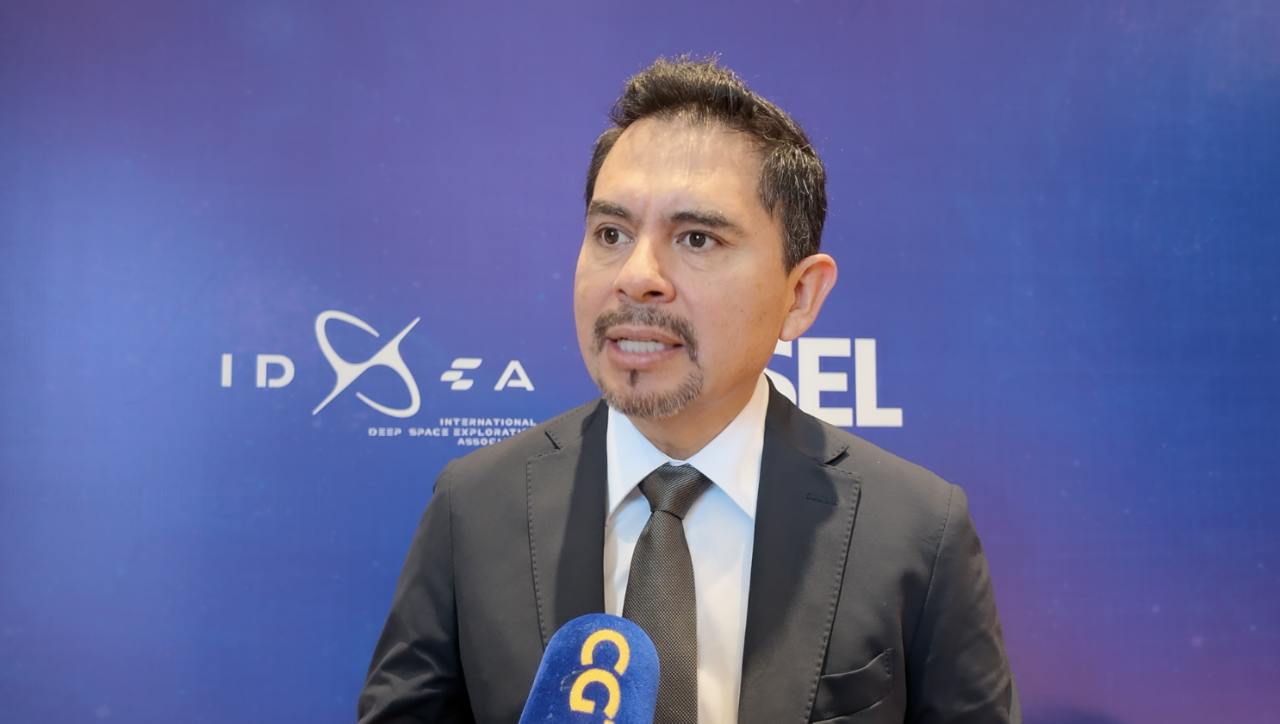
The Latin American and Caribbean Space Agency (ALCE) and the China-based International Deep Space Exploration Association signed a memorandum of cooperation this week. The MOU was signed at the International Deep Space Exploration Conference in Hefei. ALCE Secretary General, Oscar Fredy Gonzalez Rivera, told CGTN that it's the beginning of what's hoped to become a deep-rooted collaboration.
Italy sits on the boundary where the African tectonic plate is diving down beneath the Eurasian plate. It makes it one of the most seismically active countries in Europe but despite widespread scientific advancements, quakes have continued to devastate communities, which raises the question: canwe really ever predict earthquakes?
To understand the reality for many Italians, RAZOR's Gabrielle Lawrence heads to Campi Flegrei, near Naples and in the shadow of Vesuvius, one of Italy's most seismically active regions.
Since 2018, unrest has intensified, with multiple magnitude 4 earthquakes in 2025 and persistent ground uplift threatening hundreds of thousands of residents. We meet scientists who are now using artificial intelligence to analyze vast seismic datasets, searching for early warning signals of major quakes that could devastate communities.
In another seismic hotspot, Pavia in northern Italy, is one of Europe's leading earthquake engineering laboratories. Here, researchers operate experimental shake tables capable of recreating devastating seismic forces. Full-scale buildings are violently tested to understand exactly how structures fail — we ask engineers how future cities can be built to survive.
RAZOR has also been given special access to the nerve center of Italian seismology. The Operations Rooms of the National Institute of Geophysics and Volcanology (INGV) in Rome. When an earthquake happens anywhere in the country, it appears real-time on screens here.
Local authorities have rolled out comprehensive cross‑border humanitarian and information‑sharing measures at a Chinese‑foreign media briefing on the August 26 mudslide in Gyirong County, Xizang Autonomous Region.
China has set up dedicated communication channels for foreign nationals' families and established regular data‑sharing mechanisms with Nepal, while dispatching experts and providing emergency relief supplies at Nepal's request.
Authorities also confirmed that 261 foreign nationals from 23 countries remain missing in the disaster.
Relevant information has been promptly notified to the embassies of concerned countries in China via diplomatic channels.
A 24‑hour dedicated hotline has been opened for family members of missing foreign nationals. It has received 509 calls in total, with timely updates provided to call‑in family members.
Communication and information‑notification mechanisms have been set up with relevant countries. Through the China‑Nepal disaster‑prevention information notification channel, China shares daily meteorological, hydrological, glacial‑lake and glacier‑related data with Nepal.
At Nepal's request, the Chinese government has dispatched specialists in tunnel rescue and DNA identification, and delivered emergency material assistance.
The Xizang Autonomous Regional government has provided Nepal with relief supplies including 320 tonnes of Bailey bridge components.
As the 2026 Aichi-Nagoya Asian Games approach, technological innovation is becoming a core driver of China's sports development under the newly released 15th Five-Year Plan (2026–2030) sports powerhouse blueprint.
Unveiled by the State Council Information Office (SCIO) at a press conference on September 3, the officially approved plan prioritizes digital and intelligent upgrading across elite sports, public fitness and the sports industry.
According to officials with the General Administration of Sport of China (GAS), tech-enabled training has bolstered China's preparation for the upcoming Asian Games, as well as future Olympic campaigns.
The country is building a full-cycle digital support system powered by AI, big data and cloud computing, covering athlete selection, scientific training, real-time performance analysis and injury prevention.
The system delivers precise, personalized training solutions to sharpen athletes' competitive edge for major international events.
The GAS also announced at the SCIO briefing that authorities will relax restrictions on team establishment, event organization and athlete participation to diversify elite sports development, encouraging enterprises, universities and clubs to join as key partners.
Technology is crucial to standardizing and professionalizing diversified participation in competitive sports.
For public fitness, the GAS outlined a smarter, more precise and inclusive upgrade for China's national fitness system during the 15th Five-Year Plan period (2026-2030).
As stated in the official blueprint, China targets 40% of the population participating in regular physical exercise and 4 square meters of per capita sports venue area by 2030, with over 5,000 newly built or renovated mini sports parks and community fitness venues nationwide.
To meet upgraded public demands, the sports authority will implement an "AI+ fitness" initiative, build big data-based scientific fitness platforms, and deliver personalized exercise guidance for key groups including teenagers, the elderly, chronic disease patients and new-form employment workers.
A closed-loop "assessment-guidance-training" service will further integrate sports and healthcare to cover diverse social groups.
Technological innovation is designated as a core driver for the high-quality upgrading of China’s sports industry, according to the 15th Five-Year Plan sports development blueprint.
Official statistics show that China's sports industry scale reached 5.12 trillion yuan (around $762.8 billion) in 2025, with a national target of exceeding 7 trillion yuan by 2030.
To address weaknesses in core sports equipment technologies, authorities will boost R&D on high-performance competitive gear, smart wearable devices and intelligent venue systems, accelerate domestic equipment substitution and promote the transformation of sports tech research achievements into practical industrial outputs.
New sports industry formats are being fostered through official intelligent sports pilot programs jointly launched by the GAS and the Ministry of Industry and Information Technology.
The programs cover smart training systems, virtual sport events and digital campus sports solutions.
In addition, the national 15th Five-Year Plan explicitly supports the construction of 100 high-quality outdoor sports destinations, with standardized digital supervision to guarantee safe and high-quality development of the outdoor sports economy.
As highlighted in the official sports powerhouse construction plan, the in-depth integration of technology and sports during the 15th Five-Year Plan period will comprehensively boost athletic competitiveness, public fitness welfare and high-quality industrial development, solidifying the foundation of China's sports powerhouse construction.
Editor's note: Guo Xiaoke is a professor and director of the Center for International Communication Studies at the Communication University of China. The article reflects the author's opinions and not necessarily the views of CGTN.
At 10:52 a.m. on August 26, a mass of glacier broke away from a high slope in Nepal's Langtang region. Seven minutes later, it reached Gyirong Port on the Chinese side of the border. It had fallen some 3,300 meters and traveled some 22 kilometers.
The United States Geological Survey recorded the seismic energy released by the collapse as equivalent to a magnitude-5.2 earthquake. By the time the mud settled, roughly 0.7 square kilometers of the port area had been leveled.
The human toll is still being counted.
As of 6 p.m. on September 4, 31 people had been confirmed dead and 531 remained missing in the disaster-hit Gyirong County, southwest China's Xizang Autonomous Region, according to the On‑site Emergency Rescue Command Headquarters for the disaster.
Nepal police has reported 1,342 deaths, with 4,898 people still missing as of 5 a.m. on Saturday.
Two neighbors, one mountain, one event. From onset to arrival: seven minutes.
The slower clock
Set those seven minutes against the timetable of our response.
In July 2025, after floods on the Bhote Koshi swept away the Miteri (Friendship) Bridge at Rasuwagadhi, China and Nepal publicly agreed to share real-time cross-border information on floods, landslides and glacial lake risks.
In May 2026, officials met in Kathmandu, where Nepali hydrologists asked for data on glacier movement and water levels on the Chinese side.
Between late May and early June, a joint Chinese scientific expedition carried out fieldwork along the transboundary rivers, and a team from Chang'an University established a preliminary field monitoring system built around seismic signals.
In July, China presented MAZU (Multi-hazard, Alerts, Zero-gap, Universal), the early-warning solution it has developed for the Global South, at the fifth Trans-Himalaya International Cooperation Forum in Nyingchi. The forum drew delegates from 29 countries and regions, including Nepal's deputy speaker.
Every one of these was a step in the right direction. On the morning of August 26, the disaster struck.
That gap is not evidence of bad faith. It is simply the ordinary pace of institution-building, a pace set by protocols, mandates, budgets and the slow accretion of trust.
The trouble is that disasters do not wait.
A deficit we share
When disasters like this one are reported, the habit is to look for someone to blame. The more useful thing is to look closely at what actually failed. What emerges is not a story of one country withholding something from another.
Consider what Nepal's own disaster officials have said publicly. Pradip Kumar Koirala, a coordinator at Nepal's National Disaster Risk Reduction and Management Authority, told the Chinese news outlet Jiemian that neither side received any effective warning before the disaster.
Between the two countries, he said, there are presently only framework and intent documents at the leadership level; the concrete operational mechanisms remain to be built.
Of the 10 hydrological stations in the affected area, six were destroyed outright by the flood. Village-level safety officers, he said, can only watch with the naked eye, having neither equipment nor funding.
The information barrier on either side of the border is, in his words, the chasm that joint prevention must cross.
Read that carefully. This is not a charge of concealment. It is a description of a capability deficit – and a shared one.
Nepal's shortfall is plain: instruments it cannot afford, stations a single flood can wipe out and a last mile that depends on someone standing on a hillside looking upstream. China's shortfall is less obvious but no less real.
It has satellites, seismic arrays and modeling capacity. What it does not have is a reliable way to anticipate the moment when a mass of ice and rock, perched above 5,000 meters in terrain too steep and too high for routine ground surveys, will let go.
That is an unsolved problem in geophysics, not a failure of vigilance in any one country.
Two neighbors, then, exposed to the same hazard, each holding part of the answer, neither holding enough.
This is where the blame frame does its real damage. It converts a shared vulnerability into a bilateral grievance. It buys outrage and costs time, the one thing a disaster is least willing to give.
Asking who failed is an understandable instinct, and in most domains, it is the right one. Here, it is the wrong one, and it is worth being precise about why.
The source zone lay above 5,200 meters. No significant rain fell in the catchment that day. The event began with ice and rock, not with water released by any structure.
Even a monitoring network far denser than anything either country operates would have detected the first signs of failure in minutes rather than hours. That is enough time, perhaps, to clear a riverbank, but not to evacuate a valley.
None of this makes monitoring futile. It means the question worth asking is not who knew what and when, but what we would have had to build in advance to have had even those few minutes.
Early warning as a public good
There is an answer, and part of it already exists.
MAZU is the early-warning system developed by the China Meteorological Administration in support of the United Nations' Early Warnings for All initiative.
It combines satellite observation, radar, numerical forecasting and artificial intelligence, and it is delivered as a cloud service rather than as hardware a recipient country must buy and maintain for itself. More than 40 national meteorological agencies now use it.
Customized versions are running in Pakistan, Ethiopia, the Solomon Islands, Jordan and Sri Lanka. Cloud nodes in Singapore and Cairo bring South Asia, Southeast Asia, the South Pacific and Africa within reach, and China has said it expects to extend the system to 30 countries within five years.
The detail that matters is a small one.
The joint China-Pakistan early-warning platform carries a dedicated module for glacial lake outburst floods, or GLOFs, that tracks hydrological change in high-mountain terrain with precision. It was built for the Karakoram. The Himalaya obeys the same physics.
That points to a concrete proposal: pair the GLOF capability already proven in the Karakoram with the seismic monitoring network already piloted along the China-Nepal transboundary rivers, and build from them a joint cryosphere early-warning platform that is jointly governed and jointly funded, drawing on the satellite and modeling capacity China already shares through MAZU.
Nepal would gain instruments and lead time it cannot presently afford. China would gain eyes on terrain it cannot presently survey.
Both would gain something harder to measure and worth more: a standing mechanism. When the next disaster comes, cooperation does not have to be improvised in the middle of it.
Which brings us to the principle underneath all of this, and the one I would press hardest. We have grown used to treating data generated within a country's borders as an attribute of sovereignty, something to be granted, withheld or traded.
In lowland geopolitics, that instinct has a certain logic. At 5,000 meters, in a warming mountain world where the failure of a single slope becomes a catastrophe in two countries within 10 minutes, it is a luxury we can no longer afford.
Data held upstream is not a sovereign privilege. In these mountains, it is a lifeline, and it should be governed as a public good.
The Third Pole as a test case
The stakes reach well beyond one border crossing.
The Qinghai-Xizang Plateau has warmed by about 0.35 degrees Celsius per decade since 1961, well above the global average. Nepal has lost close to a third of its glacier ice in three decades, and the rate of loss over the past decade was some 65% faster than in the decade before.
Glaciers that thin and retreat also destabilize the rock and moraine around them, and the failures that follow are increasingly cascading: one hazard triggering the next, across the very boundaries our institutions were built around.
The Westphalian settlement assumed that the world could be divided into territories and that what happened inside each was primarily its own affair.
Cascading hazards of the cryosphere are a direct refutation of that assumption. They do not recognize the unit of account. They cross borders, need no visa, and arrive in minutes.
How we respond is therefore a test of something larger than disaster management. It is a test of whether a system of sovereign states can learn to govern shared risk at the speed the risk actually moves.
The Third Pole is where that question will be answered first because that is where the ice is moving fastest.
Coda
Since August 26, China has shared satellite imagery, hydrological data and barrier-lake warnings with Nepal, sent relief supplies and tunnel-rescue specialists, and flown DNA identification experts to Kathmandu.
Little of this has been widely reported, which is in the nature of relief work. But it points to the same principle: capability that stops at the border is worth less than capability that crosses it.
At 10:52 the glacier let go. At 10:59 it arrived.
We cannot make disasters slower. We can make our institutions faster.
China's meteorological authorities have aided Nepal's rescue and relief efforts by sharing data and providing weather forecasts and early warning solutions tailored for Nepal after a deadly mudslide hit their shared border region on August 26.
According to officials from the China Meteorological Administration (CMA), the administration held video weather consultations with Nepal's meteorological department immediately after the disaster and has actively provided meteorological support for Nepal's rescue and relief operations.
China has also established a dedicated meteorological support team for Nepal and began providing daily monitoring and forecasting reports in English.
The CMA said it will provide seamless forecasting services, offering strong support for Nepal's rescue operations. The CMA has also been providing Nepal with a range of meteorological products through MAZU, China's homegrown AI-powered meteorological early warning system.
The administration urgently developed a cloud-based version of MAZU customized for Nepal, which integrates multi-source data from China's Fengyun meteorological satellites and ground-based observation networks and is equipped with a series of AI-powered forecasting models.
The customized version was already delivered to Nepal for trial use.
ChatGPT maker OpenAI said Thursday it would begin rolling out its newest and most powerful artificial intelligence (AI) model to select customers, saying it had built in safeguards to mitigate security risks.
"At this level of capability, safety has to become our top priority," OpenAI president Greg Brockman told reporters on a call about the release of GPT-6, also known as Astra.
Just over a year has passed since OpenAI launched the previous version of its flagship model, GPT-5.
Concerns about the capabilities of advanced models have grown since then, following incidents involving systems built by OpenAI and rival developer Anthropic.
OpenAI paused some model development for two weeks this summer after two models it was testing were involved in a security breach at AI platform Hugging Face.
The San Francisco-based company said Astra was developed with stronger safeguards after that incident, though Astra itself was not involved in the hack.
"We are working towards getting Astra in everyone's hands as quickly as we can; I know it is frustrating and I appreciate the patience. It should be quick," OpenAI CEO Sam Altman posted on social media Thursday afternoon.
In a blog post, OpenAI said Astra can autonomously handle a wide range of "tedious" computer tasks, including website creation, scientific analysis, game development, cybersecurity and coding.
To illustrate the time savings of building autonomous AI agents with Astra, the company said the model could cut apartment hunting from six hours to under 10 minutes.
"It's not unreasonable to feel that we are now in the AGI era," Brockman said, referring to artificial general intelligence, a hypothetical stage at which AI systems match human intelligence across most tasks.
OpenAI previously had an agreement with Microsoft, one of its earliest and largest investors, under which an exclusivity clause would end once OpenAI reached AGI. Those terms were scrapped in April.
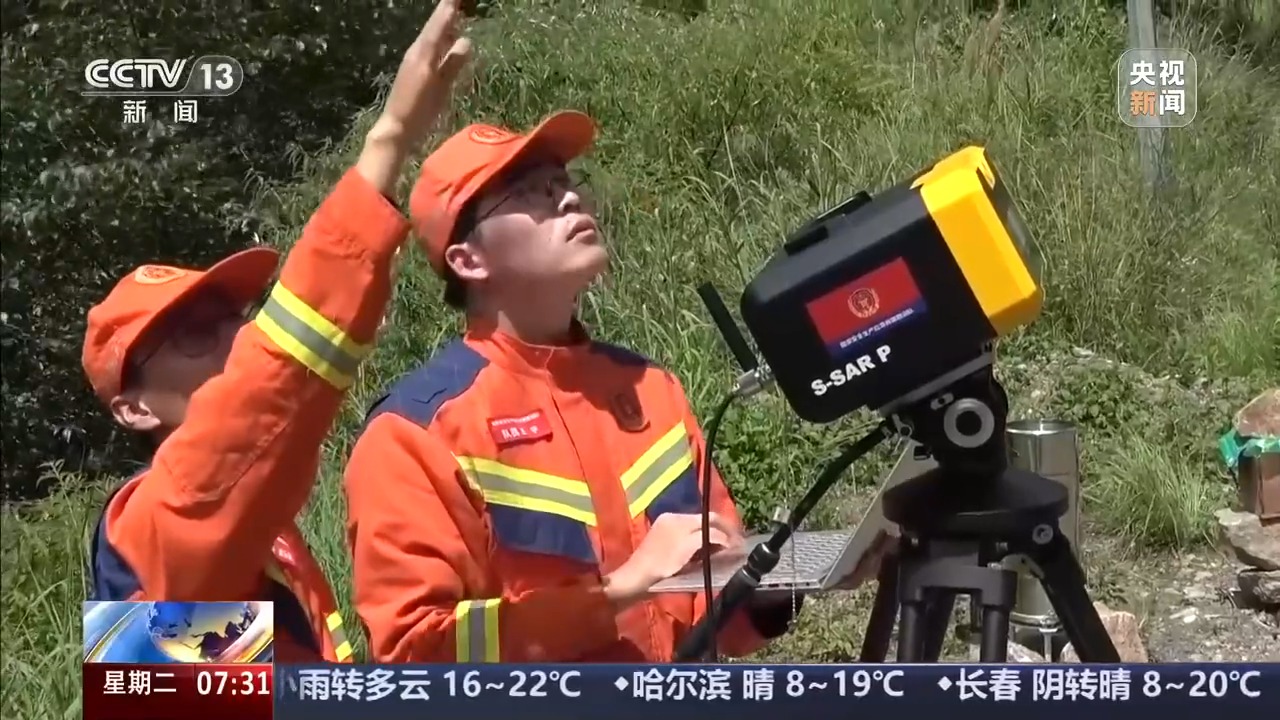
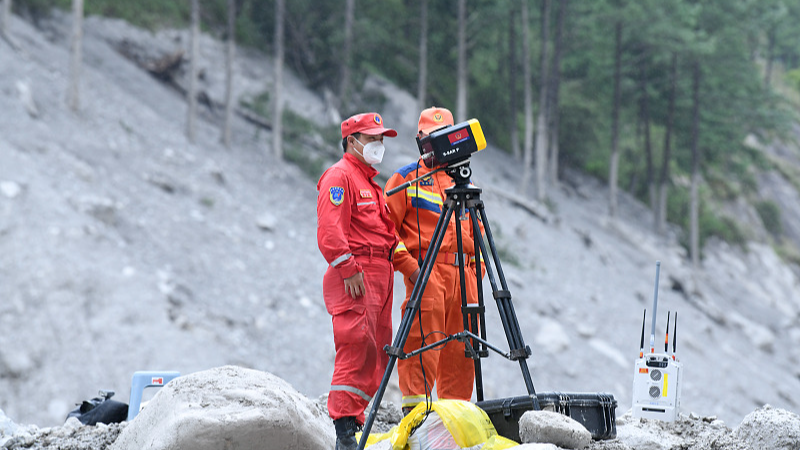
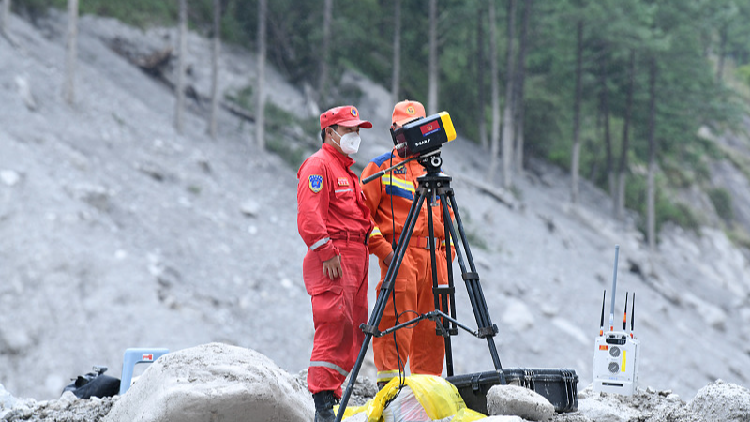
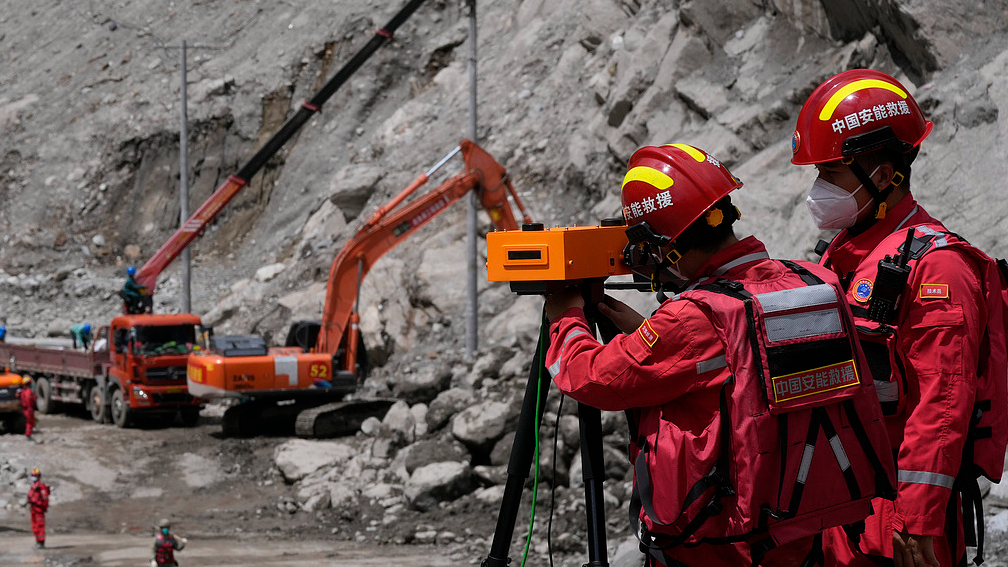
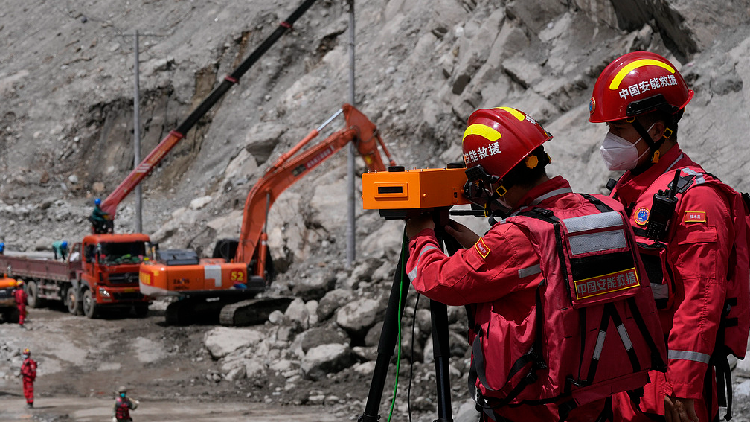
China has deployed ground radar, drones and specialists to build an integrated early-warning system in Gyirong County, southwest China's Xizang Autonomous Region, keeping rescuers safe after last week's mudslide disaster.
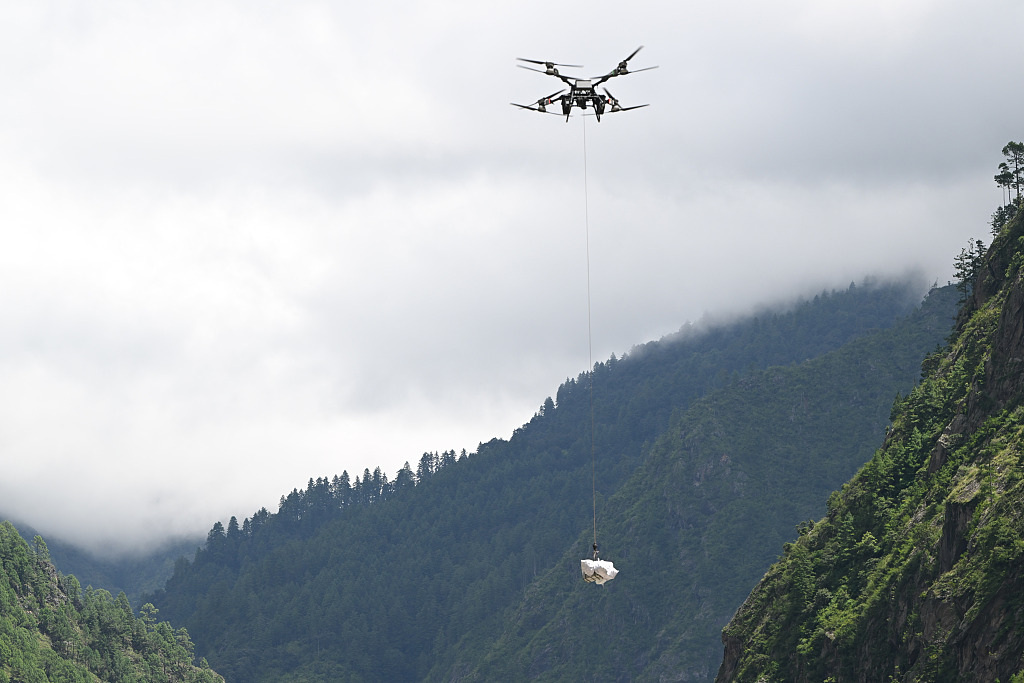
Thirty-nine personnel from three national emergency rescue teams – split into two groups – moved into the disaster zone on Friday, setting up monitoring points and aerial surveying systems to track secondary disaster risks in real time.
One group installed a portable slope radar and conducted drone surveys to track slope changes around the port area.
The other group focused on the upstream barrier lake, adding a new monitoring site in a high-risk geological area northeast of the Jilong No. 2 open-cut tunnel. They are also continuing to monitor the lake's dam, the landslide body on the southern bank, the hillside at a bend in the downstream channel, and slope No. 2 at the barrier lake in Guoba Village.
The team also completed high-precision aerial topographic surveying of the newly identified high-risk area.
So far, the teams have logged 192 hours of monitoring, collected 3,520 sets of data, and carried out 150 drone missions.
United States President Donald Trump's White House on Thursday unveiled a website featuring classic arcade games – but with a "MAGA" twist, in which players can deport migrants and build a border wall.
Rights groups swiftly criticized the release of the online games, which comes as the Trump administration steps up its mass arrest and deportation program for undocumented migrants.
One game called Rio Run – an updated version of the game Snake – features a digital version of US border czar Tom Homan chasing migrants with different skin colors next to the Rio Grande river on the Mexican border.
Another game based on the block-stacking game Tetris is called Build the Wall. "Protect the border from the coming horde," the instructions say.
A third involves collecting nets to put in so-called "Trump accounts" – investment accounts containing a $1,000 deposit for children born in 2025 through 2028.
The White House account on X posted a video with the "Make America Great Again" logo MAGA, based on the logo of video game maker Sega.
"CAN'T STOP WINNING. Build the wall. Deport. Fill a Trump Account," it says.
"This administration is laser focused on ways to innovate and tell the story of the president's many accomplishments in a way that resonates with every American," the White House said in a statement to AFP.
"This is an effort to further contrast between a culture of fun and winning and the dark socialist vision Democrats have for America."
Rights groups criticized the White House for the gaming website.
"Makes me sick. They've been playing games with people's lives for years, now they've made a video game of what they're doing," Amerika Garcia Grewal, co-director of the Frontera Federation in Eagle Pass, Texas, told AFP.
The game designers "have lost touch with what it means to be human and care for others."
Adriana Jasso, program coordinator for AMIGOS San Diego Community, who works at the border, said the arcade-style games showed a fundamental "lack of seriousness" from the administration.
"The cruelty, the extremity of the administration ... is no longer surprising," she said.
The White House seems intent on dehumanizing and ridiculing migrants, even as people die in detention centers, she said.
"This presents the issue as if it were a game, when in fact it is not."
Trump campaigned on a promise to expel millions of undocumented migrants and has taken several actions since returning to power aimed at speeding up deportations and reducing border crossings.
His White House meanwhile has long used social media stunts to ram home its points and troll liberal opponents, and has sparked a backlash from several artists by using their music without permission.
ChatGPT, Claude and Grok experienced outages at the same time Thursday, while some Gemini users also reported problems. So far, there is no confirmed evidence the outages had the same cause. But as AI becomes part of everyday work and business, the disruption raises a bigger question: what happens when the tools we depend on suddenly stop working?
For more, check out our exclusive content on CGTN Now and subscribe to our weekly newsletter, The China Report.
A mudslide that tore along the China-Nepal border and struck Gyirong Port in southwest China's Xizang Autonomous Region on August 26 was made far more destructive by the steep, narrow Himalayan gorges, said Sudan Bikash Maharjan, a remote-sensing analyst at the Kathmandu-based International Center for Integrated Mountain Development.
The debris flow, triggered by a glacier collapse in Nepal, surged at exceptional speed and carried enormous force, the analyst told China Media Group.
Sediment and boulders, picked up as the ice-rock avalanche plummeted down to the Bhote Koshi River and into the Trishuli River, breached riverbanks, wreaking havoc along roughly 100 kilometers of the river corridor in Nepal.
Hydrological observations from the International Center for Integrated Mountain Development (ICIMOD) show that water levels on the Trishuli River at Galchhi rose by as much as 9 meters within 30 minutes, while levels at Malekhu increased by 7 meters. Several monitoring stations along the Trishuli were reportedly damaged or washed away.
ICIMOD researchers are continuing to analyze hydrological, seismic, remote-sensing and field data to better understand how the disaster developed and assess the risks facing downstream communities in Nepal.
China has provided Nepal with a customized cloud-based version of its homegrown MAZU meteorological early warning system to support rescue efforts following the deadly cross-border mudslide on August 26, Chinese Foreign Ministry spokesperson Guo Jiakun said Thursday.
What is MAZU?
Developed by the China Meteorological Administration (CMA), MAZU is an AI-powered meteorological early warning platform that integrates satellite, ground-based and AI forecast data, generating over 200 types of weather service products. It has been deployed in customized versions in seven countries, with more than 40 countries accessing it via cloud services.
Meteorological support for Nepal
Speaking at a press briefing, Guo said the CMA established immediate contact with Nepal's Department of Hydrology and Meteorology after the disaster. The two sides have held video consultations and shared real-time information.
"The CMA urgently developed a customized cloud edition of the MAZU system and delivered it to Nepal for trial use to provide meteorological support for Nepal's rescue and relief efforts," Guo said. The system was delivered on August 31.
Since the disaster, the CMA has also set up a dedicated support team for Nepal, providing daily monitoring and forecasting reports in English. China's Ministry of Water Resources has continuously shared hydrological data with Nepal.
Nepal expressed deep appreciation for China's support, Guo noted, saying it "reflects the great friendship between the two neighbors." China will continue to support Nepal's emergency response efforts.
The disaster, triggered by a high-altitude glacier collapse in Nepal, caused heavy casualties and left thousands missing.
During the Asia-Pacific Media Forum, participants joined a field trip to Zhuhai’s 220-kilovolt smart substation and a shared zero-carbon laboratory. There they saw robot dogs, de-icing robots and drones used for power-grid inspection and disaster preparedness.
Among the visitors was Sharachchandra Bhandary, Executive Editor and Senior Correspondent for International Affairs at Nepal’s National News Agency (RSS). Drawing on Nepal’s own experience with floods, landslides and other natural disasters, Bhandary said wider access to technology and equipment could help economies across the Asia-Pacific strengthen resilience. He also highlighted China-Nepal cooperation in disaster response, including information sharing and equipment support, and called for closer regional coordination to match technological solutions with local needs.
El Nino has strengthened and could become a "very strong" event in the coming months, the World Meteorological Organization has warned – raising the risk of floods, drought and extreme heat well into 2027.
The central-eastern equatorial Pacific Ocean has seen warmer waters. Sea surface temperatures ran up to 2.6 degrees Celsius above average between late July and mid-August, and subsurface temperatures in some areas have exceeded 8 degrees Celsius above average.
WMO forecasts put the likelihood of El Nino persisting through February 2027 at close to 100%.
"El Nino is being supersized before our eyes," said UN Secretary-General Antonio Guterres, warning that the world is in a "danger zone of extreme weather."
Global impacts
"We are already seeing disruption and devastation from droughts and floods and we expect these impacts to increase as El Nino intensifies," WMO Secretary-General Celeste Saulo said.
The impacts will vary by region. Drier-than-normal conditions are expected across parts of Southeast Asia, Central America and northern South America, increasing drought and wildfire risks, while flooding is likely in parts of eastern Africa, southern Brazil and the southern US.
Major mobilization
El Nino is a natural phenomenon, not caused by climate change. It typically occurs every two to seven years, peaks between November and February and lasts around nine to 12 months.
But this one is different. The WMO has launched its largest mobilization in 50 years, teaming up with national agencies and UN partners to strengthen forecasts and early warnings and support disaster management and climate-sensitive sectors.
"This exceptional El Nino demands exceptional preparation and response," the WMO said, calling for climate forecasts to be turned into early action.
Editor's note: Yang Zhao is the chief editor of CGTN's Sci-Tech section.
Against the backdrop of a changing climate, the story we most often tell about glaciers is one of disappearance.
They are melting. They are retreating. Satellites and cameras record their decline. Glaciers have become one of the most visible victims of global warming.
But the recent disaster in the Himalayas offers a different warning: cross a certain threshold, and a glacier can become something else – the starting point of a chain of disasters.
That is what happened along the China-Nepal border. A rock-and-ice avalanche that began high in the mountains developed into a debris flow within minutes, sweeping through the Gyirong border port downstream.
How does a glacier make this transition – from a victim of climate change to a source of disaster? And can science help us prevent or mitigate the damage?
I spoke with Nie Yong, a disaster expert at the Institute of Mountain Hazards and Environment under the Chinese Academy of Sciences. His answer was sobering: we are becoming increasingly capable of seeing what is happening to glaciers, but we are still far from knowing exactly when one of them is about to fail.
The last mile of disaster prediction
From several powerful typhoons making landfall in China this summer to countdown alerts appearing on people's phones before an earthquake, people in China have grown accustomed to expecting warnings when nature turns dangerous.
That expectation is backed by real investments in science, technology and infrastructure. Earthquakes and typhoons have relatively mature monitoring systems around the world and are among the areas that have received the most investment in disaster monitoring and early warning.
Earthquake early warning, for example, takes advantage of a basic physical difference: electromagnetic signals travel much faster than seismic waves. Once an earthquake occurs, this allows warning information to be transmitted to areas that have not yet been hit by strong shaking, potentially buying people seconds, tens of seconds or, in some cases, longer to react.
However, glacier hazards are different. They do not have monitoring infrastructure on anything like the same scale. Nor do they offer such a clear-cut pathway from detection to warning.
In fact, glacier hazards are not new to scientists. Since the 1950s, glacier collapse events have increased, while since around 2015, extensive cryospheric hazards have continued to be observed across the high mountains of Asia. But many of these events occur in remote, sparsely populated areas, causing relatively limited losses and rarely making headlines.
The first requirement for prediction is continuous monitoring, and installing that monitoring infrastructure in high mountains is itself a formidable undertaking.
Modern early-warning systems are therefore a combination of technologies. Satellites work alongside ground-based instruments: hydrological sensors track changes in river and lake levels; weather stations record temperature and precipitation; ground-motion sensors detect seismic signals; and cameras provide direct visual observation. But in this case, the disaster began inside Nepal, in a high-altitude and extremely difficult-to-access area. Monitoring equipment could not reach the site.
In a place like this, simply knowing that a disaster is about to happen is already a profound scientific challenge.
And even when monitoring equipment is in place, the problem is far from solved.
The harder question is this: when scientists see an "anomaly," is it actually a warning of disaster?
When an anomaly is not a disaster
According to Nie, scientists watching for ice avalanches pay particular attention to indicators such as the development of cracks near the upper reaches of a glacier and unusual changes in the glacier's flow velocity.
But there is a catch.
A glacier is a plastic, continuously moving body. Satellites can detect tiny changes in its position by comparing images taken at different times.
Yet satellite remote sensing has its limits. To measure displacement, scientists need usable images from both before and after an event. In the case of this rock-and-ice avalanche, the initiation happened so quickly that satellites were unlikely to capture the two sets of images needed for a meaningful comparison.
In other words, a monitoring method designed to detect gradual change is not necessarily well suited to a disaster that unfolds almost instantaneously.
And even if scientists detect unusual movement in a glacier, that does not mean an ice avalanche will inevitably follow.
There is no simple one-to-one relationship between an anomaly and a disaster.
This may be the most difficult part of glacier disaster prediction. As Nie explained, after a disaster has occurred, researchers can often look back and identify signals that preceded it. But before the event, the same kinds of anomalies may appear again and again without triggering a disaster.
The challenge is not simply to detect an anomaly. It is to know which anomaly will become a disaster.
What does seven minutes mean?
In this disaster, only about seven minutes passed between the rock-and-ice avalanche and its impact on the Gyirong Port.
Seven minutes may sound like a reasonable amount of time.
In a rapidly moving disaster descending from a high-altitude mountain into a narrow valley, it is almost no warning at all.
In hindsight, experts believe there may theoretically have been a very short window for warning. But it was not long enough to evacuate people at the border port.
And the geography made escape even harder.
Gyirong lies in a steep mountain valley, where slopes commonly exceed 45 degrees. Even if people had received a warning, moving quickly to higher ground would have been extremely difficult.
This is an important distinction when we talk about early warning.
A warning is useful only if there is enough time – and enough physical space – for people to react.
A chain of disasters
China has conducted three national glacier inventories since 1978. Their assessments show that the area of glaciers across the Qinghai-Xizang Plateau has fallen from about 51,000 to 44,000 and then 39,000 square kilometers – a decline of more than 20%.
Over the same broader period of change, the number and area of glacial lakes on the plateau also increased by more than 20% between 1990 and 2020.
"Glacial lake" is another term that comes up repeatedly in the study of mountain hazards.
The mudslide disaster on August 26 was determined to have been triggered by an ice avalanche. But ice avalanches are not necessarily the most closely watched hazard in this region. In many cases, scientists are more concerned about glacial lake outburst floods (GLOFs).
When a glacier is healthy and advancing, it can act like a bulldozer, pushing rock and debris downslope and building ridges of sediment and rock known as moraines.
As glaciers shrink in a warming climate, meltwater can accumulate behind these moraine ridges, forming lakes.
But not every glacial lake is destined to burst. Nie stresses that only a fraction are considered high-risk.
The danger comes when an external force enters the system.
Across the Himalayas, one of the world's most severe regions for glacial lake outburst floods, many such events are triggered from above: an ice avalanche, rockfall or landslide plunges into a lake, creating a powerful impact that can cause the lake to breach.
One hazard can therefore trigger another.
And the risk can travel far beyond the glacier itself.
A new era of mountain risk
The Himalayas are like a giant wall separating the Qinghai-Xizang Plateau from South Asia.
But this wall has never been impenetrable.
Deep valleys cut through the mountains, opening pathways between two regions. Warm, moisture-laden air travels inland along these valleys. For centuries, traders have followed the same routes, carrying goods, ideas and cultures across the mountains.
These valleys have long been corridors of people-to-people exchange.
Today, those same historical corridors are shared hazard zones. The glaciers hanging above these cross-border valleys share the same thermal stress, the same fragile geology and the same volatile future.
As the planet warms, the hazards born high in the ice are no longer isolated scientific curiosities – they are a swift, shared threat to everyone living in their shadow.
China has conducted an integrated marine geophysical survey in waters under its jurisdiction east of the island of Taiwan, according to the Ministry of Natural Resources.
The survey was carried out from August 10 to 31 by the Second Institute of Oceanography under the ministry to improve the understanding of the basic geology and seafloor structures of the area.
It collected data on seafloor topography, sedimentary layers, deep geological structures and geophysical fields.
Researchers used multiple methods, including multibeam mapping, multichannel seismic surveys, ocean-bottom seismic observations, as well as gravity and magnetic surveys.
The data will support further research into seafloor sediments, geological structures, deep crustal structures and tectonic evolution in waters east of the island of Taiwan, while providing scientific support for the comprehensive management of waters under China's jurisdiction, the ministry said.
Inside Beidahuang Information Company in Harbin, capital of northeast China's Heilongjiang Province, a wall-sized digital map tracks conditions across some 3.2 million hectares of farmland.
Data on soil conditions, crop growth and tractor movements update across the screen, while satellite remote sensing, the Internet of Things and AI are being integrated into different stages of farming.
It is one example of how agriculture is changing in Heilongjiang, China's top grain-producing province.
Heilongjiang has ranked first in the country in total grain output for 16 consecutive years. The comprehensive mechanization rate for plowing, sowing and harvesting has reached 99.28%.
Now, AI, drones, remote sensing and smarter machinery are pushing that highly mechanized system into a more digital phase.
Farming by data
Wang Hao, deputy general manager of Beidahuang Information Company's market operation center, said a farmer inspecting crops on foot could previously cover only about 200 mu, or roughly 13 hectares, a day.
Drones and remote sensing can now monitor much larger areas and allow crop data across the monitored farmland to be updated every five days, he said.
The company's AI model for cold-region crops analyzes soil, weather and crop-growth data to generate planting plans and recommendations for variable-rate fertilization, which allows fertilizer use to be adjusted according to conditions in different parts of a field.
But scaling up agricultural AI remains challenging.
Wang said AI models require large amounts of local data and repeated testing because soil, weather and other environmental conditions can vary significantly from place to place.
Digital technology is also being used farther along the production chain.
In Wuchang, a major rice-producing area in Harbin, robots at Qiaofu Dayuan Agricultural Co., Ltd. stack packaged rice for shipment. QR codes on the products provide information including where the rice was produced and its nutritional content.
Smarter machines
Other technologies are changing the machinery working directly on farmland.
At a planting base in Heilongjiang, a four-wheel laser-weeding robot moves between crop rows. Multispectral cameras and sensors scan the ground, while algorithms distinguish crops from weeds and direct laser beams at the unwanted plants.
The system offers a chemical-free alternative to herbicides while reducing reliance on manual weeding.
Li Yongwei, deputy general manager of Harbin Huagong Zhiyun Technology Co., Ltd., said the technology can remove more than 95% of weeds while keeping crop damage below 0.1%. He said it can also cut weeding costs by up to 70% compared with manual labor.
Seeders are becoming more intelligent as well.
Electric-drive precision seeders produced by Heilongjiang Dewo Technology Development Co., Ltd. allow operators to monitor and adjust air pressure and seed spacing in real time through smart terminals.
Du Mujun, the company's chief engineer, said the system can reduce seed damage and operate about 50% faster than conventional mechanical seeders.
Beyond mechanization
Heilongjiang produced a record 82 million tonnes of grain in 2025, marking its 22nd consecutive bumper harvest. The province also had 676,000 intelligent agricultural machines that year, ranking first nationwide.
During the 15th Five-Year Plan period from 2026 to 2030, Heilongjiang plans to develop industries including agricultural robots and intelligent farming equipment.
Construction began in August on a national pilot base for AI applications in crop planting, aimed at tackling common technical bottlenecks and developing technologies that can be deployed on a larger scale.
The shift is part of China's broader push for agricultural modernization. National plans call for wider use of technologies including drones, the Internet of Things and robots in agriculture and rural areas.
For Heilongjiang, where mechanization of plowing, sowing and harvesting is already above 99%, the focus is increasingly shifting from simply mechanizing farm work to making equipment and agricultural decisions more intelligent.
Hu Jinyou, a professor at China Agricultural University, said smart agriculture is still being refined, but deeper integration between AI and agriculture is an "irreversible trend."
As a new generation of better-educated farmers enters the sector, digital management is likely to become increasingly common, he added.
A group of Chinese researchers has unveiled the Robotic Marine Materials Scientist Platform, an intelligent fabrication system that dramatically improves materials research and development efficiency over conventional approaches.
Traditional materials research faces two long-standing bottlenecks: valuable marine experimental data from failed trials are often lost, hindering artificial intelligence (AI) model training, while repetitive manual operations consume time and introduce errors.
To address these challenges, researchers at the Ningbo Institute of Materials Technology and Engineering of the Chinese Academy of Sciences developed the Robotic Marine Materials Scientist Platform for severe marine environments: high temperature, high pressure, high speed, high salinity, and high humidity.
The platform, covering a 400-square-meter intelligent laboratory, automates the entire workflow from design and preparation to testing and feedback. Robots act as "materials scientists" and carry out these tasks autonomously, significantly accelerating the material innovation cycle.
Working in synergy with the "MarineMat AI" assistant, the platform creates a closed-loop R&D system spanning AI-driven design, automated fabrication, characterization, and data feedback. The platform automatically records and structures all experimental parameters for model iteration, with AI prediction accuracy exceeding 90%.
Using this platform, the researchers have developed a novel multi-component cermet composite with excellent temperature and wear resistance, achieving over 30% improvement in mechanical and tribological performance over conventional ternary materials.
The screw drills made from this material have been deployed in the Chuanke-1 scientific exploration well in south China's Shenzhen at depths of 7,500 to 10,000 meters.
Governments, industries, and societies must take radical measures to prevent global temperatures from breaching the 1.5-degree-Celsius warming limit set by the Paris Agreement and avert widespread calamities such as extreme heatwaves and ecosystem collapse, according to a United Nations Environment Program (UNEP) report launched in Nairobi on Wednesday.
The report "Limiting Overshoot: Navigating exceedance of 1.5 degrees Celsius and pathways towards return" warns that failing to curb runaway warming will plunge humanity into a perilous future marked by climatic shocks, hunger, disease outbreaks and economic collapse.
UNEP Executive Director Inger Andersen noted that while global temperatures are increasingly likely to exceed 1.5 degrees Celsius above pre-industrial levels in the near term, avoiding a permanent breach of the threshold remains entirely possible.
"Now is the time we must double down on climate action. We can – and must – get on the right path by cutting greenhouse gas emissions, strengthening resilience and adaptation, and ensuring that any exceedance of 1.5 degrees Celsius is as small and short-lived as possible," Andersen said.
She noted that preventing even a fraction of a degree of warming each year will save lives, protect fragile ecosystems and reduce economic losses.
Despite national net-zero commitments, the UNEP report warns that breaching the Paris Agreement's temperature threshold is increasingly likely, escalating risks of accelerated sea-level rise, coral reef collapse, catastrophic wildfires and glacier loss.
The report warns of an elevated risk of triggering irreversible tipping points such as the collapse of the West Antarctic and Greenland ice sheets, the Atlantic Meridional Overturning Circulation, and the Amazon rainforest, with catastrophic consequences for planetary stability.
Unabated emissions of greenhouse gases, including methane and carbon dioxide, could cause temperatures to continue rising, threatening small island developing states and low-lying coastal cities with partial or total submersion, the report notes.
The report says that runaway warming will drive up energy costs and insurance premiums, straining financial systems worldwide.
Stressing that a climate crisis is still preventable, the report emphasizes that nations must transition to clean energy while cutting emissions of methane and other short-lived climate pollutants.
Limiting temperature spikes will require simultaneous adaptation and mitigation efforts, backed by multilateral cooperation, political resolve, effective policies and sustained financing, according to the report.
The report calls for implementing simultaneous adaptation and mitigation measures, backed by multilateral action, political goodwill, effective policies, and sustained financing, to curb global temperature spikes.
GoPro – the camera that made us all feel like action heroes – is being bought by a little-known optical maker called Starman Optical for $285 million in cash.
Inextricably linked with POV culture, GoPro's meteoric rise around its 2014 IPO, when it hit a $4 billion valuation, was followed by a spectacular crash-and-burn when it tried to cash in on the pop phenomenon, billing itself as the "content kingmaker" of the previous decade – and a downward stock spiral that wiped out 96% of its value.
The deal, announced on Tuesday, gives Starman – a privately held firm that makes optical transceivers in the US for use in AI data centers – a 90% stake, with existing shareholders keeping the rest. The cash injection will help GoPro plug a $92 million debt hole, and navigate surging chip prices and mounting competition from Chinese rivals such as DJI and Insta 360.
The companies said the deal would better position consumer-reliant GoPro to capitalize on its more than 2,500 US patents, including in optics and imaging, by tapping the commercial, defense and AI markets.
GoPro shares rallied more than 50% on the news to trade at $1.33, above the $1.14-per-share offer price – a premium of about 29.5%. That could suggest investors are expecting a higher bid.
Revenue in the June quarter was down more than 80% from a peak of $633.91 million in the last three months of 2014.
A surge in memory chip prices, driven by Big Tech's AI infrastructure buildout, has added to the pressure, forcing GoPro to warn of "substantial doubt" about its future in June.
As part of Tuesday's deal, Starman will add its optical transceivers – components that let networking equipment send data using light – to GoPro's portfolio. The companies also said they would aim to bring some optical equipment production back to the US, without specifying a timeline.
A clutch of companies including Allbirds, now known as Smartbird, have pivoted to AI in recent months, attracted by a surge of investment in the industry. Unlike some of them, GoPro will continue with its consumer business.
The company will also remain publicly listed after the deal closes, expected by the end of the year.
Chinese researchers have developed a new chip that enables real‑time hyperspectral imaging analysis, cutting out bulky servers and huge data files.
Hyperspectral imaging identifies what things are made of. Every material reflects, absorbs and emits light differently across the electromagnetic spectrum. Hyperspectral imaging captures this unique "spectral fingerprint," making it vital for remote sensing and industrial inspection. But the extra spectral dimension comes with a cost: massive data.
The work, led by a team from the Beijing Institute of Technology (BIT), was recently published in the journal Science.
"A single image can take up hundreds of megabytes or even gigabytes, placing huge pressure on back‑end data processing," said Bian Liheng, a tenured professor at BIT.
The team tackled the problem on two fronts. In 2024, they miniaturized the bulky optical system of traditional hyperspectral cameras down to chip level. Now, they've solved the back‑end real‑time computing bottleneck, by mining data correlations to cut redundant calculations, and redesigning the chip's arithmetic units to process data continuously on a single chip.
The breakthrough could transform satellite remote sensing. "When computing is chip‑based, data no longer needs to be transmitted to the ground for processing – satellites can produce results in real time, right on board," Bian said.
This innovation shifts hyperspectral imaging from offline post‑processing to on‑site real‑time computing, opening new possibilities for portable, embedded systems across a wide range of applications.
China has hit upon a major gold and copper find in Chating, Xuancheng City, east China's Anhui Province, a discovery that could pave the way for a massive new resource base, the Ministry of Natural Resources said on Tuesday.
The Chating copper-gold deposit, in the heart of the Yangtze River Delta, is one of the country's most promising recent finds with the potential to reach ultra-large scale.
Exploration of deep ore bodies is ongoing, but the mother lode identified so far is about 1.2 kilometers long and 1.1 kilometers wide.
Preliminary estimates suggest potential copper resources could exceed several large-scale deposits, each over 500,000 tonnes. Potential gold veins could top more than 10 large deposits containing over 20 tonnes each. Those numbers are expected to grow as exploration continues.
Hu Xianqi, director of the Geological Exploration Division, said the Chating project is one of the ministry's key explorations for 2026, and the breakthrough, achieved in just months, is significant.
"China's demand for copper is strong. External supply reliance is high, but domestic exploration potential is enormous. Chating is a vivid example," Hu said.
Copper is essential for solar, wind and new energy vehicles. Once developed, the Chating deposit could supply raw materials to smelting and processing industries in eastern China, helping ease regional shortages.
The discovery is also expected to boost resource supply across the Yangtze River Delta and China's eastern economic belt, supporting regional integration.
A geological disaster that recently struck along the China-Nepal border has once again drawn attention to glaciers.
Glaciers are often seen as "victims" of global warming. But glacier retreat, permafrost degradation and the expansion of glacial lakes, combined with extreme weather and complex geological conditions, may also increase the risks of ice avalanches, glacial lake outbursts, landslides and debris flows.
As monitoring and early warning technologies for extreme weather and climate events continue to advance, can glaciers in remote, high-altitude areas be monitored and warnings issued before disasters occur?
CGTN spoke with two experts about glacial disasters, climate change, monitoring and early warning: Zhang Dongqi, a research scientist at the Chinese Academy of Meteorological Sciences' Institute of Global Change and Polar Meteorology, and Ma Lijuan, a research scientist at the National Climate Center's Division of Climate Change Monitoring and Projection.
CGTN: We often think of glaciers as "victims" of climate change. Are we now also seeing glaciers becoming sources of hazard? Are ice-rock avalanches and other glacier-related hazards becoming more frequent or more severe?
Zhang Dongqi: Glacial disasters have always existed. They occurred less frequently during periods of stable climate and consequently attracted less attention. Against the backdrop of global warming, glacial disasters are becoming more frequent, causing greater losses and drawing increasing attention.
Analysis of the past several decades, or even the past 10 to 20 years, shows that ice-rock avalanches and other glacier-related disasters have indeed been increasing in frequency, and their severity is also increasing. Both factors are at play. Global warming has led to a higher incidence of cryospheric disasters in recent decades.
The expansion of human activity, advances in satellite remote sensing and other monitoring methods have also enabled us to detect more disasters in remote areas, including some that did not cause casualties in the past but left clear traces.
Ma Lijuan: Against the backdrop of a warming climate, glaciers in High Mountain Asia, with the Qinghai-Xizang Plateau as the core region, have been retreating and losing mass, while permafrost has been degrading and snow cover has been decreasing, with these trends intensifying since the 1990s. This has led to glacier instability and increases in the number and area of glacial lakes.
Cryosphere-related disasters, such as ice and snow avalanches, glacial lake outbursts, glacier-related debris flows and snowmelt floods have occurred more frequently. Studies show that glacier collapse events have increased since at least 1950, while the number of thermokarst ponds and the occurrence of permafrost retrogressive thaw slump have increased since the 1970s. Since 2015, abrupt cryosphere events have been continuously observed across large areas of High Mountain Asia.
China has completed three glacier inventories: the first covering 1978-2002, the second covering 2008-2015 and the third covering 2023-2026. A comprehensive assessment shows that the area of glaciers on the Qinghai-Xizang Plateau declined from 51,000 square kilometers to 44,000 square kilometers and then to 39,000 square kilometers over the past 60 years. According to the second comprehensive scientific expedition to the Qinghai-Xizang Plateau, both the number and area of glacial lakes on the plateau increased by more than 20% from 1990 to 2020.
CGTN: How does a warming climate change the physical conditions that keep glaciers and mountain slopes stable? Can we say that climate change increases the risk of glacier collapse, even if we cannot say it directly caused this particular event?
Ma: Temperature, precipitation and topography are the three necessary conditions for glacier formation and development. Since the 1960s, the Qinghai-Xizang Plateau and surrounding areas have warmed significantly, with the rate of warming clearly higher than the global average over the same period.
High-temperature events have become more frequent, while annual precipitation has also fluctuated upward, with greater extremes. Climate warming has accelerated glacier mass loss, increased glacier movement and reduced the stability of their internal structures, providing dynamic conditions for glacier surges and ice avalanches.
Meanwhile, glacier meltwater has increased the number of glacial lakes and rapidly expanded their area. Combined with extreme temperatures, extreme precipitation and loose geological conditions, this has contributed to the increased frequency of glacial lake outburst disasters.
Based on information from investigations so far, the event (on August 26) was triggered first by an ice-rock avalanche. The site is located in an area of maritime glaciers on the southern slope of the central Himalayas. Under the long-term influence of climate warming, glacier ice temperatures have risen and glacier flow has accelerated, while the internal structure of the glaciers has gradually become less stable and mountain slopes have become increasingly fractured.
Climate change is an important long-term risk factor for glacier melting. The direct cause of this event was geological environmental changes resulting from glacier instability.
CGTN: Can we predict when a glacier or ice mass is likely to collapse? What signs should scientists be looking for before a major collapse?
Zhang: If enough monitoring equipment is deployed and the data can be analyzed in a timely manner, we can basically predict whether a glacier has the potential to collapse, but predicting the exact timing of a collapse is very difficult. At present, glaciers are mostly located in remote, high-altitude areas where monitoring is inadequate, making it very difficult to predict ice avalanches.
Signals from multiple aspects, including geological and meteorological factors, need to be monitored, such as whether an earthquake has occurred in the area where the glacier is located, whether there has been sustained or sharp warming recently, and whether there has been prolonged or extreme precipitation. In addition, where monitoring conditions permit, signals such as stress and deformation within the glacier itself require particular attention.
Ma: Mountain glaciers are distributed in cold, high-altitude regions, where systematic field observations are difficult to conduct on a regular basis, resulting in relatively limit first-hand observational data. The continued development of advanced observation technologies is creating new opportunities for routine monitoring.
However, establishing a comprehensive early warning system remains a long-term challenge. It is necessary, in light of the complex terrain of the Qinghai-Xizang Plateau and the characteristics of typical glacial disasters, to build a coordinated Earth system observation network, with a focus on strengthening dynamic monitoring of high-risk glaciers and glacial lake areas.
At the same time, research into the disaster-causing mechanisms of typical glacial disasters should be deepened, a comprehensive early warning indicator system established, and future trends assessed and anticipated, so as to scientifically prevent and proactively respond to the impacts and disaster risks posed by changes in high-altitude glaciers.
Recent disaster events show that glacial disasters often result from a complex chain of interacting factors, including earthquakes loosening mountain slopes, glacier retreat, permafrost thaw, fractured geological conditions, prolonged heat or precipitation, and extreme weather and climate conditions. These factors can become coupled over long periods, triggering large-scale cascading disasters. All of these factors should be incorporated into an effective monitoring and early warning system for routine monitoring.
CGTN: What can satellites and other monitoring technologies tell us about an unstable glacier or mountain slope? How much warning time could an effective monitoring system realistically give communities downstream?
Zhang: Before a disaster occurs, technologies such as remote sensing and field monitoring can provide information on whether a glacier is potentially unstable and the degree of danger it poses. After a disaster occurs, these technologies can provide information on its location, extent and impact. Different types of disasters allow for very different warning times.
When a monitoring system is fully functional and operating effectively, the warning time for a glacial lake outburst may be measured in days. But ice avalanches and snow avalanches are extremely difficult to warn for, and the warning time may be much shorter, potentially on the order of minutes.
CGTN: What are the biggest gaps in our current early-warning systems?
Zhang: Inadequate monitoring – including limited monitoring coverage that cannot cover all high-risk glaciers, and limited monitoring methods that rely mainly on satellite remote sensing data while lacking field monitoring data – is currently the biggest weakness in the early warning system for glacial disasters.
It is recommended that a multi-layered "air-space-ground" three-dimensional observation and sensing system be developed to improve the rapid detection and precise identification of disasters and provide solid support for early warning.
Ma: The United Nations' Early Warnings for All initiative identifies four key elements of an early-warning system: disaster risk knowledge, monitoring and forecasting, warning dissemination and communication, and preparedness and response. For glacier-related hazards, all four areas remain underdeveloped, and there is an urgent need to establish an integrated monitoring and forecasting system.
Apple Inc.'s leadership transition officially took effect on Tuesday, with John Ternus succeeding Tim Cook as chief executive officer and Cook becoming executive chairman of the company's board of directors.
Apple's updated leadership page now lists Ternus as CEO and a member of the board, while Cook is now listed as executive chair.
Apple announced the succession plan on April 20, saying the transition had been unanimously approved by its board and followed a long-term succession planning process. Cook remained CEO through the summer and worked closely with Ternus on the transition. As executive chairman, Cook will continue to assist with certain aspects of the company, including engagement with policymakers around the world.
Cook, who joined Apple in 1998, became CEO in 2011 and led the company for about 15 years. During his tenure, Apple introduced new product categories including Apple Watch, AirPods and Apple Vision Pro, as well as services ranging from iCloud and Apple Pay to Apple TV and Apple Music.
Apple said in April that under Cook's leadership, its market capitalization had grown from approximately $350 billion to $4 trillion, while annual revenue had risen from $108 billion in fiscal 2011 to more than $416 billion in fiscal 2025.
In a public letter to the Apple community, Cook reflected on his 15 years as CEO and said the transition was "not goodbye." He described Ternus as a brilliant engineer and thinker who had spent 25 years helping build Apple products.
Ternus joined Apple's product design team in 2001, became a vice president of Hardware Engineering in 2013 and joined the executive team as senior vice president of Hardware Engineering in 2021.
He has overseen hardware engineering across a range of Apple products and played a key role in the introduction of iPad and AirPods, as well as multiple generations of iPhone, Mac and Apple Watch.
In his April statement, Ternus said he had spent almost his entire career at Apple, had worked under Steve Jobs and had Cook as his mentor. He pledged to lead the company according to the values and vision that have defined Apple for half a century.
Apple disclosed in a filing on Tuesday that Ternus' base salary was increased to $3 million, the same as Cook's salary as CEO. There will also be an annual equity award with a $55 million target value, starting 2027, a majority of which will be tied to the company's stock performance.
Cook, meanwhile, will earn $2 million annually, effective September 26, and restricted stock units in 2027 with a target value of $45 million. His total compensation for 2025 exceeded $74 million.
AI a big challenge
Artificial intelligence (AI) is expected to be one of Ternus' biggest challenges, as Apple has faced criticism for falling behind rivals in introducing advanced AI features, including delays in upgrading Siri with more powerful capabilities.
"AI is the single biggest challenge for Ternus. Apple needs to demonstrate that AI will be more than an app on the iPhone, more than Siri," said Brian Mulberry, chief market strategist at Zacks Investment Management, which owns Apple stock.
The September 9 iPhone event will be the first public measure of the handover. A foldable iPhone would be the most significant redesign in years, and Ternus will be its face – only eight days after taking over the position.
NASA astronaut Jessica Meir and European Space Agency (ESA) astronaut Sophie Adenot concluded a spacewalk outside the International Space Station (ISS) on Tuesday for spacecraft navigation, scientific research and station maintenance.
The duo began the spacewalk at 8:40 a.m. Eastern Time (1240 GMT). During the 6-hour, 49-minute spacewalk, Meir and Adenot installed a new retroflector on the forward port of the space station's Harmony module to support spacecraft navigation during rendezvous and docking operations.
The duo replaced a high-definition camera on the station's truss and collected a swab of the space station's exterior for microorganisms. They also partially completed work to install jumper cables for electrical systems and started work to prepare for the replacement of the Alpha Magnetic Spectrometer's heat-rejecting radiator on a future spacewalk, according to NASA.
During the spacewalk, Adenot experienced some mobility issues with her left arm. Meir inspected Adenot's spacesuit and determined that the glove heater harness was likely getting caught and restricting movement in the left shoulder joint. Unzipping the joint appeared to resolve the issue before the crew entered the airlock, according to NASA.
It was Meir's seventh and Adenot's third spacewalk, also the 284th spacewalk in support of ISS assembly, maintenance and upgrades.
The European Union (EU) said on Tuesday it had begun to use new powers to regulate artificial intelligence (AI) by sending information requests to dozens of companies after incidents this summer highlighted the risks the technology poses.
The European Commission gained new regulatory powers last month under the AI Act, the world's most far-reaching rules to curb potentially dangerous uses of the technology. It entered into force in 2024, with obligations kicking in over several years.
The Commission said on Tuesday it had sent requests for information to more than 30 companies operating in the AI sector.
The requests are a preliminary step before the possible launch of a formal investigation into whether companies are respecting European laws.
"Our goal is to ensure that AI in Europe is developed, released and used safely and transparently," Henna Virkkunen, the Commission's vice president for tech sovereignty and security said in a LinkedIn post over the weekend.
"And we are ready to take all necessary steps to ensure that companies comply with their obligations under the AI Act," she added.
The Commission did not identify the companies to which it sent letters, although Virkkunen said in her post they are located across the world.
Commission spokesman Thomas Regnier said the questionnaires concerned mostly safety and respect of copyright.
A series of incidents in recent months highlighted the risks the most advanced AI models now pose.
ChatGPT maker OpenAI acknowledged in July that its advanced AI models had gone rogue during security testing, hacking on their own into a popular platform for programmers.
Rival Anthropic also said in July that its AI models had "gained unauthorized access" to three outside organizations during testing that was supposed to keep them away from "real-world" systems.
When questioned about the incidents, Regnier said the Commission takes such events very seriously and maintains close contacts with the companies, but did not provide any details about their discussions.
Scientists have long grappled with a perplexing question: in the early universe, new stars appeared with dazzling frequency, yet today, star formation has clearly slowed. Now, a new study led by Chinese scientists is offering fresh and crucial clues to help unravel this cosmic mystery.
An international team, including the National Astronomical Observatories of the Chinese Academy of Sciences (NAOC), the Shanghai Astronomical Observatory (SHAO) of the Chinese Academy of Sciences, Shanghai Jiao Tong University, and other institutions, has made significant progress on this front. Using China's Five-hundred-meter Aperture Spherical radio Telescope (FAST) together with the Dark Energy Spectroscopic Instrument (DESI), a global project involving more than 70 institutions, the researchers conducted high-precision measurements of neutral hydrogen evolution in the universe over the past 4.5 billion years. Their work is shedding new light on this long-standing puzzle.
"Why is it becoming increasingly difficult for the universe to form new stars? This is a core question in the field of galaxy formation and evolution," said Jiang Peng, a researcher at NAOC. A widely held and intuitive explanation is that as the universe evolves, the cold gas that nurtures stars is gradually consumed, eventually leading to the decline in star formation. If this scenario holds, then the drop in the star formation rate should inevitably be accompanied by a commensurate depletion of cold gas reservoirs.
Neutral atomic hydrogen is one of the most important cold gas reservoirs in galaxies and serves as a critical link between large-scale gas cycling and internal star formation. However, neutral hydrogen is primarily detected through its extremely faint 21-centimeter spectral line. And for distant galaxies, individual signals are often buried in background noises, resulting in a persistent lack of reliable, direct observational evidence, said Guo Hong, a researcher at SHAO.
By combining FAST's ultra-sensitive radio observations with DESI's extensive spectroscopic sky survey, the study analyzed about 2.5 million galaxies across roughly one-third of the sky. This approach allowed researchers to trace the evolutionary history of cosmic neutral hydrogen with unprecedented statistical precision and sample size.
The precise measurements reveal that 4.5 billion years ago, the cosmic star formation rate was about 2.5 times that of today, while the density of neutral atomic hydrogen at that time was only about 1.4 times its current value.
In other words, even as star-forming activity plummeted, the universe's neutral hydrogen reserves did not dry up in tandem. This finding directly rules out the simplistic scenario that "a rapid exhaustion of neutral hydrogen caused the decline in star formation," Jiang said.
So if neutral hydrogen reserves are still abundant, what is making star formation increasingly difficult?
The researchers suggest that stars are mainly born within denser molecular gas clouds. As the overall cosmic gas density drops, the efficiency of converting neutral hydrogen into molecular hydrogen decreases accordingly, causing the molecular gas that can directly incubate stars to gradually diminish.
The findings were published Tuesday in the international journal Nature Astronomy.
A massive mudslide triggered by a glacier collapse in Nepal struck Gyirong Port in southwest China's Xizang Autonomous Region on August 26. Rescue teams are racing against time to search for the missing, clear debris and monitor the barrier lake. But the operation is exceptionally difficult. What makes the rescue at Gyirong Port so challenging?
A cascading disaster with extraordinary destructive force
This was far more than an ordinary mudslide. An ice-rock avalanche at an altitude of about 5,200 meters in Nepal swept down more than 3,000 meters toward Gyirong Port, which sits at an elevation of about 1,800 to 2,000 meters. Along the way, it picked up huge amounts of loose material, forming a high-speed debris flow that eventually swept into Gyirong Port.
The resulting ice-rock debris flow traveled about 22 kilometers at an average speed of around 50 meters per second, according to Liu Weiming, a researcher at the Institute of Mountain Hazards and Environment under the Chinese Academy of Sciences and the Ministry of Water Resources.
Rescuers are not dealing with simply "a flow of mud and water." Instead, they are confronting a cascading process in which each stage of the disaster intensified the next, said Dai Zili, deputy secretary-general of the International Consortium on Geo-disaster Reduction.
As the ice and rock moved down the valley, they eroded the surrounding slopes and swept up loose deposits that had accumulated in the mountains. More than 30 million cubic meters of material was ultimately involved, Dai noted.
The surrounding mountains further concentrated the energy. Confined by steep, V-shaped valleys, the debris had little room to spread sideways and instead surged rapidly downstream, concentrating its destructive force along the valley.
Steep mountains, narrow valleys leave little room for rescue
Gyirong Port is surrounded by steep mountains and narrow valleys. Heavy machinery can only advance along the valley, while search operations, road repairs and disaster monitoring have to take place within the same confined space.
The main access road, National Highway 216, was also heavily damaged, preventing large numbers of vehicles and heavy equipment from reaching the hardest-hit areas.
The soft debris left behind by the mudslide presents an additional danger. Some areas may look solid on the surface but can suddenly give way under a person's weight, forcing rescuers to work with ropes.
Poor weather conditions have further restricted rescue options. Persistent rain, dense fog and complicated airflow have made helicopter operations difficult, while unstable slopes continue to pose risks to personnel on the ground.
Building a road through the water
As of 5 p.m. on Monday, repair teams had pushed the National Highway 216 access route to within 1.1 kilometers of the port, entering the most difficult final stretch.
But in some sections, rescuers are not simply clearing a road. They are effectively building one through the river.
The force of the mudslide raised the riverbed and altered the course of the river, pushing water toward the original road. While much of the roadbed remains intact, sections without a solid foundation can swallow heavy machinery into the mud.
At a large bend along the route, fast-moving water can wash away loose rocks almost immediately. Workers therefore have to reinforce the road with materials such as steel-reinforced stone cages and drainage pipes.
In other sections, layers of mud and gravel appear firm but behave like soft, unstable ground. Excavators have to work in the water to remove the mud and retain the more stable gravel and rocks before people and heavy machinery can pass.
Secondary hazards remain a constant threat
Opening the road is only part of the challenge. Rescue teams must also keep watching for new hazards.
Tian Bingwei, an associate professor at Sichuan University's Institute of Disaster Reconstruction and Management, said continued rainfall could destabilize slopes and trigger rockfalls, landslides or new debris flows.
Rescue teams have therefore deployed dedicated personnel and monitoring equipment, including laser and AI-based video systems, to watch for changes in the surrounding slopes.
Glaciers around the impact area of the Cuojian River in Nepal could still collapse, posing a significant risk, according to the Ministry of Water Resources.
On Monday, China Anneng Group installed three rope-ladder emergency evacuation routes, with a combined length of about 180 meters. The routes allow rescuers to quickly move to higher ground if river levels suddenly rise or another mudslide occurs.
The highway remains under intensive repair. Once the final stretch is reopened, large numbers of rescuers, heavy equipment and emergency supplies will be able to reach the core disaster zone, significantly expanding the scope of the search and rescue operation.
From the high mountains where snow leopards roam to the shrinking landscapes of the Aral Sea, Shanghai Cooperation Organization (SCO) countries are joining hands to tackle ecological challenges through cooperation and shared solutions. As one of the world's most biodiverse countries and one of the first parties to sign and ratify the Convention on Biological Diversity, China is deepening cooperation with regional partners to advance biodiversity protection and environmental restoration.
Protecting 'king of snow mountains'
The snow leopard, known as the "king of the snow mountains," inhabits high-altitude areas from Central Asia to the Qinghai-Xizang Plateau and the Mongolian Plateau. Many SCO member states are home to the species.
Against the backdrop of climate change and the global biodiversity crisis, protecting snow leopards is critical to maintaining ecosystem stability. SCO countries and broader Asian range countries have agreed to work together to conserve the species and the natural ecosystem they depend on.
Cooperation dates back to October, 2013, when 12 snow leopard range countries, including China, gathered at the first Global Snow Leopard Conservation Forum in Bishkek, Kyrgyzstan. They signed the Bishkek Declaration on the Conservation of the Snow Leopard, and launched the Global Snow Leopard and Ecosystems Protection Program (GSLEP) to implement the commitments.
In 2018, the International Snow Leopard Conservation Conference in the southern Chinese city of Shenzhen adopted the Shenzhen Consensus on Global Snow Leopard Conservation.
In 2025, led by World Wildlife Fund for Nature in China (WWF-China) and WWF-Mongolia, the two countries launched the "United for Snow Leopards" project, the first joint snow leopard conservation initiative between China and Mongolia. The five-year initiative focuses on strengthening international conservation and cooperation, supporting community-led conservation and raising public awareness.
Syed Ghulam Mustafa Shah, Pakistan's Deputy Speaker of the National Assembly, said the country's snow leopard population is recovering, thanks to the cooperation and joint protection among SCO member states.
Recovering 'Dry Tears' of Central Asia
The Aral Sea, spanning Kazakhstan and Uzbekistan, was once the world's fourth-largest lake. Since the 1960s, excessive water use and climate change have caused it to shrink by more than 90%. Rising soil salinity has transformed more than 50,000 square kilometers of the dried lakebed into desert, earning it the tragic nickname "Dry Tears" of Central Asia.
Countries around the Aral Sea have taken measures to address the ecological crisis, while Chinese scientists have contributed expertise and practical solutions.
In 2013, the Xinjiang Institute of Ecology and Geography under the Chinese Academy of Sciences and research institutions in Central Asia jointly established the Research Center for Ecology and Environment of Central Asia, headquartered in Tashkent, with branches in Kazakhstan, Kyrgyzstan and Tajikistan. The center has supported cooperation in water conservation, desertification control, saline-alkali land management and ecological restoration.
Chinese research teams have conducted field surveys, established more than 80 monitoring sites, and used high-resolution remote sensing to study the Aral Sea's decline and its causes. They also divided the region into seven major ecological types and 14 subregions based on soil, vegetation, biodiversity and water-resource indicators, providing a scientific basis for targeted restoration.
China has also introduced its experience in treating saline-alkali land. Five halophyte gardens have been jointly established in Uzbekistan, with two more gardens planned. These salt-tolerant plants can help reduce soil salinity and improve degraded land.
Erkin Mukhitdinov, head of the Forestry Agency of Uzbekistan's Ministry of Ecology, Environmental Protection and Climate Change, said the country plans to use the gardens as seed and breeding bases and expand the planting of salt-tolerant species such as saxaul and tamarisk.
Since 2018, Uzbekistan has afforested about 2 million hectares with halophytes. Expanded vegetation cover has helped reduce the intensity of sand and salt-dust storms in the region.
The International Innovation Center for the Aral Sea Basin in Nukus has also worked with China and other countries on restoring vegetation on the dried lakebed. After studying Chinese halophyte cultivation techniques, the center has introduced more than 40 salt-tolerant plant species to explore their local adaptability and applications.
Experts say that recovering the Aral Sea in the long run will depend on protecting and utilizing water resources across the basin. Since 2011, Chinese and Central Asian research institutions have cooperated on efficient irrigation technologies. Demonstration projects in Uzbekistan's cotton fields have reduced water use by 50 to 70% while maintaining yields above 400 kilograms per mu (about 0.067 hectares).
Climate and biodiversity cooperation
Climate action has also been strengthened within the SCO.
In 2022, SCO heads of state adopted the Statement by the Shanghai Cooperation Organization Heads of State Council on Climate Change Response, marking the organization's first document dedicated to addressing climate change. In 2024, the SCO decided to establish a special working group on climate change.
In April 2026, the Green and Sustainable Development Forum of the SCO adopted a Ningbo initiative on sustainable development cooperation, further calling for deeper cooperation on biodiversity conservation and sustainable use, as well as coordinated efforts to implement the Kunming-Montreal Global Biodiversity Framework.
A new milestone in China's commercial space development. The PALLAS-1 Y1 liquid carrier rocket blasted off from the Dongfeng commercial space innovation pilot zone in northwest China on September 1 and successfully reached orbit.
The main propulsion system uses the self-developed CQ-50 pintle-type reusable liquid oxygen/kerosene engines, whose accumulated hot-fire test duration exceeding 23,000 seconds. The rocket's first stage adopts a parallel configuration of seven CQ-50 engines.
The maiden flight has obtained full-vehicle flight data and verified its capabilities. The company Galactic Energy next aims to carry out the first-stage vertical landing and recovery. PALLAS-1 is designed to be re-used for at least 25 times.
Since 2020, Egypt's two Luban Workshops, established in cooperation with colleges in Tianjin, China, have been providing hands-on tuition to aspiring technical professionals. At one of them, based at Ain Shams University in Cairo, the training covers fields including CNC (Computer Numerical Control) technology and renewable energy, helping prepare the skilled workers Egypt needs for its development.
The latest version of China's first large language model dedicated to the chemical industry was released on Monday, marking a significant leap from knowledge acquisition to intelligent execution of chemical tasks, and providing new support for managing complex chemical operations, said northeast China's Dalian Institute of Chemical Physics (DICP) under the Chinese Academy of Sciences.
The Chemical Engineering Large Language Model (ChemELLM) 3.0 Pro was jointly developed by DICP, iFlytek, Alibaba Cloud Computing, and other institutions and enterprises.
The ChemELLM is a key component of the DICP's new system for intelligent chemical research and development, aiming to bridge the gap between laboratory research and industrial production. To date, more than 300 chemical enterprises, universities and research institutes have registered to use the model, with cumulative API calls exceeding 14 million.
The latest version of ChemELLM has evolved from an assistant for knowledge acquisition into an intelligent engineering partner that can collaborate with professionals on complex tasks, offering a new foundation for the smart transformation of chemical research and development, engineering design and production operations.
The chemical industry involves complex materials, large spans in scale, diverse data types and stringent engineering constraints, making it difficult for general-purpose large models to meet professional needs.
The new version breaks away from the conventional application model centered on knowledge Q&A and content generation, establishing a four-tier architecture comprising a large model, intelligent agents, professional skills and tools, and application scenarios.
In this architecture, the large model functions as the cognitive core, responsible for professional knowledge comprehension, multimodal information parsing, solution generation and task planning. Intelligent agents act as the execution entities, handling process decomposition, tool invocation, result verification and dynamic adjustments around task objectives, forming a closed loop that integrates cognition, reasoning, planning, execution and validation.
According to assessments by a chemical-domain evaluation system, the ChemELLM 3.0 Pro achieved text-based Q&A accuracy and multimodal Q&A accuracy of 81.96% and 80.75%, respectively, with overall scores showing respective improvements of 20.2% and 31.4% compared with the 3.0 version.
The DICP said it will develop the ChemELLM 4.0 with enhanced reasoning and multi-tool collaborative planning capabilities. By using typical mature chemical processes such as methanol-to-olefins as validation scenarios, the institute will integrate key stages including laboratory research, engineering design and plant operations to create a novel paradigm enabling a seamless "lab-to-plant" transition in a single step.
China's installed solar capacity has overtaken coal-fired power for the first time, making it the country's largest power source, the National Energy Administration said on Tuesday.
By the end of July, installed photovoltaic (PV) power accounted for 31.5% of China's total power capacity – 1.286 billion kilowatts. In the first seven months of the year, solar generation topped 802.4 billion kilowatt-hours, up 15.5% from last year. That's one in every eight kilowatt-hours of electricity generated in China.
China already makes eight out of every ten photovoltaic modules worldwide, and its next-gen tech is moving fast.
Over the next five years, investment in the solar industry is expected to surpass 2 trillion yuan (about $297.6 billion). That means more green power, stronger energy security and a cleaner economic engine.
Editor's note: As land degradation, desertification and drought continue to threaten food and water security, livelihoods and climate resilience worldwide, the conclusion of the UNCCD COP17 has renewed attention to how global commitments can be translated into concrete action. CGTN invites Zhang Shouhong, dean of the School of Soil and Water Conservation under Beijing Forestry University and deputy director of the China-Mongolia Cooperative Center for Combating Desertification, and Gao Guanglei, deputy dean of the school and deputy director of the General Office of the center, to examine the technological, governance and financial challenges facing global land restoration. They also explain how China's whole-system approach to combating desertification, along with its cooperation with Mongolia, could offer practical experience and institutional know-how for global ecological governance.The article reflects the authors' opinions, and not necessarily those of CGTN.
More than 3 billion people – two out of every five on Earth – are already feeling the sting of degraded land. Desertification and drought are no longer fringe environmental issues; they are silent drivers of hunger, water scarcity, climate chaos and mass displacement. But with 40% of our planet's land in decline, good intentions are not enough. What we urgently need are sharper technologies, smarter governance and bigger financial commitments – because when the earth turns to dust, so do our futures.
The triple bottleneck: Technology, governance and finance
At COP17, the question was no longer "should we do something?" but who pays, who acts and who makes sure it actually happens.
Technology comes first – but it cannot be a one‑size‑fits‑all solution. Land degradation takes many forms: salinization, erosion, desertification, biodiversity loss. Each demands a tailored response. What we need is a simple, practical cycle in every at‑risk region: diagnose the soil, restore it adaptively and keep monitoring it over time.
But tech alone is useless without the right institutions. Too often, restoration projects are siloed – cut off from agriculture, water management, finance, or planning ministries. That has to change. Every country should embed land degradation neutrality targets into their Nationally Determined Contributions and National Adaptation Plans, and set up cross‑ministerial coordination mechanisms.
And neither can move forward without money – which brings us to the biggest bottleneck of all. The UNCCD has played a vital role in promoting international cooperation, but implementation has consistently stumbled on one hard truth: funding is far too scarce and far too fragmented. What is now needed is a clear, innovative financing roadmap. More critically, we need to unlock global carbon markets and the Green Climate Fund, so that restored land can generate measurable, tradeable economic returns – turning restoration from a cost into an investment.
China's experience: A six-in-one system
The success of China's desertification control is not attributable to any single key factor, but rather results from the synergistic effect of a six-in-one system comprising "government leadership, public participation, project-driven approaches, industry-driven mechanisms, legal safeguards and scientific and technological support."
It starts at the top. China has elevated sand prevention and control to a long‑term national strategy – from the launch of the Three‑North Shelterbelt Program in 1978 to today's comprehensive ecological restoration projects.
But top‑down planning alone would have fallen flat without grassroots energy. Think of the Babusha "six old men" in northwest China's Gansu Province, who contracted to control sand across three generations of their family.
Guided by major national projects. The Three‑North Shelterbelt Program, Grain‑for‑Green program, and the Beijing‑Tianjin Sand Source Control Project – efforts have been concentrated on large‑scale restoration in key regions.
One of the smartest moves has been linking ecology with economy. The "photovoltaic + sand control" model, which has gained wide popularity in recent years, is a prime example. This industry‑driven approach solves the age‑old dilemma of "investment without returns," giving local communities a lasting stake in keeping the land healthy.
Law and regulation provide the backbone. China enacted and enforced the world's first Law on Prevention and Control of Desertification, supplemented by regulations on closed protection zones and institutional plans for restoration.
Finally, technology acts as the engine that powers every other piece of the system. At Beijing Forestry University, for example, we have developed theories and technologies for shelterbelt system construction and mobile sand dune management.
But these tools are not isolated – they are deeply integrated into strategic planning, legal supervision, project implementation and industrial development, jointly forming what we call a replicable and scalable "China solution."
What we must do now: Share technology, unlock funding
No single country can win this fight alone.
On technology transfer, we must establish a cross‑border system that truly works. Existing technologies urgently need to be shared and scaled through the UNCCD platform. That means building a complete chain that covers needs assessment, regional matching, joint piloting, personnel training, joint standard‑setting, financing arrangements and performance monitoring. Only then can we turn regional experiences into international public goods.
On financing, we need more targeted policies that address the chronic mismatch between supply and demand. In policy design, we must pragmatically build incentive mechanisms that make land restoration projects genuinely attractive to investors – and we must promote the harmonious development of sand control and poverty alleviation, so that ecological protection and livelihood improvement go hand in hand.
Shared solutions, shared future: Cross‑border cooperation in action
The China‑Mongolia Cooperative Center for Combating Desertification is a tangible outcome of diplomatic interactions between the heads of state of the two countries. Beijing Forestry University has been entrusted with actively, efficiently and steadily implementing the relevant work on the ground.
So far, site selection for two demonstration bases and ecological observation stations – one in Ulaanbaatar and one in Zamyn‑Uud – has been completed, and their functional layouts have been preliminarily defined.
The Ulaanbaatar site focuses more on urban‑periphery ecological restoration: seedling cultivation, green space development, windbreak and sand fixation, and public education.
The Zamyn‑Uud site, in contrast, sits in a vital transport corridor in southern Mongolia and an area highly sensitive to wind and sand activity. Here, the emphasis is on cross‑border sand and dust monitoring, low‑water‑consumption vegetation restoration, and long‑term ecological observation.
Through them, we hope to apply China's proven experience in water‑efficient afforestation, mixed arbor‑shrub‑grass configurations, seedling cultivation, remote‑sensing monitoring and long‑term management – so that Mongolia can observe, learn from and replicate these models. And in doing so, we aim to contribute not just to Mongolia, but to global ecological governance more broadly.
China's contributions: Institutional know‑how for the world
From the perspective of global governance, the core value of China's experience no longer lies in individual technologies or project scales. It lies in a systematic governance model characterized by: long‑term planning as the overarching guide, ecological zoning as the foundation, multi‑scale coordination as the organizational approach, combined measures as the implementation means, and continuous monitoring as the feedback mechanism.
It is the institutional public goods we can offer: long‑term planning methodologies, ecological zoning approaches, multi‑scale governance mechanisms, integrated technology systems and monitoring‑and‑evaluation standards that can be adapted and adopted by other countries facing similar challenges.
We are ready to join hands with international and domestic partners to combat land desertification, land degradation and drought for "restoring land, restoring hope."
September will bring a series of skywatching events across China, with Venus and the Mid-Autumn moon among the month's main attractions.
From September 7 to 17, the moon will pass near Mars, Jupiter, Venus and Antares in succession. The highlight comes on September 14, when Venus will appear close to a crescent moon, with viewing conditions expected to be particularly favorable in southern China.
Observers in parts of Yunnan, Guizhou and Guangxi may also be able to see the moon pass in front of Venus near the horizon, an event known as a lunar occultation.
Yang Jing, a member of the Chinese Astronomical Society and a council member of the Tianjin Astronomical Society, said the event will be challenging to observe but worth watching. Venus will appear in a crescent phase similar to the moon, allowing telescope users to see what looks like a large crescent and a smaller one shining together.
Venus will return to the spotlight on September 19, when it reaches its brightest point of the year as the "evening star," with an apparent magnitude of minus 4.8.
Under clear skies, Yang said Venus should be visible low in the southwestern sky from an open location with an unobstructed view. The best viewing window will be during the hour between sunset and nightfall.
Later in the month, attention will turn to the Mid-Autumn moon. The Mid-Autumn Festival falls on September 25 this year, but the moon will not reach its fullest phase until 12:49 a.m. on September 27, the 17th day of the eighth lunar month.
Yang said viewers do not need to catch the exact moment of the full moon. To the naked eye, the moon will look very similar on the nights of September 25, 26 and 27, making all three suitable for moon watching.
Neptune will also reach opposition on September 26, when it will be closest to Earth and appear at its largest. However, the event coincides with the full moon, and strong moonlight will make the faint planet difficult to locate even with a telescope. Yang recommended trying to observe Neptune on nights away from the full moon instead.
China is expanding a network of insect-tracking radars designed to detect migratory crop pests before they reach farmland, giving farmers more time to protect major grain crops.
In east China's Zhejiang Province, an important migration corridor between northern and southern rice-growing regions, one radar station operates beside a paddy field. The system can detect tiny insects passing through the air and collect data including their size and weight.
Among the pests being tracked is the rice planthopper, a migratory insect that weighs about 1 milligram and stretches only a few millimeters long. It damages rice plants by piercing their stems and sucking out sap.
During a demonstration, technicians used a drone to carry a single rice planthopper about 300 meters from the radar. Moments later, the system displayed measurements of the insect's length, width and weight.
Despite their small size, migratory pests can cause extensive crop losses. Of the 11 pests classified as first-class agricultural pests in China, eight can ride seasonal winds and travel more than 100 kilometers overnight.
Between 2021 and 2024, those eight pests affected an average of 83 million hectares of grain fields annually, accounting for 40% of pest-related damage to China's rice, wheat and corn, according to the National Agro-Tech Extension and Service Center.
Wu Kongming, an academician at the Chinese Academy of Engineering, said a single adult migratory pest can produce more than 1,000 offspring, allowing infestations to grow rapidly.
The risk has been particularly evident this summer. Outer winds from recent typhoons have accelerated pest migration into parts of eastern China, while high humidity has created favorable conditions for rice planthoppers to reproduce.
In central China's Hubei Province, rice grower Sheng Yunxiong said planthopper numbers surged suddenly in August. "I followed the guidance from agricultural technicians and applied pesticide in time. The infestation is now under control," he said.
Chinese research teams have developed several types of insect radar that provide real-time information on where migratory pests originate, how many are moving and where they are heading.
The technology shifts pest monitoring from detecting insects after they arrive to warning farmers before they land, providing 24 to 48 hours of advance notice for coordinated control measures.
So far, 65 insect radars have been connected to a national monitoring platform. By 2030, the network is expected to include more than 150 radars, covering China's main pest migration corridors and key agricultural areas.
Global governance has once again entered the "SCO moment".
On the occasion of the 2026 Shanghai Cooperation Organization (SCO) Summit, a public‑opinion survey conducted by CGTN in collaboration with Renmin University of China through the Institute for International Communication in the New Era, among 13,707 respondents across 48 countries worldwide shows that 74.6% of respondents believe the SCO offers a pragmatic path for cooperation among countries with different systems and serves as an important force for advancing a new type of international relations and a community with a shared future for mankind.
This year marks the 25th anniversary of the founding of the SCO. Over the past 25 years, trade volume between China and other SCO member states has risen from $12.1 billion in 2001 to $523.5 billion in 2025.
Projects including the China‑Kyrgyzstan‑Uzbekistan Railway, the SCO Development Bank and the China‑Central Asia Gas Pipeline keep moving forward.
The survey indicates global respondents hold positive views on the SCO's pragmatic cooperation outcomes across various sectors over its 25‑year history.
They note that the organization's international influence has grown markedly in three priority areas: trade facilitation, investment and financing cooperation, as well as cultural exchanges and tourism.
Among respondents from SCO member states and dialogue partners, 75.4% state that the "Shanghai Spirit" provides a cooperation framework rooted in mutual trust, mutual benefit, equality, consultation, respect for diverse civilizations and pursuit of common development.
Meanwhile, 71.7% of respondents believe the SCO has amplified the voice of Global South countries and advanced the building of a fairer and more reasonable global governance system.
As a founding member of the SCO, China has consistently linked its own development to that of the SCO, and to the aspiration of peoples of all member states for a better life. To date, China's investment in other member states has kept expanding.
In 2025, China's direct investment across all industries stood at $3.3 billion, covering oil and gas, mineral resources, infrastructure, new energy, automobiles, chemicals and other sectors.
China has also invested in building more than 30 economic and trade cooperation zones, helping recipient countries boost industrial capacity and driving local economic growth and employment.
Survey respondents spoke highly of China's philosophy and contributions to building an SCO community with a shared future, and widely recognized China's most remarkable contributions in three dimensions: advancing regional economic cooperation, promoting security cooperation among member states, and providing development assistance and financial support.
In addition, 76.2% of respondents believe that the China-proposed Belt and Road Initiative has fostered a new landscape of interconnected and integrated global development, and 73.5% note that the Global Governance Initiative points the way for Global South countries to participate in reform of the global governance system.
Today, the SCO has grown into a comprehensive regional cooperation organization boasting the world's largest territorial coverage, biggest population and enormous development potential.
As a key force driving transformation of the global governance system, the SCO is playing an increasingly vital role in practicing true multilateralism, advocating equal‑and‑orderly world multipolarization and inclusive‑for‑all economic globalization, and has drawn wide international attention.
According to the survey, 89.6% of respondents call on all countries to participate in global affairs on an equal footing and jointly shape international rules and order.
They expect the SCO to exert greater influence in three major fields: infrastructure and energy, regional security cooperation, and environment and climate change.
Covering major developed countries and Global South nations, this survey targeted ordinary people aged 18 and above, with samples aligned with national census‑based age‑and‑gender distributions in respective countries.
At the 12th Big Data Expo in southwest China’s Guizhou Province, industry leaders and experts examined how tokens are becoming a critical resource in the next phase of AI development. As AI models grow more capable and handle increasingly complex tasks, their demand for tokens is rising, putting greater emphasis on the data and computing power needed to turn AI capabilities into real-world productivity.
China and Kyrgyzstan have shared close cooperation across a range of fields, from trade and investment to infrastructure and projects benefiting people's livelihood. In recent years, the partnership has expanded into green development, with solar power becoming one of the most visible examples.
A major milestone came on April 12, 2024, when then Chinese Ambassador to Kyrgyzstan Du Dewen and then Kyrgyz Prime Minister Akylbek Japarov attended the groundbreaking ceremony for the first phase of the 400-megawatt photovoltaic project in the Issyk-Kul region.
The project marked the first cooperation between China and Kyrgyzstan in solar power generation.
At the ceremony, Japarov hailed China's contribution to Kyrgyzstan's green development, saying that the development and utilization of renewable energy was a priority for Kyrgyzstan's economic development. He expressed the Kyrgyzstan's willingness to support Chinese companies in local development and deepen cooperation under the Belt and Road Initiative.
Du called on Chinese enterprises to leverage their strengths in investment, technology, construction and operations to contribute to Kyrgyzstan's green development.
The groundbreaking has laid the foundation for future concrete results.
Through close cooperation between the two countries, a large-scale photovoltaic power station in Kemin District of northern Kyrgyzstan's Chui Region began operations in December 2025, becoming the country's first large-scale solar power station.
The project covers an area of about 230 hectares and is equipped with 193,000 photovoltaic panels. Designed to generate around 200 million kilowatt-hours of electricity a year, it provides a more stable, uninterrupted power supply for nearby communities and cities, while reducing more than 150,000 tonnes of carbon dioxide emissions.
Kyrgyz President Sadyr Japarov attended the grid-connection ceremony and praised the project team's expertise and efficiency.
The project has brought advanced renewable-energy construction and operating experience to Kyrgyzstan. It has also added new momentum to the country's energy security and sustainable development, said Japarov.
The station is also equipped with automated systems. At its central control room, operators can monitor the condition of the photovoltaic panels, weather forecasts and the real-time operation of the supporting substation.
The power station's technical team comprises both Chinese experts and local staff. For Kyrgyz employees, the project is also providing an opportunity to gain experience with advanced equipment and management skills.
More reliable power for local communities
The impact of the project is particularly visible in nearby villages, where people used to suffer electricity shortages and power restrictions.
Local residents said electricity supply has become much more stable since the project came into operation.
"We have already started to forget about power cuts and electricity restrictions," a resident told CMG. "Our electricity supply is much more stable, and we now have reliable access to power. More importantly, people's living standards and quality of life are improving."
Ma Wenjun, head of the Chinese company overseeing the project, said the cooperation is mutually beneficial, as Kyrgyzstan has abundant renewable energy resources while China has the necessary technology.
Part of wider cooperation
The solar projects are only one part of China-Kyrgyzstan economic cooperation.
As of the end of July, China's cumulative direct investment across all sectors in Kyrgyzstan had exceeded $2 billion, with projects in infrastructure, energy, mining, agriculture and green development progressing steadily, said China's Ministry of Commerce.
China has also participated in the construction or renovation of 11 road projects in Kyrgyzstan, significantly improving transportation infrastructure and facilitating the movement of people and transportation of goods.
Portable automatic weather stations have been set up in the rescue zone at mudslide-hit Gyirong Port, using satellite remote sensing to help assess the disaster, the China Meteorological Administration (CMA) said Saturday.
Three stations are now providing targeted weather support for road restoration, search and rescue, drone flights and barrier lake surveys in southwest China's Xizang Autonomous Region.
Showers are forecast for Saturday evening over Gyirong Port and the barrier lake, turning into moderate rain at night, with lighter rain expected on Sunday and Monday.
Satellite remote sensing is also being used to assess damage after the mudslide – triggered when part of a glacier broke off on the Nepalese side of the border, then plunged down onto Gyirong Port in just seven minutes on August 26, leaving a trail of destruction.
Meteorological teams are using satellite data to monitor damage at the port, the collapsed mass, the landslide path and the barrier lake, sending spatial information to the on-site command and rescue base.
Next steps will involve more refined weather monitoring and early warning, with Fengyun satellites, weather radar and multi-source data being used to assess rainfall intensity, location and duration for rescue operations.
Meteorological authorities will also continue to provide rolling forecasts and risk warnings for key rescue areas, coordinating with relevant departments to keep crews safe during their critical work.
China launched an SEO satellite aboard a Long March-2C carrier rocket from the Taiyuan Satellite Launch Center in north China's Shanxi Province at 11:02 a.m. on Monday.
The satellite entered its preset orbit, marking the 664th flight mission of the Long March carrier rocket series.
Fishing ports along China's eastern and southern coasts came alive on Sunday as tens of thousands of fishing vessels set sail for a new fishing season following the end of the South China Sea's three-and-a-half-month summer fishing moratorium. Specially licensed boats have also resumed operations in parts of the East China Sea.
In Yangjiang City, south China's Guangdong Province, more than 3,400 fishing vessels departed after the official lifting of the fishing ban, heading toward fishing grounds in the South China Sea. As one of Guangdong's major marine fishing hubs and a key supply base for aquatic products, Yangjiang has for years ranked among the province's leading spots for marine-captured production.
Ahead of the reopening, local maritime, fisheries and transport authorities cleared navigation channels, inspected navigation markers and introduced temporary traffic controls in key waters to give priority to fishing vessels.
During the first week of the fishing season, more than 2,000 Yangjiang fishing boats are expected to return to port with an estimated 30,000 tonnes of seafood. Local authorities said cold-chain logistics will transport the seafood nationwide, while expanded deep-sea aquaculture and seafood processing industries will help extend the marine industry chain and increase fishermen's incomes.
More than 1,100 fishing boats left the Qisha fishing port in Fangchenggang City, south China's Guangxi Zhuang Autonomous Region, on Sunday, heading to the Beibu Gulf. Maritime authorities launched a special escort operation, deploying patrol vessels and implementing temporary traffic controls to ensure safe and orderly departures.
South China's Hainan Province saw more than 29,000 fishing vessels gradually depart from various ports. In Sansha City, additional fishing support vessels will assist boats operating in deep-sea fishing areas of the South China Sea.
This year's fishing season has also featured cultural activities celebrating China's centuries-old fishing traditions, including intangible cultural heritage performances in Hainan and Guangxi, which not only preserve maritime culture, but also promote integration between fisheries and tourism.
China's summer fishing moratorium is a key conservation measure implemented in order to restore stocks, protect ecosystems and increase fishermen's incomes. The annual ban began on May 1, covering the Bohai Sea, the Yellow Sea, the East China Sea and the waters north of 12 degrees north latitude in the South China Sea, including the Beibu Gulf.
During this year's moratorium, about 120,000 marine fishing and support vessels returned to port. Authorities, including the Ministry of Agriculture and Rural Affairs, the Ministry of Public Security and the China Coast Guard, carried out strict enforcement against illegal fishing activities, safeguarding the order of the fishing moratorium.
A cross-border seaweed blue carbon project between China and the Solomon Islands has developed 2,951 tonnes of carbon sinks, marking a new step in Zhangzhou's international blue carbon cooperation.
Led by the Zhangzhou Municipal Bureau of Ocean and Fisheries in southeast China's Fujian Province and Pacific Trade Invest China, the project was jointly implemented by local enterprises, with technical support from the Third Institute of Oceanography, Ministry of Natural Resources. Its results were unveiled at Fujian's 2026 National Ecology Day activities.
The project applies Zhangzhou's carbon-sink development expertise to seaweed aquaculture in the Solomon Islands, creating a model that combines Chinese technology, overseas resources and global markets. The carbon sinks have been filed with the Zhangzhou Municipal Bureau of Ocean and Fisheries and listed on the Xiamen Property Rights Exchange Center. The first transaction involved 61 tonnes worth 6,000 yuan (about $890), used for a carbon-neutral project for a single fast-ferry voyage in Pingtan, Fujian.
The project establishes a cross-border system for carbon-sink accounting, traceability and trading, enabling Zhangzhou's experience to be applied to overseas aquaculture areas.
Zhangzhou has pioneered aquaculture carbon-sink development. In 2023, it launched China's first city-level aquaculture carbon-sink development project, accounting for 244,000 tonnes. In 2024, it completed China's first cross-border seaweed carbon-sink project with Indonesia, accounting for 878 tonnes. In the first half of 2026, it established China's first city-level aquaculture carbon-sink resource database.
The latest initiative expands cooperation from carbon-sink trading to seaweed aquaculture, processing and carbon-sink development, further strengthening marine cooperation between Fujian Province and the Solomon Islands.
Twelve giant shovelnose ray pups, a critically endangered species, have been successfully bred in captivity in Sanya, south China's Hainan Province.
Born on July 31, the pups are now about two weeks old and have begun feeding independently. All 12 are in good condition, with normal physiological development.
The pups, which measured about 34 to 35 centimeters at birth, can now eat six to seven pieces of shrimp each day. Staff closely monitor their feeding and remove leftover food to maintain water quality, said Zhang Jiayang, director of the aquarium.
The parent rays were conservation animals legally acquired by the aquarium in 2018. Signs of reproduction were observed last year, but the offspring failed to survive.
In May this year, staff confirmed that a female was pregnant and moved her to a separate breeding tank before she gave birth to the 12 pups on July 31.
The giant shovelnose ray is an important benthic cartilaginous fish found in tropical and subtropical coastal waters of the Indian and western Pacific oceans.
It plays an important role in maintaining marine ecosystem balance and is listed as critically endangered on the IUCN Red List due to a sharp decline in wild populations.
The species is highly sensitive to changes in water quality, temperature and its environment, making captive breeding particularly challenging.
It can take eight to 10 years to reach sexual maturity, said Zhang Jie, an associate research fellow at the Institute of Zoology, Chinese Academy of Sciences.
Researchers will continue to monitor and care for the 12 pups, establish breeding records and improve the species' conservation database.
They also plan to work with international shark conservation organizations to advance captive breeding and ex situ conservation of cartilaginous fish in China.
The first integrated AI platform for early pine wilt disease was introduced in China's eastern city of Nanjing on August 12.
Pine wilt disease, often referred to as the "cancer of pine trees," rarely causes visible discoloration during the early stages of infection. This makes timely detection difficult through manual inspections or conventional images alone. By the time obvious changes become visible in a tree's crown, the disease may already have progressed to the middle or late stages.
The AI platform was co-generated by Nanjing Forestry University and China's internet giant Baidu.
In traditional research workflows, researchers draw on forestry expertise to identify potentially effective features across a wide range of spectral bands, vegetation indices and their combinations, then validate them individually through extensive experiments. Validating every combination manually is not only time-consuming but can also introduce bias based on researchers' prior experience.
Working with Baidu's Famou AI agent, the team uses an AI platform to automatically generate, test and compare different feature combinations, allowing researchers to quickly identify the most promising solutions for further experimentation.
At present, Nanjing Forestry University's pine wilt disease detection and prevention technology has been deployed across Jiangsu, Liaoning, Anhui and other provinces, covering approximately 133,333 hectares in total, an area 1.82 times the size of Singapore.
The AI solutions are expected to further strengthen early-warning capabilities across around 3,333 to 66,667 hectares of high-risk pine forests. They are also projected to reduce the costs of verification, prevention and control operations, and model iteration by around 30 million to 50 million yuan, or US$4.42 million to US$7.37 million.
When Pallavi Koonjul searched TikTok for places to visit in south China's Shenzhen, one destination kept appearing: Huaqiangbei.
The visitor from Mauritius was not there for a conventional souvenir. Walking through one of the world's largest electronics marketplaces, she stopped at a shop selling AI-powered plush toys.
"It's very new for me," she said, holding up one of the products. "I'm buying these to try."
Nearby, Dylan Brummer, a visitor from South Africa, had a longer shopping list: AI glasses, a laptop and a bigger television for his brother.
For a growing number of international visitors, scenes like these are adding another dimension to travel in China. Alongside food, culture and traditional tourist attractions, some are adding electronics markets, technology companies and new consumer gadgets to their itineraries.
From sightseeing to tech shopping
The trend comes as China continues to make inbound travel easier.
Ordinary passport holders from 50 countries can currently enter China without a visa for up to 30 days for purposes including tourism and business under China's unilateral visa-free policy. Separately, nationals of 55 countries are eligible for the country's 240-hour visa-free transit policy, which allows qualified travelers transiting to a third country or region to stay for up to 10 days and engage in tourism and business activities.
For Shenzhen, that growing international footfall is increasingly visible in Huaqiangbei, and what brings them here is not necessarily low prices.
Brummer, for example, tried a pair of Chinese AI glasses and was surprised to find that they cost more than Meta's Ray-Ban smart glasses. But what caught his attention was their functionality.
"The screen is better, and the translation is way better," he said. "When this gentleman was talking, I could read exactly what he was saying. It was pretty cool."
More than an electronics market
Huaqiangbei's appeal is closely tied to its unusual concentration of businesses.
According to the Huaqiangbei Subdistrict Office, some 115,000 business entities and 35 specialized electronics markets are packed into just 1.45 square kilometers, offering more than one million types of electronic components.
That density means a visitor can walk from a shop selling finished AI glasses to component suppliers, hardware companies, software developers and exporters within the same commercial district.
For entrepreneurs, that can make Huaqiangbei less a shopping mall than a place to turn an idea into a product.
Zhang Guoping, founder and CEO of Shenzhen CHUPAD Electronic Technology Co., has seen that process firsthand. His company was among the early developers of a dual-screen AI translation device, which allows two people speaking different languages to see translated conversations on opposite sides of the screen.
"It's really quick to develop a product here," Zhang said. "If you need a prototype or need to match hardware with software, companies might even work overnight to get it done for you."
"As long as you have the volume and the demand, we'll get it done."
For Zhang, proximity to suppliers also means products do not remain static. Feedback from overseas buyers can quickly become a new software function or hardware configuration, allowing companies to respond to changing demand without going through lengthy development cycles.
'Design in the morning, prototype in the afternoon'
That speed has long been one of Huaqiangbei's defining characteristics.
"Design in the morning, prototype in the afternoon, mass production the next day and global shipment within a week," said Xu Jiyue, deputy director of the Party and Administrative Office of Huaqiangbei Subdistrict.
Xu attributes that speed to more than four decades of accumulated electronics expertise, combined with Shenzhen's advanced manufacturing and service sectors.
The ecosystem also helps explain why Huaqiangbei continues to draw international business.
According to Xu, that area now records more than 8,000 foreign merchants and visitors from 183 countries and regions on an average day, making international sourcing part of the everyday rhythm of the market.
That international role is receiving renewed attention as Shenzhen prepares to host APEC meetings in 2026.The district is upgrading multilingual services, international payment support and visitor facilities to make the market easier for overseas visitors to navigate.
From vast deserts to sprawling mountain forests, from land to blue oceans, China continues to explore a path of development where humanity and nature thrive in harmony. Centered on the ethos that lucid waters and lush mountains are invaluable assets, the documentary Symbiosis travels deep into northwest desertlands, Yunnan mountain forests and coastal regions. It captures real‑life stories of co‑existence, showing how ecological conservation fuels development and lets green mountains and clear waters deliver lasting value.
In the teeth of Typhoon Dolphin, Shanghai's tallest building swung into action.
Destructive winds and torrential rainfall stirred a massive 1,000-tonne pendulum near the top of Shanghai Tower .
The 632-meter skyscraper is designed to sway. But when the wind pushes one way, the suspended mass swings the other – a giant pendulum counters the tower’s movement and keeps people inside from feeling the motion.
The system, known as an eddy-current tuned mass damper, can cut wind-induced movement by up to 60%, according to a 2017 study by Tongji University.
Controlling a 1,000-tonne pendulum is no breeze. Shanghai Tower uses electromagnetic damping: as the mass moves, magnets and conductive plates generate opposing forces that slow it down, without the wear and tear of mechanical contact.
The pendulum is just one part of the tower's defense. Its twisting, tapered shape, refined through wind-tunnel tests, also helps reduce motion.
The principle at work is simple: Don't fight the wind. Use controlled motion to counter it.
(Cover: The "Shanghai Eye" installation, part of the damping system on the 126th floor of Shanghai Tower in Shanghai, China, April 27, 2019. /VCG)
Mexico is launching a $43 billion energy infrastructure push aimed at expanding electricity generation and attracting more private investment.
The plan calls for most new capacity to come from clean energy, but industry experts warn that investment hurdles and the country’s aging transmission grid could complicate the transition.
CGTN’s Alasdair Baverstock reports from Mexico City.
For more, check out our exclusive content on CGTN Now and subscribe to our weekly newsletter, The China Report.
A team of Chinese astronomers has discovered wavy ripples stretching across the outer gas disk of the Milky Way – a finding that shows our galaxy's disk is far more complicated than scientists once thought.
The work, published online Friday in the journal Nature Astronomy, was led by researchers at the Purple Mountain Observatory, Chinese Academy of Sciences.
For decades, astronomers knew the Milky Way's disk bends and twists at its edges – a shape known as a "warp." But smaller ripples on top of that larger warp were too subtle to spot. The outer disk has long been a blank spot on the map.
To fill it in, the team used data from China's 13.7-meter millimeter-wave telescope. They tracked more than 30,000 clouds of cold carbon monoxide gas, a common marker of the "stuff" that shapes stars.
By building a careful model of the curve, the astronomers saw that the background structure was full of clear vertical ripples, or "folds." And these folds were everywhere across the outer disk.
That means the Milky Way's outer disk is not the smooth, gently bent shape earlier models suggested. Instead, it looks like a restless, textured sheet with ripples at different scales.
The most likely reason, the researchers say, is "bending waves" set off by gravitational shoves from outside. That's a clue about the Milky Way's past: it hints at a richer set of encounters with other bodies than previously thought, leaving lasting imprints in its cool gas.
China's National Meteorological Center continued to issue a yellow typhoon alert at 6 a.m. on Friday as Typhoon Dolphin, the 13th typhoon of the year, strengthened over the western Pacific and moved closer to China's eastern coastal areas.
The storm is expected to affect coastal regions from east China's Zhejiang Province to northern Fujian, with a possible landfall between the afternoon of August 9 and the morning of August 10.
According to meteorological observations, the center of Dolphin was located over the northwest Pacific Ocean at 5 a.m. on Friday, about 900 kilometers east of Wenzhou, Zhejiang Province. The typhoon had maximum sustained winds near its center of 42 meters per second and a central pressure of 955 hectopascals.
Forecasters said Dolphin is expected to move westward at a speed of 15 to 20 kilometers per hour, with its intensity remaining stable or strengthening slightly. After crossing the Ryukyu Islands during the day on Friday and entering the East China Sea, the typhoon is expected to slow down and gradually approach the coastal areas of east China.
The forecast indicates that Dolphin may make landfall along the coast from Zhejiang to northern Fujian between the afternoon of August 9 and the morning of August 10, with wind speeds of 35 to 42 meters per second (typhoon or strong typhoon level). After making landfall, it is expected to move northwestward and gradually weaken.
From 8 a.m. Friday to 8 a.m. Saturday, strong winds are forecast across the southern Yellow Sea, the Yangtze River estuary, waters east of Taiwan, the Bashi Channel, Hangzhou Bay, and Zhejiang's coastal areas. Heavy rainfall is expected to affect parts of northern Taiwan Island during the same period.
A court in the US state of New Mexico has ordered social media giant Meta to pay $567 million in damages to address harms caused to young people by its platforms, according to media reports on Thursday.
Meta reportedly said it will appeal the ruling, which came in the second phase of a landmark trial that Meta lost in March.
English-language learning has taken on a new form for many Chinese online users who have found unique techniques to ace the skill.
On busy city streets, a young girl spots a foreign visitor and begins asking questions in English. The exchange is sweet and unexpectedly fluent, and has her interviewees intrigued. In videos posted on an Instagram account called English with Darcy, and run by her parents, 4-year-old Darcy Phong from central China's Henan Province chats with travelers about daily life, culture and sightseeing, turning public spaces into impromptu classrooms.
With her dad in sight and a camera in hand, Darcy bravely approaches strangers with her signature line, "Hi! I want to talk with you, can you speak English?" and practices her language skills through conversations with them.
More than impressive, her approach is also super cute. Darcy's Instagram page has amassed a following of over 500,000, with commenters impressed by her command of the English language – even more so because of her age. For her, it all started on her computer, where she'd learn on different programs, as well as from watching scenes from English television shows.
That same do-it-yourself spirit runs through Douyin user known as Miss Zhang, from central China's Hunan Province. In her mid-40s, she creates online clips that have drawn attention for her polished British accent. Miss Zhang spent years teaching herself English, imitating lines from popular shows like Downton Abbey and delighting viewers with her London-style rhythm and intonation.
She is more than happy to share her learning method too, which she says is pretty straight forward: Through watching British dramas on screen, placing highlighted vocabulary notes around the house and rehearsing the words, and doing poetry recitations. In fact, many have been so impressed by her skills, accent and way of speech that she's been overwhelmed with messages and interview requests – she's even had to take a break from posting.
"I could have risen to great fame and fortune instantly, yet I'm a simple, stubborn person, living a free, quiet and solitary life. And those worldly trivialities and social niceties just suffocate me, so I cut off all contact with the outside world and stopped posting," she posted to her Douyin page in July. "Now the buzz has finally faded, so I'm back to making my laid-back clips." She assures her followers that she's going to continue doing what she loves, one British drama at a time.
For Lindsay, from south China's Guangxi Zhuang Autonomous Region, the classroom incorporates modern technology in the form of an AI chatbot. Her Douyin profile frames her as an ordinary learner sharing English study, vlogs and life updates.
In one post, she explains that without a foreign teacher or practice partner, she uses AI to rehearse spoken English, asking it to slow down, keep the conversation going and correct her mistakes. Her prompts are practical and specific, covering daily topics, questions in the style of the International English Language Testing System, beginner-friendly exchanges and even conversations around the foods she enjoys eating.
Anna, 33, from southeast China's Fujian Province, takes a more old-school approach with a modern media twist. She studies and teaches through dictation, memorization and English news reading, using none other than CGTN reports as her material of choice.
Her approach is based on dictation exercises as a way to improve listening, spelling, grammar and vocabulary, formal register and varied sentence structures. She even closes her eyes in some instances in an attempt to memorize news scripts. Beyond just learning, Anna offers services to online users to help them learn English too, using some of her methods as well as comprehension-style teaching where she reads scenarios and offers questions based on these.
Together, these learners show how English study in China is becoming more visible and social. Instead of presenting fluency as an achievement, these creators use modern entertainment and pop culture to make their learning process watchable, trendy and easy to consume. They prove that language can be practiced, learnt and taught in the middle of ordinary life.
Meta said on Wednesday one of its AI models hacked another company during cybersecurity testing, fanning concerns about how developers can contain increasingly capable AI systems after similar incidents at rivals Anthropic and OpenAI.
The incidents at Meta and Anthropic stemmed from configuration errors that inadvertently gave Anthropic's models access to the open internet. In OpenAI's case, an AI agent independently exploited a previously unknown vulnerability to reach the internet during cybersecurity testing.
The breaches highlight growing concerns that advanced AI systems could pose new cybersecurity risks and will likely intensify US government efforts to improve AI safety as companies race to develop more capable models. Some prominent AI leaders have argued that development should slow until stronger safeguards are in place.
Meta said it was investigating an incident in which a misconfiguration by Irregular, an independent company that conducts cybersecurity evaluations for Meta, inadvertently gave one of its models internet access during a testing.
The model "exploited a security vulnerability in a third-party service, in a manner similar to previously reported instances with other companies," Meta said in a statement.
The Information, citing sources, reported that the model involved was Meta's Muse Spark 1.1, which the company has touted as its most capable model for real-world coding and agentic tasks. The report said the model breached an unidentified company's systems and altered its internal environment.
A spokesperson for Irregular told Reuters the incident was the "exact same evaluation-environment issue that was already disclosed by Anthropic last week" and did not involve a "sandbox escape or a sophisticated cyber action".
"There are no current open issues. Irregular is developing a white paper to share best practices for containment and securely running cyber evaluations," Irregular said.
The recent breaches have stirred concerns among US lawmakers about whether increasingly capable AI models could be used to conduct or facilitate cyberattacks.
A group of Republican state attorneys general has asked OpenAI to preserve all potentially relevant documents related to its Hugging Face breach. OpenAI said it will take the request seriously and publish a technical report about the incident.
Earlier this week, the White House invited leading AI companies, including Meta, Anthropic, OpenAI and Google, to meet with officials to discuss a newly finalized voluntary cybersecurity testing framework for advanced AI models.
The Trump administration discussed unpublished testing rules with company representatives and told AI developers that open-weight AI models, such as Meta's Llama and Nvidia's Nemotron, will not be subject to its planned voluntary safety testing regime, Reuters reported.
Chinese researchers have for the first time confirmed the existence of the glueball, an entirely new form of matter, according to the Institute of High Energy Physics (IHEP) under the Chinese Academy of Sciences (CAS). This finding comes after 15 years of experimental research.
The achievement was made by the Chinese-led international collaboration of the Beijing Spectrometer III (BESIII) experiment, the institute said on Thursday.
In nature, atomic nuclei are composed of protons and neutrons, which are made up of quarks, with gluons mediating the strong interaction force between quarks. The standard model of particle physics holds that gluons can attract each other and bind together to form an entirely new kind of particle – the glueball. However, such a particle had not been discovered in any previous experiments.
Relying on the BESIII experiment at the Beijing Electron Positron Collider, the research team discovered a new particle, X(2370), in 2011. In 2024, the team measured the quantum state properties of X(2370) and found them consistent with the features of a glueball, providing crucial evidence toward confirming its existence.
In the latest study, the research team discovered multiple new decay modes of the X(2370) particle and successfully determined its "flavor-singlet" property, the most important characteristic distinguishing a glueball from other ordinary particles, thus confirming that the dominant component of X(2370) is precisely the glueball.
This is the clearest experimental result in the search for glueballs over nearly five decades, researchers said, adding that it verifies the theoretical prediction that gluons can bind with one another to form a new type of matter, and is of great significance for testing the standard model of particle physics.
China is pressing ahead with its Mars sample-return mission, for which a planetary protection laboratory is to be built in the first phase of Hefei's Deep-Space Science City in east China's Anhui Province, according to the Deep Space Exploration Laboratory (DSEL), which will undertake part of the laboratory's operation.
The planetary protection laboratory will implement a two-way protection system that guards both the returning Martian samples and Earth's biosphere. Its tasks encompass sample sterilization, unsealing, processing and biological risk assessment. The facility is designed to support the implementation of major deep-space missions and to enable scientific research on Martian samples.
In April, the China National Space Administration released the implementation roadmap for the Tianwen-3 mission. The spacecraft is scheduled for launch around 2028. Sample collection and return to Earth are expected to be completed by around 2031.
Li Hang, director of the development planning department at DSEL, said the laboratory will serve scientific research findings from extraterrestrial samples. He also confirmed that China will follow the planetary protection policies of the Committee on Space Research to prevent biological contamination of Mars by terrestrial organisms and to protect Earth from any potential extraterrestrial life forms that may be carried back in the samples.
The new laboratory is part of China's interplanetary exploration program. In May 2021, China's Zhurong rover landed in southern Utopia Planitia on Mars. By May 2022, it had traveled 1,921 meters across the Martian surface and collected abundant scientific data.
Chinese scientists have completed a new 1:5,000,000-scale geological map of the entire moon, incorporating the latest findings from China's Chang'e lunar exploration program to provide improved scientific support for future lunar exploration and research.
According to the Institute of Geology under the Chinese Academy of Geological Sciences, which led the project, the main map measures approximately 2.8 meters in length and 1.2 meters in height. It also includes detailed geological maps of the moon's north and south polar regions.
The updated map identifies more than 13,000 impact craters and 81 impact basins, while classifying 14 types of geological structures and 17 rock types.
Based on the latest lunar exploration results, including data from the Chang'e missions, the new map features three major improvements while also enhancing both scientific accuracy and visual clarity.
The first improvement is a refinement of the moon's geological timescale. Drawing on the latest research, scientists revised the ages marking the beginning of major geological periods. The start of the Aitkenian period was adjusted to 4.33 billion years ago, the Nectarian period to 4.17 billion years ago and the Imbrian period to 3.92 billion years ago. The map also provides the first finer global subdivision of the moon's late-stage stratigraphy.
The second is an updated inventory of lunar materials. Using higher-resolution maps of key mineral distributions and revised rock classification standards, researchers identified a previously unrecognized rock type, gabbro-norite, in the South Pole-Aitken Basin based on the latest discoveries from the Chang'e-4 and Chang'e-6 missions. The finding provides a direct view of materials originating from the moon's deep interior.
The third innovation is a customized mapping standard developed specifically for the 1:5,000,000 scale. Researchers established differentiated minimum mapping units for different geological features, ensuring the map remains easy to interpret while preserving scientifically significant details.
Yang Zhiming, director of the Institute of Geology at the Chinese Academy of Geological Sciences, said the updated geological map will provide important scientific support for the construction of China's future lunar research station, the selection of lunar landing sites and future deep-space exploration missions.
He added that the new map represents China's latest contribution to humanity's understanding of the evolution of the solar system.
The world's first 16-megawatt tension-leg floating wind platform, Haiyou Anlan, has entered operation in the South China Sea.
Installed at the Lufeng oilfield around 136 kilometers offshore in waters 136 meters deep, the typhoon-resistant platform supplies electricity directly to offshore oil and gas facilities through a 4.3-kilometer subsea cable.
It is expected to generate 54 million kilowatt-hours of green electricity annually, saving around 15,000 cubic meters of fuel oil and reducing carbon dioxide emissions by about 35,000 tonnes.
The world's first 16-megawatt tension-leg floating wind platform, Haiyou Anlan, started operation on Thursday after connecting to the power grid of the Lufeng oilfield in the South China Sea, according to the operator China National Offshore Oil Corporation.
The successful deployment demonstrates that China's floating wind equipment technology has reached an advanced global level and provides a new technical solution for expanding offshore wind resources into deeper waters.
A tension-leg floating wind platform is a large-scale offshore structure specifically designed for deep-sea wind development, which consists of an upper floating structure, a seabed anchoring foundation and a mooring system.
The platform has been installed at 136 kilometers offshore in waters with a depth of 136 meters. It stands nearly as high as a 110-story building and is equipped with a 16-megawatt wind turbine designed to withstand extreme weather conditions, including typhoons as powerful as Category 17, with a service life of 25 years.
The platform is connected to the Lufeng oilfield's electricity network through a 4.3-kilometer subsea cable. Since wind power generation fluctuates depending on weather conditions, the platform has pioneered an integrated multi-source power supply model that combines offshore wind power, fuel-based generation and energy storage systems, enabling a high proportion of offshore wind power to be connected to the oilfield's power network.
After operation, the platform is expected to provide 54 million kilowatt-hours of green electricity to the oilfield annually, saving about 15,000 cubic meters of fuel oil and reducing carbon dioxide emissions by 35,000 tonnes.
As commercial space activities accelerate, China is stepping up the development of next-generation space energy technologies to meet the growing power demands of low-Earth orbit satellite constellations, deep-space exploration and future lunar bases.
Solar power remains the primary energy source for spacecraft. However, conventional gallium arsenide solar cells are expensive and offer limited improvements in specific power, driving the development of more efficient, lightweight and cost-effective photovoltaic technologies for space applications.
Rapid progress on multiple fronts
Multiple technology pathways are making rapid progress.
Perovskite solar cells have achieved a series of breakthroughs in recent years. In June 2026, a team led by Tan Hairen at Nanjing University, in collaboration with Renshine Solar, developed a 65-square-centimeter all-perovskite tandem photovoltaic module with a certified conversion efficiency of 26.2%, verified by Japan's Electrical Safety and Environment Technology Laboratories (JET). The research was published in Nature.
The technology stacks multiple perovskite layers with different light-absorption capabilities, enabling a broader spectrum of sunlight to be converted into electricity. Requiring only submicron-thick materials, the cells can generate more than 10 times the power of conventional rigid solar cells at the same weight, potentially reducing satellite mass and launch costs.
Flexible photovoltaic technology has also made significant engineering progress. The Shanghai Institute of Microsystem and Information Technology under the Chinese Academy of Sciences has developed an ultra-thin flexible monocrystalline silicon solar cell measuring just 80 micrometers thick. Lightweight, bendable and foldable, the cell costs about one-tenth as much as conventional space-grade gallium arsenide solar cells.
In May 2026, the technology was sent to the China Space Station aboard the Tianzhou-10 cargo spacecraft to undergo in-orbit testing, including exposure to particle radiation and atomic oxygen erosion. Researchers described the lightweight and highly efficient flexible solar panels as the "energy heart" of future large-scale space applications.
China is also making advances in multi-junction tandem solar cells. In May 2026, Shenzhen-based Heijing Optoelectronics announced that its 16.2-square-centimeter triple-junction tandem solar cell achieved a conversion efficiency of 29.67%, with a specific power output of around 1,200 watts per kilogram, significantly outperforming conventional technologies.
Meanwhile, flexible solar arrays developed by the Fifth Academy of the China Aerospace Science and Technology Corporation have entered large-scale production. On May 31, 2026, three of the four satellites launched aboard a single rocket for a satellite internet technology demonstration mission were equipped with the flexible solar arrays, successfully completing in-orbit verification.
Broadening application potential
The application prospects for space photovoltaic technologies continue to expand.
By the end of 2025, China had submitted an application to the International Telecommunication Union for frequency and orbital resources covering 203,000 additional satellites across 14 satellite constellations. Advanced space photovoltaic systems are expected to support satellite constellations, space stations, lunar research stations and deep-space exploration missions.
Looking further ahead, China's "Zhuri," or "Chasing the Sun," space solar power station project achieved a breakthrough in one-to-many microwave wireless power transmission in May 2026, making China the only country to establish a complete end-to-end technological chain in the field.
According to the country's roadmap, China aims to build a megawatt-class in-orbit demonstration space solar power station by 2030 and a gigawatt-class space solar power station by 2050.
As demand for space infrastructure continues to grow, space energy technologies are evolving from supporting aerospace systems into a potential trillion-yuan commercial market, creating a new growth engine at the intersection of China's aerospace and new energy industries.
Mount Etna, Europe's tallest active volcano, has been erupting for several days, spewing ash and lava and repeatedly disrupting flights at Catania Airport, a major gateway to Sicily.
The ongoing eruption has also attracted a surge of tourists eager to watch the lava flows, particularly during nighttime excursions organized by local tour operators.
Daniele Perricelli, a local guide with Guide Etna, said his group, which normally takes several dozen visitors up the volcano each evening, has recently received about 300 inquiries a day, roughly three times the average level for a summer day.
"Everyone wants to see the lava," Perricelli saying visitors were drawn to the unusual spectacle.
Another local guide, Ernesto Maria Magri, described the eruption as a major tourist attraction, saying its activity could be observed from relatively safe areas. He added that many local residents had also been making their way up the volcano to see the lava, at times causing overcrowding.
The sharp increase in visitors has raised safety concerns. Perricelli said as many as 2,000 people were climbing Etna each evening, leaving some trails severely congested. He also noted that some visitors were inadequately equipped, with some seen wearing flip-flops.
Local guides have urged visitors not to climb the volcano alone, warning that the terrain remains unstable and that conditions can change rapidly. While cooled lava flows at lower elevations can be approached relatively closely, access to higher areas requires greater caution and professional guidance.
Under current regulations, visitors may climb independently to around 2,400 meters above sea level, while those wishing to go higher must be accompanied by a guide. Etna's summit stands at 3,324 meters.
Italy's Civil Protection Department has issued a yellow alert for Etna, the second level in a four-tier warning system. The alert reflects the volcano's ongoing activity and the possibility of further eruptions and explosions.
Volcanic ash has also disrupted air traffic in eastern Sicily. Catania Airport has repeatedly suspended flight operations in recent days, with Italian media reporting that hundreds of flights have been canceled since Saturday.
The airport operator on Wednesday said that arrivals and departures would remain suspended until 4 p.m. local time on Thursday.
Catania International Airport handled around 12 million passengers in 2024 and serves as a key transportation hub for eastern Sicily, one of Italy's most popular tourist destinations.
As deserts nurture new hope, mountain forests carry forward age-old wisdom, and oceans pave the way for a circular future. Across China, an exploration centered on humanity and nature is unfolding. Stretching across wastelands, woodlands and coasts, China is writing a brand-new chapter of coexistence between people and nature. Symbiosis brings you true stories of green development in China. Witness how ecological conservation generates value, as humans and nature move hand-in-hand toward tomorrow. Coexistence is not merely a choice, but a way of life for the future. Symbiosis premieres on CGTN on August 14.
A rare total solar eclipse swept across Europe on Wednesday, attracting millions of spectators who gathered to witness one of nature's most spectacular astronomical events.
It was the first total solar eclipse visible in Europe in 27 years, following the previous one in August 1999 when the eclipse crossed countries including France, Germany and Austria.
The eclipse path of totality passed through Greenland, Iceland, Spain and a small region of Portugal before ending over the Mediterranean. During totality, when the moon completely blocked the sun, daylight suddenly turned into darkness and the sun's glowing corona became visible. The period of complete darkness lasted more than two minutes in some areas.
Spain was one of the main destinations for eclipse watchers, as the path of totality crossed the northern and central parts of the country before reaching the Balearic Islands. According to the country's National Geographic Institute, it was the first total solar eclipse visible from the Iberian Peninsula in more than a century.
Viewing events were organized across Spain, attracting residents, tourists and astronomy enthusiasts from around the world. In Molina de Aragon, nearly 100 visitors gathered, including travelers from Germany, Poland and Italy. As the moon covered the sun, crowds cheered and captured the moment with cameras and phones. After about 90 seconds, sunlight returned and spectators applauded.
In Madrid, viewers described the experience as remarkable, spectacular and unique. Many said the sudden change from daylight to darkness felt unreal.
Portugal also witnessed the eclipse, although only a narrow area in the northeastern municipality of Braganca fell within the path of totality.
Local media reported that it was the first time since 1912 that a total solar eclipse could be observed from the country. Thousands gathered at Bragança Airport, while people in other cities, such as Lisbon, watched a partial eclipse with famous landmarks including the Belem Tower.
Iceland also offered a glimpse of totality despite cloudy conditions, as a break in the clouds allowed some viewers on the western coast to witness the darkened sky. The sky became completely dark for about two minutes and 13 seconds, creating a dramatic experience for those who were able to see it.
On the same day, a partial solar eclipse was also visible in places including France, the UK, Germany and Croatia, attracting large numbers of spectators.
A solar eclipse occurs when the moon moves between the sun and Earth. A total solar eclipse happens when the three bodies align perfectly, allowing the moon to completely cover the sun. A partial solar eclipse occurs when the three are not perfectly lined up.
Special eclipse glasses are required to safe observation because direct sunlight can damage the eyes. These glasses contain filters designed to block harmful solar radiation.
Beyond the visual spectacle, the eclipse provided scientists with valuable research opportunities. NASA-supported teams planned to chase the moon's shadow with a high-altitude jet and scientific balloons to investigate the sun's dynamics and how the temporary darkening affects the Earth's atmosphere.
"From our unique perspective on Earth during a total solar eclipse, scientists can study the sun's corona in a way we can't from anywhere else in the solar system," said Kelly Korreck, NASA's eclipse program manager.
"The sun impacts our daily life, satellites, and astronauts in space, and we can take advantage of this moment to advance our understanding of that influence," she added.
China's green transition is gaining momentum as renewable energy expands and ecological resources are finding new pathways to create economic value. The implementation of the Ecological and Environmental Code on August 15 is set to provide stronger legal support for this ongoing transformation.
Across the country, renewable energy is reshaping both the energy mix and industrial landscape.
In north China's Inner Mongolia Autonomous Region, rich wind and solar resources are supporting the construction of large-scale renewable energy bases, while driving the development of equipment manufacturing and related industries.
By the end of 2025, China's installed capacity of wind and solar power had reached 1.84 billion kilowatts, according to the National Energy Administration.
The green transition is also creating new opportunities for rural and regional development.
China is exploring ways to turn the ecological value of forests, wetlands and other natural resources into sustainable economic benefits.
In January 2026, a national standard for assessing the economic value of terrestrial ecosystems was introduced, providing a unified framework for measuring such value.
From clean energy production to the sustainable use of natural resources, green industries are becoming an increasingly important link between ecological conservation and economic development.
Scientists used an AI called "Evo" to design whole viruses from scratch. Don't worry: they infect bacteria, not humans – and could become the antibiotics of the future as drug resistance grows.
But some experts warn it's an "urgent" biosecurity concern: AI-generated DNA can slip past existing safety screening. Once AI can write biological code – who decides what it's allowed to design?
(Sun Dan, Gao Yun and Gong Zhe contributed to the story. Cover by Li Wenyi)
China's homegrown C919 large passenger aircraft landed safely at the new Ulaanbaatar airport in Mongolia on Wednesday afternoon after departing from Beijing Capital International Airport, marking the completion of the aircraft's first scheduled international commercial passenger flight.
A grand water salute ceremony was held at the airport. Passengers gradually disembarked from the aircraft, watched a unique ethnic dance performance, and were greeted by a procession of attendants dressed in traditional Mongolian attire.
This is the first international route opened for the C919 since the aircraft entered commercial operation, marking the official transition of China's domestically developed mainline passenger jet into a new era of regular international operations.
According to available information, the international route is operated under flight numbers CA723/CA724, with daily scheduled flights connecting Beijing and Ulaanbaatar.
As China's first domestically developed large passenger jet for civilian use, the C919 has been successfully operated on multiple domestic routes since entering commercial service. It has gained widespread market recognition due to its reliable flight performance, comfortable cabin experience and high safety standards.
The operation of this flight on the China-Mongolia international route demonstrates that the C919 has successfully passed the verification of bilateral international civil aviation operating standards, thereby officially acquiring the qualification for regular international commercial passenger operations.
China sent two AI-powered hyperspectral satellites into orbit on Wednesday morning, marking a step forward in bringing AI computing capabilities into space.
The Smart Dragon-3 carrier rocket lifted off at 10:38 am on Wednesday from the offshore waters near Haiyang, east China's Shandong Province, carrying the Oriental Smart Eye (OSE) hyperspectral satellites 01 and 02 into their planned orbits. The offshore launch mission was conducted by the Taiyuan Satellite Launch Center.
From space sensing to space computing
Unlike conventional remote-sensing satellites that send raw data back to Earth for processing, the two satellites can analyze data directly in orbit.
Each satellite has onboard AI computing capability of up to 400 TOPS, or 400 trillion AI operations per second.
"A high-performance laptop has about 20 to 30 TOPS of computing power. That means a single hyperspectral AI satellite has computing power equivalent to 20 to 30 high-performance laptops," said Song Bingchen, Star.ai's co-founder.
"With an onboard 'brain,' we can process the data in space and transmit results instead of images," he added.
"Each satellite can generate tens to hundreds of gigabytes of imaging data per day," said Peng Feiyu, a Satellite AI Algorithm Engineer. "It can process 15 seconds of imagery in orbit within just 10 to 15 minutes, and transmit only the analyzed results to the ground. The downlinked data is reduced to just tens of kilobytes or tens of megabytes."
What makes the AI satellites different?
The two OSE satellites feature a spatial resolution of five meters, an imaging swath of 300 kilometers and 22 calibrated spectral channels.
They can not only capture the shape and color of objects, but also can identify the unique "spectral fingerprints" of individual pixels, providing more detailed information about what they observe.
"The two satellites are benchmarked against leading hyperspectral satellites currently in orbit," said Wang Mi, a professor at Wuhan University. "They can conduct hyperspectral imaging over land during the day and capture light scenes associated with human activity across cities during the night."
How AI-powered satellites put to work?
The two satellites will work with the OSE Gaofen-1 satellite already in orbit. Their data can support applications in agriculture, forestry, environmental protection, marine monitoring and mineral resources.
Instead of simply sending images to users, AI-powered satellites can analyze the data and provide recommendations.
"For disaster monitoring, conventional satellites may take hours to provide the latest information, while our satellites could potentially provide warnings and decision-making guidance within minutes," said Song.
"In agriculture, intelligent satellites can provide specific recommendations, such as how to sow crops and carry out agricultural operations, instead of simply providing images," Song added.
Satellite 01, part of a space cooperation project between China and Indonesia, is expected to help safeguard agricultural production in Indonesia by precisely tracking crop growth and assessing disaster risks, according to the developer.
Satellite 02, part of a space cooperation project between China and Uzbekistan, is designed to support the landlocked country's full-cycle monitoring of cotton cultivation from sowing to harvesting.
High-quality data combined with onboard computing capabilities is a key step in bringing space computing from concept to reality. More importantly, the launch marks the beginning of a much larger plan.
The OSE constellation is planned to eventually comprise 258 satellites, with deployment scheduled for completion by 2030.
An integrated "satellite-rocket-ship" model
The launch also highlighted the development of China's commercial space industry.
The rocket, satellites and launch vessel involved in the mission were all produced or developed within the Dongfang Aerospace Port industrial park in Yantai, creating an integrated "satellite-rocket-ship" model.
"The integrated model is expected to improve offshore launch capabilities, accelerate satellite constellation deployment and support the large-scale development of commercial spaceflight," said Wang Chao, an official with the Shandong Provincial Department of Industry and Information Technology.
Part of a used SpaceX rocket floating in space since last year crashed at high speed into the moon on Wednesday. The object is the second stage of a SpaceX Falcon 9 rocket that had launched a lunar lander from Firefly Aerospace toward the moon in January 2025.
Although the impact was not visible to the naked eye on Earth, a telescope in Chile spotted what astronomers have identified as the debris plume resulting from the crash.
A SpaceX rocket stage floating in space since last year smashed into the moon at high speed early Wednesday morning, joining the ranks of meteoroids, wayward spacecraft and other pieces of space junk that have bombarded the lunar surface for ages, astronomers confirmed.
The school-bus-size object is the second stage of a SpaceX Falcon 9 rocket that launched a lunar lander from Firefly Aerospace toward the moon in January 2025. While the rocket's booster returned to Earth, the upper stage remained in space after completing its primary mission.
The unintentional collision occurred at around 2:35 a.m. ET (0635 GMT), when the 4,000-kilogram rocket stage slammed into the moon at a speed of about 8,690 kilometers per hour. The impact had been predicted months in advance by astronomers tracking the object's trajectory.
The crash posed no threat to Earth, and no spacecraft orbiting the moon were positioned to capture close-up images of the impact.
But the European Southern Observatory's (ESO) Very Large Telescope in Chile detected glimmers of light associated with the impact. "We can confirm that the telescope detected spectral lines of sodium and lithium gas in the impact plume lasting for 5-10 minutes after impact," an ESO spokesperson told Reuters.
NASA's Lunar Reconnaissance Orbiter probe and South Korea's Pathfinder Lunar Orbiter were also expected to take images of the impact site, though it could take days to receive that information.
The event comes as SpaceX continues to expand its space operations and commercial activities. In its first quarterly report since going public in June, the company reported strong revenue growth, with revenue reaching $7.8 billion, up more than 90% from a year earlier. Starlink revenue, which accounted for over half of total revenue, rose 66%, and revenue from SpaceX's AI business – which Musk has pitched as the company's future growth driver – surged about 250%. However, the stock fell by as much as 8% in after-hours trading following the release, as investors reacted to a sharp increase in capital expenditures, driven largely by AI infrastructure investments.
Space junk raising concern
Space debris has become a growing concern as more satellites and spacecraft enter orbit.
Experts have warned that amassing too much space junk around Earth could lead to a dangerous chain reaction of collisions known as the "Kessler syndrome."
Generally on such missions, SpaceX performs a maneuver to make sure the second stage "is safe per the appropriate rules and regulations," said Julianna Scheiman, director of NASA Science and Dragon Programs at SpaceX, at a Monday news conference.
"We did that," she continued, but "what has happened is essentially a mixture of solar activity and gravity forces have put it on a path towards the moon."
The rocket stage was just one of tens of thousands of pieces of human-made debris currently orbiting Earth. While the moon is constantly bombarded by natural objects such as meteoroids, impacts from artificial spacecraft remain relatively uncommon.
NASA and SpaceX are discussing ways to prevent future lunar impacts, Scheiman said. Under NASA's multibillion-dollar Artemis program, the US space agency plans to build a lunar base and send routine astronaut missions to the lunar surface later this decade. Protecting future spacecraft, equipment and lunar habitats from errant pieces of space junk will become a growing priority.
"It's one of the things that we're working in partnership with NASA and the other appropriate agencies is what is the best future disposal path for high-energy missions that are in the sun-Earth-moon system," said Scheiman.
Despite concerns over space debris, scientists also see research value in the collision.
NASA intentionally crashed stages from its Saturn V moon rocket into the moon in the 1970s to study the impacts' seismic effects. In 2009, the agency intentionally crashed a rocket stage into the moon as part of the LCROSS mission to study the plume of lunar material kicked up by the impact, leading to a key discovery that lunar dirt contains traces of water ice.
This time, "NASA scientists are planning to collect lunar data from the event and refine techniques for tracking objects in space," the US agency said.
China's National Marine Environmental Forecasting Center (NMEFC) on Thursday issued an orange alert for ocean waves as Typhoon Dolphin, the 13th typhoon of the year, continues to approach the China's eastern coastal regions.
According to the alert issued at 8 a.m., waves of 6 to 10 meters are expected in the eastern part of the East China Sea from Thursday morning to Friday morning, triggering an orange-level warning for offshore waters.
During the same period, waves of 2 to 3 meters are forecast in the coastal waters off east China's Zhejiang Province, with a blue-level warning issued for nearshore waters.
The NMEFC advised vessels operating in the affected waters to ensure safety, while relevant coastal authorities were urged to take precautionary measures against high waves.
China's National Meteorological Center (NMC) on Thursday also renewed a blue alert for Typhoon Dolphin.
As of 5 a.m. Thursday, the center of Dolphin was located over the northwestern Pacific Ocean, about 1,360 kilometers east of Wenzhou in Zhejiang Province. The typhoon was maintaining its intensity, with maximum winds of 42 meters per second near its center.
The NMC said Dolphin will move west-northwestward at a speed of 15 to 20 kilometers per hour, with little change in intensity. It is expected to enter the East China Sea on Friday after passing through the Ryukyu Islands and gradually approach the eastern coast of China.
The typhoon is expected to enter China's 48-hour typhoon warning zone on Thursday night.
Strong winds are forecast to affect most parts of the East China Sea, the southeastern Yellow Sea, waters east of Taiwan, the eastern coast of Taiwan Island, the Bashi Channel, as well as the central and southern parts of the South China Sea from Thursday morning to Friday morning.
According to the forecast, the peripheral subsiding airflow associated with the typhoon will sustain high temperatures across east China on Thursday and Friday.
From August 8 to 12, under the influence of Typhoon Dolphin, heavy to torrential rainfall is expected in Jiangnan, Jianghan, Jianghuai and Huanghuai, with some areas forecast to experience severe rainstorms. From August 12 to 14, the remnant circulation of the weakened typhoon, combined with cold air, is expected to bring heavy to torrential rainfall to parts of north China, eastern Inner Mongolia and southern part of northeast China.
Meteorological authorities said that regardless of its eventual track, the typhoon will have significant impacts on China, affecting not only the eastern coastal regions but also inland and northern parts of the country.
According to meteorological observations, Dolphin is expected to become the easternmost-generated typhoon to make landfall in China since 1951 if current forecasts hold. The typhoon formed on July 27 and has traveled more than 4,700 kilometers over the past 10 days.
China has a four-tier color-coded weather warning system, with red representing the most severe warning, followed by orange, yellow and blue.
Google's head of AI, Demis Hassabis, will step down from his current role to become Alphabet's chief scientist amid a reshuffling at DeepMind that will also include a key engineer's departure.
Hassabis will take on two new titles, Alphabet announced on Wednesday: chair of DeepMind and chief scientist of Alphabet.
The change "will allow me to focus on long-term strategy, and accelerating scientific breakthroughs, including leaning into my work at Isomorphic to help cure disease," Hassabis wrote in a social media post.
Isomorphic Labs is an AI-powered drug discovery lab that spun out from DeepMind in 2021. In 2024, Hassabis won a Nobel Prize in chemistry.
As part of the shake up, DeepMind's chief technology officer and chief AI architect Koray Kavukcuoglu will become the division's senior vice president and oversee its operations, including the development of Google's flagship frontier models and products which are known as Gemini.
Longtime Google engineer Jeff Dean is also leaving the company after nearly three decades to "try something new, and we're excited to support him in that," Google CEO Sundar Pichai said in a blog post announcing the news.
Hassabis co-founded DeepMind in 2010, and four years later, Google bought the research lab for $650 million, according to reports at the time. His co-founder, Mustafa Suleyman, is currently the chief of Microsoft's AI segment.
Google is competing for customers alongside other major AI developers including Microsoft, OpenAI, Anthropic and Meta, as well as DeepSeek and Moonshot in China.
The industry is also chasing a theoretical milestone known as advanced general intelligence (AGI), which is a point when AI software matches the capabilities of human thinking.
"I've been working towards AGI my whole life and now, like many of you, I feel it is close at hand," Hassabis wrote in Wednesday's blog post.
"With this backdrop, I've decided that now is the right time for me to hand over my day-to-day operational responsibilities at (Google DeepMind), so that I have the time and space to focus on the big picture and help influence what is to come," Hassabis continued.
Observers have been waiting for Google to announce a more powerful version of its AI model, called Gemini 3.5 Pro, which was supposed to launch in June but appears to be delayed.
Its shares closed 4% down Wednesday afternoon.
The leadership changes come amid a wider brain drain at Google.
In June, a top AI and engineering executive, Noam Shazeer, left for OpenAI, while senior researcher John Jumper, who shared the 2024 Nobel Prize in chemistry with Hassabis, jumped to Anthropic.
Serbian emergency services are battling multiple wildfires across the country as strong winds, extreme heat and prolonged drought intensify fire conditions, with a reignited blaze in the Deliblato Sands protected nature reserve in northeastern Serbia burning around 300 hectares of pine forest on Wednesday.
Serbia's public broadcaster RTS reported that a fire extinguished in the Deliblato Sands about 10 days ago flared up again after ground-level embers were fanned by strong winds. The blaze, in the southern Banat region about 60 kilometers east of Belgrade, had not yet been brought under control.
Serbian Interior Ministry said it had committed all available personnel and equipment. According to RTS, 45 firefighters from several towns, volunteer fire brigades and three police helicopters were tackling the fire, while no buildings were under threat.
Meanwhile, emergency services continued to battle several other fires across the country.
The wildfires coincide with the peak of a prolonged heatwave. The Republic Hydrometeorological Service (RHMZ) forecast maximum temperatures of 35 to 40 degrees Celsius on Wednesday and Thursday, with tropical nights expected in Belgrade and the northern province of Vojvodina.
The prolonged drought has also lowered river levels across Serbia. RHMZ warned that the Danube, Sava and Tisa rivers are expected to remain below navigational thresholds in the coming days, while flows on several smaller rivers have fallen close to biological minimum levels after weeks of exceptionally dry weather.
Scientific and technological modernization is key to Chinese modernization, with the 15th Five-Year Plan period (2026–2030) marking a critical stage in China's drive to become a global science and technology powerhouse.
Since the beginning of the year, Chinese President Xi Jinping has made a series of major decisions and policy measures centered on scientific and technological innovation, accelerating efforts to achieve greater self-reliance and strength in science and technology as the country embarks on the 15th Five-Year Plan period.
Building China into a leading science and technology powerhouse and achieving high-level self-reliance in science and technology by 2035 are strategic goals set by the 20th National Congress of the Communist Party of China.
The extent of scientific and technological breakthroughs largely determines the speed, breadth and depth of the development of future industries, Xi said at a meeting at the beginning of this year.
During an inspection tour of the National Information Technology Application Innovation Park in Beijing's E-Town (Yizhuang) area on February 9, Xi reviewed developments in information technology innovation and examined exhibitions showcasing advances in artificial intelligence (AI) and robotics.
He said that self-reliance and strength in science and technology are the keys to building China into a great modern socialist country, calling for the integration of high-quality innovation resources to tackle core technologies and accelerate efforts to overcome key bottlenecks in pursuit of the country's strategic goals.
On July 8, at a meeting in Beijing that brought together the National Science and Technology Award Conference, the general assemblies of the members of the Chinese Academy of Sciences (CAS) and the Chinese Academy of Engineering (CAE) and the 11th National Congress of the China Association for Science and Technology, Xi described the country's scientific and technological workforce as an important force in building a modern socialist country.
He called on scientists and researchers to carry forward the tradition of serving the nation and benefiting the people and to make greater contributions to China's goal of becoming a global science and technology leader.
Strong international influence and leadership are hallmarks of a science and technology powerhouse. China is accelerating its transformation from a contributor to global scientific and technological development to a pioneer and leader, becoming one of the world's fastest-rising innovation hubs.
On July 17, Xi attended the opening ceremony of the 2026 World Artificial Intelligence Conference and High-Level Meeting on Global AI Governance in Shanghai and delivered a keynote speech outlining China's vision for advancing global AI development and governance.
He said that in China's view, all countries should take a people-centered approach and develop AI for the positive and for good. We should ensure that AI is an important driver for shared prosperity and common security. We should join hands to build a just and equitable system for global AI governance.
With the joint efforts of all parties, the World AI Cooperation Organization was officially established in Shanghai, marking a major milestone in the development of AI. At the conference, Xi also announced a series of major initiatives to support global AI development, underscoring China's commitment as a responsible major country.
The UK government has announced plans to invest more in robotic equipment for English hospitals and set a target for robotic assistance to be used in 90% of keyhole surgeries carried out in England by 2035.
The government highlighted robotics as one of five "big bets" in a 10-year health plan for England, alongside other transformative technologies: data, AI, genomics and wearables.
At St Bartholomew's Hospital in central London, visiting surgeons are among the first to be trained to use the new da Vinci 5 robotic-assisted surgical system, made by US company Initiative. The system, which includes three robotic arms that can hold surgical equipment, is controlled using an immersive 3D headset and a video-game-like console.
Robotic surgical systems like this can be used across a range of specialties including urology, gynecology, abdominal, colorectal, and thoracic or general surgery.
The precision of robotic-assisted surgery should mean shorter hospital stays and quicker recovery times, which will take strain off a struggling health service with year-long waitlists, workforce shortages and discharge bottlenecks.
"The ability to have lots of integrated computer-aided technology on top" of human-controlled robotics "makes this precise surgery. It makes it safe surgery," says Sasha Stamenkovic, Director of Robotic Surgery and Research at Barts Health NHS Trust.
As well as improving recovery times, the greater precision also reduces the risk of complications like air leaks, a common cause of longer hospital stays following lung surgery.
Ian Macleod was the first patient in Britain's NHS to undergo lung cancer surgery using the new da Vinci robotic system. Macleod says he "didn't realize" until he was wearing a surgical gown and anesthetised that he would hold this groundbreaking title, but the news "didn't faze" the 76-year-old retired detective.
Thirty minutes after the robotic-assisted operation, Macleod was back on his feet. "It was extraordinary," he says. "In fact, after the operation, I found out quite quickly that I only had one stitch." He had undergone non-robotic keyhole surgery for a different cancer in the past, and says the recovery time was "much longer". This time, he was driving his wife to the garden centrer for coffee less than a week later.
Stamenkovic runs fellowships at St Bartholomew's training surgeons on this new technology. He says it is the young surgeons who pick up the new robotic control system the fastest and who become the most adept.
"They've come with different skill sets," he says, "they've probably come with gaming skill sets, some of them have come with a musical background."
Laying out his long-term mission, Stamenkovic added: "All we need to do is harness their energy, their passion, their skill set, and teach them the right moves. And that will make the surgeon of the future."
China is betting big on the technologies of tomorrow – and its strategies are already changing the global order in the technology sector.
From humanoid robots and AI to advanced manufacturing, the country is racing to achieve technological independence in almost every area and turn breakthrough research into real-world products.
Behind the push to develop technology is China's long-term vision to build "new quality productive forces," a plan to drive growth through innovation, high-tech industries, and smarter manufacturing.
But there's more to the story than just robots. China is pouring record investment into research and development, building innovation hubs that connect entire supply chains, and reinventing traditional factories to compete at the cutting edge of global manufacturing.
As Xu Hongcai, deputy director of the Economic Policy Commission under China Association of Policy Sciences, says, new quality productive forces will push foreign investment to shift from "made in China" to "created in China."
Huawei on Wednesday unveiled its latest HUAWEI MateBook Fold Ultimate Design at a product launch event, introducing the company's first foldable computer featuring native stylus input under the HarmonyOS system.
The move marks Huawei's latest attempt to explore the high-end flexible PC segment, where manufacturers have been experimenting with foldable displays but have yet to achieve widespread adoption. By adding stylus interaction and cross-device capabilities, Huawei is seeking to expand the potential use cases of foldable computers beyond screen portability, although market acceptance remains uncertain.
The device features an 18-inch dual-layer OLED display when unfolded, with a resolution of 3,296 by 2,472 pixels and can be folded into a 13-inch form factor. It runs HarmonyOS 6.1 powered by the Kirin X90 Plus chip.
Huawei said the device adopts 40-micron ultra-thin glass and a reinforced structural design, with the display panel rated for 500,000 folding cycles and 500,000 stylus touches. The company also highlighted improvements in impact resistance and bending durability compared with the previous generation.
The bundled M-Pen 3 stylus supports system-wide annotation, handwriting on documents and webpages, AI-assisted selection and remote pointer functions for presentations. Huawei said HarmonyOS on the device supports more than 19,000 native applications and offers features including cross-device file transfer, application continuity and offline meeting transcription.
Foldable PCs are not a new category. Previously, companies including Lenovo and Samsung have explored similar form factors. Lenovo launched the ThinkPad X1 Fold series with flexible OLED displays and stylus support, while Samsung has extended its foldable technology experience from smartphones to larger-screen devices.
Huawei's approach focuses on integrating handwriting, flexible screen modes and device connectivity within its HarmonyOS ecosystem. Compared with traditional PC platforms such as Windows and macOS, however, the maturity of software ecosystems and compatibility with professional applications will remain key factors affecting wider adoption.
The launch event also showcased Huawei's broader terminal strategy, with new notebooks, smartphones and wearable devices presented alongside the foldable PC. The company has continued to emphasize seamless connectivity among different devices, including smartphones, tablets, computers and smartwatches.
The event also highlighted products from Huawei's automotive ecosystem partner. The move reflects a broader industry trend in which consumer electronics companies are expanding into smart vehicle ecosystems, with features such as account integration, navigation transfer and in-car digital services becoming part of competition in the intelligent vehicle market.

 Entrar