Visualização de leitura

Mídia iraniana diz que EUA têm ‘exigências excessivas’ sobre Estreito de Ormuz
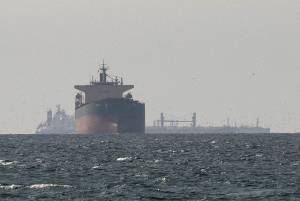
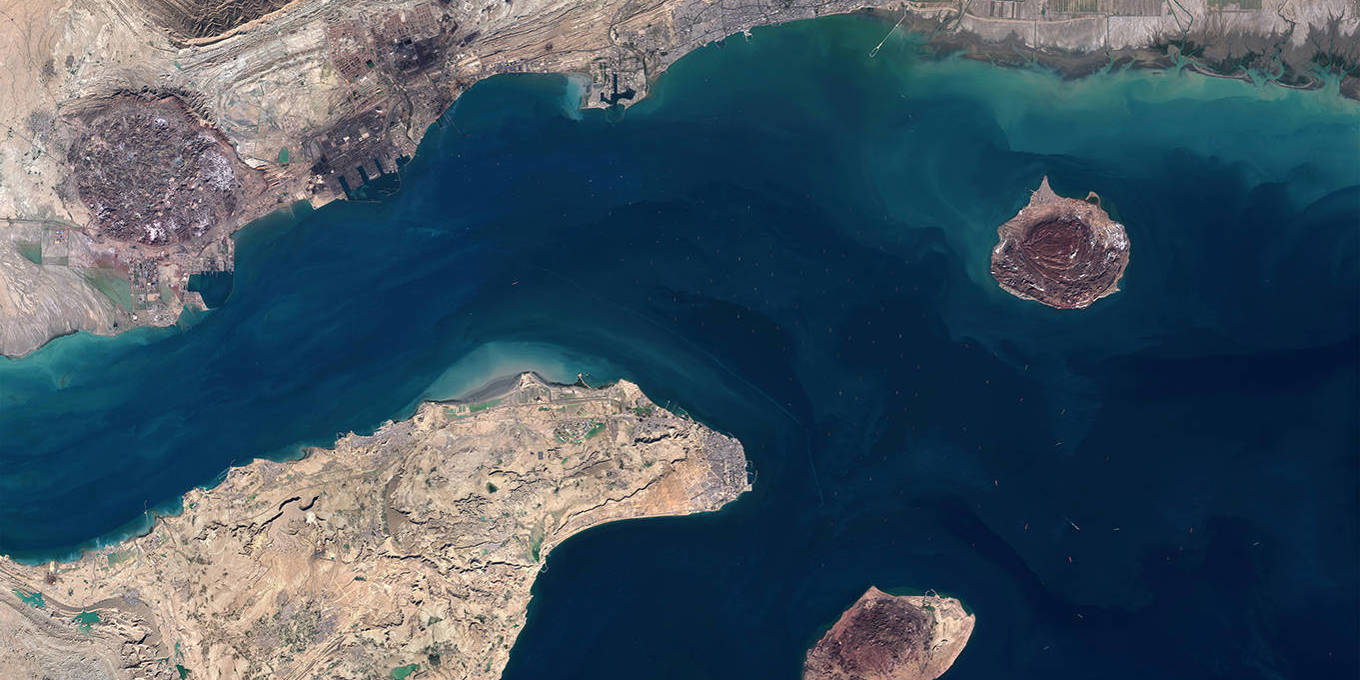
A imprensa iraniana afirma que os Estados Unidos apresentam “exigências excessivas” em relação ao Estreito de Ormuz, importante canal para o trânsito global de petróleo e cuja abertura é uma exigência central para Washington.

As negociações entre os dois países começaram em Islamabad, no Paquistão, neste sábado, 11. A Casa Branca e oficiais iranianos confirmaram que as conversas estão sendo realizadas de forma direta, com a presença de oficiais paquistaneses.

Depois de mais de cinco horas de conversa, as negociações já tiveram duas pausas e foram retomadas para uma terceira rodada de conversas, de acordo com a agência estatal iraniana.

Os Estados Unidos estão sendo representados pelo vice-presidente JD Vance, pelo enviado especial Steve Witkoff e pelo genro do presidente Donald Trump, Jared Kushner.

Já o Irã desembarcou na capital do Paquistão com uma delegação de 70 pessoas, liderada pelo presidente do Parlamento, Mohammad Bagher Ghalibaf.

O encontro acontece dias depois do anúncio de um frágil cessar-fogo de duas semanas em uma guerra que já deixou milhares de mortos e tem impactado os mercados globais ao entrar em sua sétima semana.

O Irã bloqueou efetivamente a passagem do Estreito de Ormuz, e sua reabertura foi o foco de um ultimato de Trump, que disse que aniquilaria uma “civilização inteira” se Teerã não reabrisse o estreito – Washington também deseja que o Irã desista de seu projeto nuclear e arsenal de mísseis balísticos.

Já o Irã anunciou que quer manter o controle da passagem e exige que os Estados Unidos retirem suas forças de todas as bases na região e quer preservar o direito dos iranianos de prosseguir com o enriquecimento nuclear.

A televisão estatal iraniana afirmou que, no encontro com oficiais do Paquistão, a delegação do Irã apresentou seus termos para o fim do conflito. As exigências também incluem indenização pelos danos causados ??pelos ataques conjuntos de EUA e Israel e a liberação dos ativos congelados do país.

Antes das reuniões, o primeiro vice-presidente do Irã, Mohammad Reza Aref, disse nas redes sociais que, se os interesses israelenses forem priorizados nas negociações, “não haverá acordo”.

Em meio às negociações com o Irã, Trump postou na rede social Truth Social que as Forças Armadas do Irã tinham sido destruídas e Washington havia começado o processo de reabrir o Estreito de Ormuz.

Não ficou claro na publicação se Trump se referia ao possível uso de minas no Estreito de Ormuz ou à capacidade mais ampla do Irã de controlar a área.

“Estamos agora iniciando o processo de limpeza do Estreito de Ormuz como um favor a países de todo o mundo, incluindo China, Japão, Coreia do Sul, França, Alemanha e muitos outros”, publicou Trump. “Inacreditavelmente, eles não têm a coragem ou a vontade de fazer esse trabalho por conta própria.”
Qual é a importância do Líbano?

O porta-voz do Ministério das Relações Exteriores do Irã, Esmaeil Baghaei, declarou à televisão estatal iraniana que o cessar-fogo no Líbano é uma “exigência fundamental”, durante o encontro da delegação iraniana com autoridades paquistanesas.

Israel continuou atacando o Líbano após o anúncio do cessar-fogo na semana passada entre os EUA e o Irã. O Paquistão havia apontado que o país estava incluso no acordo de trégua, mas oficiais israelenses negaram a informação.

Baghaei descreveu as negociações como um “momento particular” para o Irã e enquadrou a diplomacia como uma “continuação da defesa e uma continuação da guerra”.

“Uma intensa luta está em curso na frente diplomática”, disse ele.

Impactos da guerra

A guerra teve início em 28 de fevereiro, com ataques dos EUA e de Israel contra o Irã. Os ataques resultaram na morte do líder supremo do Irã, aiatolá Ali Khamenei, e o conflito logo se espalhou para países vizinhos.

Foi a segunda vez em menos de um ano que o presidente Trump envolveu diretamente os EUA em um conflito militar com Teerã.

O republicano justificou o confronto como parte de um esforço para incitar os iranianos a derrubar sua liderança teocrática, mas a guerra escalou e se transformou em um conflito regional que resultou em milhares de mortes, principalmente no Irã e no Líbano, mas também nos países do Golfo e em Israel. Centenas de milhares de pessoas foram forçadas a abandonar suas casas, e a economia global foi gravemente abalada.

A guerra praticamente paralisou o fluxo de navios pelo Estreito de Ormuz, por onde passa cerca de um quinto do petróleo mundial, e danificou instalações de produção de petróleo e gás em todo o Oriente Médio.

Em resposta, os preços do petróleo dispararam em todo o mundo. O petróleo bruto Brent, referência internacional, passou de cerca de US$ 70 por barril antes da guerra para mais de US$ 119 em alguns momentos.

The post Mídia iraniana diz que EUA têm ‘exigências excessivas’ sobre Estreito de Ormuz appeared first on InfoMoney.

  •  

Iran shoots down US Air Force A-10 Warthog in a firefight during fighter jet rescue mission

A US Air Force A-10 Thunderbolt II was shot down in Iran while attempting to rescue crew members from the downed F-15 Strike Eagle fighter jet. According to US officials, the pilot safely ejected over friendly territory and was unharmed.

Known as the Warthog, the A-10 has been in service since 1977… but the Air Force has been pushing to retire it from service, deeming the aircraft obsolete.

Read the original article on Business Insider

  •  

Wall Street is gushing over Citrini's 'Analyst #3' and his wild report from the Strait of Hormuz

Ships travel through the Persian Gulf near the Strait of Hormuz as the ongoing conflict with the US, Israel, and Iran disrupts trade in the region.
The war in Iran has disrupted transit through the Strait of Hormuz a critical path for global trade.

Stringer/Reuters

  • Citrini Research's "Analyst 3" is the toast of Wall Street over a wild report from the Strait of Hormuz.
  • Market watchers praised the analyst's bravery after Citrini said it had sent him to the strait.
  • They shared memes and compared him to everyone from James Bond and Ethan Hunt to Johnny English.

Finance types can't stop talking about Citrini Research's "Analyst #3" and what the firm says was a wild trip to the Strait of Hormuz.

Wall Street's denizens and market watchers across the globe rushed to X to commend the intrepid analyst with memes, GIFs, and kudos-filled posts.

It’s insane not only how wild the story is, but how well it’s written.If Citrini’s team ever stopped writing investment memos, they could create novels that would put Tom Clancy or Jack Reacher to shame.One of the few research newsletters I subscribe to, and worth every… https://t.co/ovIdOW1p01

— Adam Cochran (adamscochran.eth) (@adamscochran) April 5, 2026

Citrini's field report said that its analyst, who it says is fluent in four languages, traveled to the shipping channel at the heart of the US-Iran conflict with "a Pelican case full of equipment, a pack of Cuban cigars, $15,000 in cash and a roll of Zyn."

I feel like I fell in love with @citrini Analyst #3 without even knowing him. 😂“Armed with a fluency in four languages including Arabic, a Pelican case full of equipment, a pack of Cuban cigars, $15,000 in cash and a roll of Zyn”…. who is this man? 😍 pic.twitter.com/dK8rYNlDBE

— Liz Bazurto🛡|| lalatina.eth (@lizabazurto) April 6, 2026

Analyst #3 wrote that he snuck recording equipment into Oman, faced questioning from border officials, intelligence agents, and the coast guard, and swam in the Strait of Hormuz with a cigar in his mouth and Iranian drones flying overhead.

Citrini included a disclaimer in its research note, saying that some names and details had been changed to "protect the safety of anonymous sources" and that quotes were based on the analyst's memory of conversations he had in Arabic.

The firm described this as "the best we could do from an accuracy standpoint," noting that the analyst's phone, which contained notes and photos from the trip, was held by authorities in Oman.

The analyst reported that there were significantly more vessels passing through the strait than tracking platforms show, and said the situation was closer to a "toll road" than a "blockade," with Iran demanding that every vessel secure its approval to pass through safely.

Citrini analyst #3 when an oil tanker blows up in hormuz pic.twitter.com/fqWZs2JXuv

— Hooman (@hoomansv) April 4, 2026

Citrini Research rose to prominence for betting against Silicon Valley Bank before the lender collapsed in early 2023 and helped trigger a regional-banking crisis. It also rattled markets this February when it warned AI could crash the stock market and spark a recession.

Roughly 20% of global oil and gas flows travel through the Strait of Hormuz, making it a key shipping channel for world energy markets and a major contributor to economic growth.

But traffic has plummeted since the breakout of the war between Iran and the US and Israel, as captains fear being struck by an Iranian drone, blasted by an underwater mine, or hit by a missile launched from the coast or a passing speedboat.

The disruptions have lit a fire under energy prices, stoking renewed fears of inflation and recession. Analyst #3's audacious decision to visit the contested waterway in the middle of a full-blown war has clearly impressed finance professionals, who've compared him to James Bond, Mission: Impossible's Ethan Hunt, and even the bumbling Johnny English.

Citrini analyst #3 pic.twitter.com/f7gaL2Njhy

— Rob (@RobStonks1) April 7, 2026

Michael Burry, the investor of "The Big Short" fame, hailed Citrini's on-the-ground coverage on his Substack, describing it as "remarkable stuff."

Read the original article on Business Insider

  •  

Larry Fink lays out 2 Iran war outcomes: cheaper oil and big growth, or a global recession

Blackrock CEO Larry Fink wearing is sitting on a chair while speaking.
Larry Fink is the CEO of BlackRock.

Bloomberg/Getty Images

  • Larry Fink, CEO of BlackRock, says there are two "extreme" outcomes of the war in Iran.
  • He said that if oil hits $150 a barrel, there will be a "stark and steep recession."
  • But Fink said if Iran could be accepted by the international community, there would be growth.

Larry Fink laid out two outcomes from the Iran war: abundance and growth, or a global recession.

Speaking on the BBC's "Big Boss Interview" podcast on Wednesday, BlackRock CEO Fink said the outcome hinges on what happens next with Iran. If the country comes out of the war accepted by the global community and able to bring its oil back to market, that could boost supply and push prices lower.

But if Iran continues to pose a threat to trade, the Strait of Hormuz, and regional stability, oil prices could stay above $100 for the long term.

"Everybody has to recognize there's not going to be an outcome that's somewhere in the middle. It's going to either be two extremes," he said.

The US hasn't meaningfully imported crude or petroleum from Iran since 1979, according to the Energy Information Administration, after decades of sanctions.

Fink said a more open Iranian government could bring "Iranian oil back into the marketplace," helping drive prices back down to prewar levels and easing costs for consumers and businesses.

If that doesn't happen, though, and Iran doesn't move closer diplomatically to the US, Europe, and Gulf states, oil could climb toward $150 a barrel, with "profound implications" for the global economy.

"The $40 oil implication is one of abundance and growth. The other one is an outcome of probably a stark and steep recession," said Fink.

Rising energy prices are a 'regressive tax'

After the US and Israel launched airstrikes on Iran over three weeks ago, Iran has responded with strikes on Israel, Gulf states, US bases, and, crucially for oil markets, cargo vessels passing through the Strait of Hormuz.

This has led to a significant drop in traffic through the strait, which transits 20% of the world's oil and LNG supply. Oil has spiked by as much as 60% since the start of the war and has fluctuated with the perceived likelihood of peace negotiations — jumping on escalations, and falling when a solution looks more likely.

"Rising energy prices are a very regressive tax," Fink said. "It affects the poor more than the wealthy, because it's a larger component of their pocketbook."

The spike in oil prices is already being felt across the world — from the price of gas at the pump to flight tickets.

On Friday last week, the International Energy Agency outlined a range of measures that governments, businesses, and households could take to mitigate the impact of oil market disruptions.

These include working from home where possible and avoiding air travel.

Fink said countries, including the US, need to use the oil and gas that they have, but should "aggressively" lean into alternative energy sources, such as solar.

The BlackRock CEO said in the interview that he is a proponent of solar energy and that the US needs to "fully embrace solar."

Fink had said in his 2022 letter to CEOs said the next 1,000 unicorns will be companies making "the energy transition affordable for all consumers."

Read the original article on Business Insider

  •  

Even with US Navy warships, getting oil flowing through the Strait of Hormuz isn't likely to be quick or easy

A US Navy destroyer launches a Tomahawk missile as part of Operation Epic Fury.
The US Navy, if it were to take on an escort mission for tankers in the Strait of Hormuz, might need to lean heavily on destroyers like the one seen here launching a Tomahawk missile.

U.S. Navy photo

  • Cheap drones, missiles, and mines make chokepoints like Hormuz harder for the US to secure quickly.
  • The US Navy could need weeks or months to fully secure shipping lanes.
  • Even limited transit disruptions can spike oil prices and rattle global markets.

The "load-bearing assumption" among some investors that US Navy warships can easily keep vital chokepoints like the Strait of Hormuz open in times of conflict is slowly crumbling, steadily driving oil prices higher, a leading energy consultant said this week.

Robert McNally, a former Bush administration energy advisor and president of Rapidan Energy Group, told Business Insider on Wednesday that the market situation could worsen as US efforts to reopen the Strait of Hormuz, which handles 20% of the world's oil flows, drag on and as the potential scale of the looming energy crisis hits investors.

There is a "belief that something like this either can't happen, which was the belief before, or can't go on for long," McNally said, but as time goes on, "the remaining reservoir of just disbelief" that an essential energy chokepoint could be restricted for this long "is going to drain away," pushing prices higher in "the world's, by far, largest energy disruption in history."

To militarily secure the oil route for tanker movement, US forces will first need to substantially degrade Iran's missile, drone, and mine threats, the oil consultant and a military analyst said. That campaign could take weeks or months — long enough to significantly drive up oil prices and rattle global markets.

Surging prices and bleak predictions

The US has already been at war with Iran for weeks now. Over a dozen foreign oil tankers have been struck amid the fighting, and Brent crude prices have been climbing, jumping recently to over $100 per barrel, up from about $70 just before the conflict began, briefly surging toward $120 in the latest spike before edging back down. Year to date, oil prices have risen 78%, largely driven by disruptions created by the Iran war.

McNally predicted bleaker market outcomes if the war continues or if the conflict's combatants — the US, Israel, and Iran — target the so-called "crown jewels" of the global energy system, escalating the crisis rather than reining it in.

Israeli strikes on the South Pars Gas Field in Iran on Wednesday and Tehran's retaliatory strike on Qatar's LNG gas facility have set the stage for that kind of tit-for-tat escalation, even as President Donald Trump attempts to manage the increasingly volatile situation via his social media accounts.

Map showing the Strait of Hormuz

Graphic by JONATHAN WALTER,ANIBAL MAIZ CACERES/AFP via Getty Images

Despite growing market concerns, the US Navy hasn't stepped in to escort oil tankers the way it has in past periods of conflict and tension in the Middle East. Trump administration officials have said that escorts might be an option when it's "militarily possible."

"It takes a while to secure a strait. Iran has a lot of asymmetric layered capabilities," McNally said, pointing to "potent" weaponry ranging from coastal defense missiles to mines to mini-submarines. An escorting warship accompanies a tanker to protect it from threats like missiles, small boats, and even attack drones that Iran can use with little notice in the strait or on the approaches to it.

Escort missions come only "after you pummel Iran for weeks," he said.

US Central Command, which oversees American operations in the Middle East, said on Tuesday that US forces had dropped 5,000-pound bunker busters against hardened anti-ship cruise missile targets along the Iranian shoreline. And on Thursday, the command released video footage of strikes on Iranian naval targets that "threaten international shipping in and near the Strait of Hormuz."

U.S. forces are destroying Iranian naval targets that threaten international shipping in and near the Strait of Hormuz. pic.twitter.com/qR6FJyI5ZS

— U.S. Central Command (@CENTCOM) March 19, 2026

US armed forces have so far sunk over 120 Iranian naval vessels while also targeting naval drone facilities, storage centers for sea mines, and torpedo production sites. Additionally, A-10 attack aircraft are in the fight, gunning for Iranian fast boats.

The US military is "zeroed in on dismantling Iran's decades-old threat to the free flow of commerce through the Strait of Hormuz," CENTCOM commander Adm. Brad Cooper said on Monday.

"And we're not done," he said.

A process, not a quick fix

Assumptions that the US can quickly and easily secure vital sea lanes have been shaped by past conflicts where American naval power restored order relatively quickly.

During the Tanker War in the 1980s, US-led escorts helped keep oil flowing despite attacks in the Gulf between Iran and Iraq, and in later conflicts, the US military demonstrated the ability to rapidly overwhelm adversaries.

Those experiences, McNally said, have reinforced a broader expectation in certain markets and policy circles that any disruption to key chokepoints would be short-lived and manageable. That assumption is now colliding with very different threats.

Iran has fired more than 2,000 drones in its war against the US and Israel. A pick-up truck carried a Shahed drone during a 2025 parade of Islamic Revolutionary Guard Corps troops and paramilitaries.

Hossein Beris / Middle East Images / Middle East Images via AFP via Getty Images

"The weapons proliferation has just dramatically expanded," Bryan Clark, a retired US Navy officer and a defense analyst at the Hudson Institute, told Business Insider on Wednesday.

"You can sort of hang on forever by just using Shahed drones and little drone attack boats," he said, adding that "drones are going to be the biggest threat."

In heavily constricted waterways, like the Strait of Hormuz, which is just 21 nautical miles across at its narrowest point, state and non-state actors can "basically create an ambush situation where you can target shipping," he said.

An Iranian anti-ship cruise missile could hit a tanker in the strait within seconds, giving warship crews very little time to react. And that is only one potential threat.

The Houthis, an Iran-backed militant group in Yemen, seized on that exact opportunity in recent years, targeting both military and commercial vessels around the Bab al-Mandab Strait.

To forcefully curb the Houthi threat, the US launched Operation Rough Rider in March 2025. That effort took 52 days and more than $1 billion to get the rebels to stand down — and shipping still hasn't fully recovered, as many commercial shipping companies have opted for higher prices and longer transit times rather than face the elevated security risks.

The current situation carries greater complexities. Iran has a much deeper arsenal than its proxies, and it has leverage as long as it is willing and able to fight. There are no alternative routes to the Strait of Hormuz for oil tankers loaded with crude oil or LNG.

Launching a naval escort mission in the Strait of Hormuz "would pretty much take up all of our deployed forces in that region," Clark said. Without allied support, which isn't coming together, "it's going to take at least a dozen destroyers to do the escort mission."

"They would be all tied up doing that," he said.

An E/A-18G Growler on the deck of the Abraham Lincoln surrounded by deck crew.
In addition to warships, a US escort mission could demand regular combat air patrols.

U.S. Navy photo

Israel, waging war against Iran alongside the US military, has a small surface fleet. US European allies have balked at entering the conflict, though some have deployed ships to defend their assets in the region. Some allies have shown support in condemnations of Iran, but for a potential escort mission, the US could be forced to go it alone, relying on a mix of combat air patrols and naval power.

Clark warned that the mission could go on for months because the Iranians "can hold out for a long time, given the number of weapons they've squirreled away." The Pentagon has acknowledged the challenge of weaponry buried over decades.

As cheap weapons like Shahed drones lower the barrier to entry for precision strike for countries like Iran and aggressive non-state actors like the Houthis, McNally said that it looks like oil disruption is increasingly becoming a tool of coercion in modern conflict. These vessels are being targeted, not merely caught in the crossfire, and that will demand shifts in strategic-level thinking.

Even without a full shutdown of important chokepoints, any disruption alone can shake global markets. In energy markets, delays and uncertainty can trigger price spikes. That's leverage for malign actors, even those limited in conventional military might.

McNally said that "folks will be watching very closely how successful we will be in the coming weeks in suppressing that."

Read the original article on Business Insider

  •